


Business Sectors
Events
Offshore Support Journal Conference, Middle East 2025
 09 Dec 2025
 DUBAI
DUBAIContents
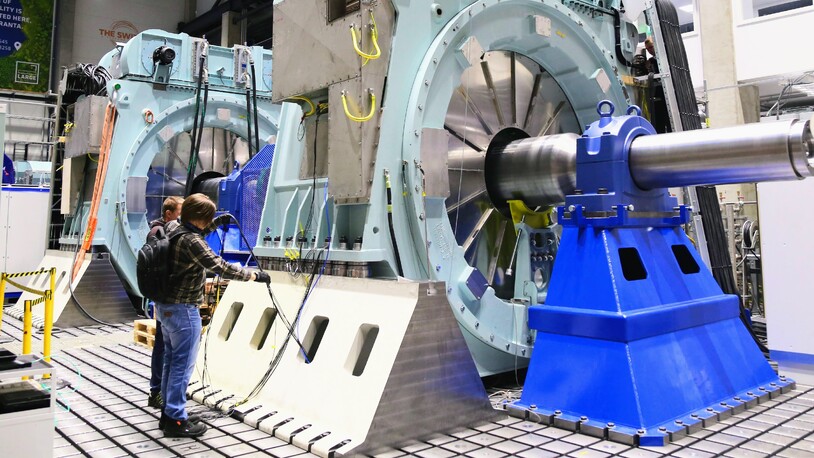
Register to read more articles.
Batteries in OSVs: inflection point reached
OSVs will increasingly be refit with battery packs and shore power connections to lower emissions and cut fuel consumption in a bid to reach decarbonisation targets


Speaking at the Annual Offshore Support Conference in November, Maersk Supply Service COO Mark Handin made clear the daunting task that lies ahead for OSV owners.
“Decarbonisation,” he said, “has to be an integral part of what we do. It is not only the expectations of our clients, but also society as whole. We either get onboard … or we are out of business in the long run.”
He said charterers are not likely to directly finance the retrofits or modifications needed to meet decarbonisation goals. Instead, OSV owners will have to make those investments themselves.
“The days of ‘If a client’s not paying for it, we’re not doing it’ are over,” said Mr Handin.
Creating a path to decarbonisation starts with a stated goal. For Maersk Supply Service (MSS) that means reducing its fleet’s carbon intensity by 50% as compared with 2018 levels by 2030 and becoming carbon neutral by 2050.
Unlikely to construct newbuilds in the next four to five years, the Danish OSV owner is investing in its existing fleet to reduce emissions. These wide-ranging investments will include new IT and software systems, batteries, shore power systems, new fuels, variable frequency drives and other technologies. Mr Handin detailed the company’s sustainability initiatives during his keynote address, characterising them as falling into three categories.
The first, ‘behaviourial,’ provides captains and crew with real-time data to support better decisions regarding fuel savings and energy efficiency.
The second is ‘retrofit technology’ – batteries, variable frequency drives and shore power connections.
The third is ‘biofuels and future fuels’. He said MSS was closely following parent AP Møller-Maersk’s ground-breaking efforts in building a series of carbon-neutral container ships that will be capable of burning green methanol when the fuel becomes available.
“We have reached an inflection point; [battery] technology is proven and considered mature”
Last year, MSS successfully conducted initial pilot tests using blended biofuel (HVO) in OSVs in co-operation with The Ocean Cleanup.
Next will be a battery-hybrid retrofit of Maersk Minder in March. It will be the world’s first anchor handler to be fitted with battery technology and a selective catalytic reduction (SCR) system. Wärtsilä will provide the turnkey solution. In 2022 and 2023, MSS will undertake five other battery retrofits and six variable frequency drive upgrades, as well as ramping up its biofuel testing.
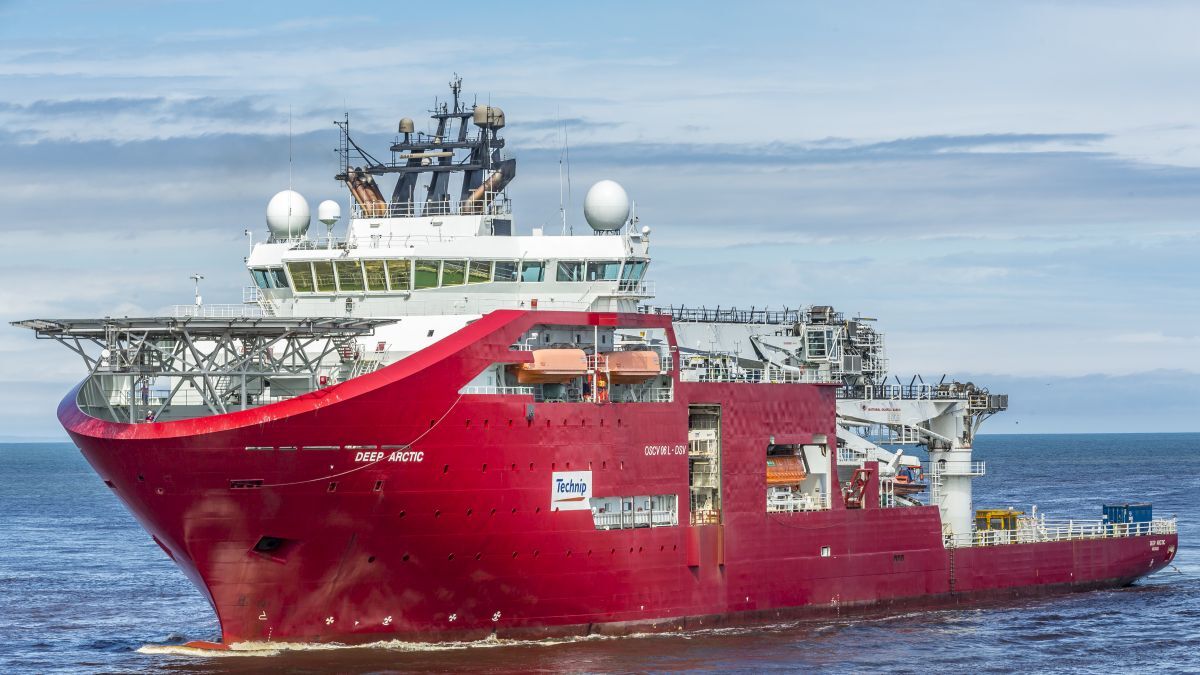
MSS is not alone in its efforts. In 2021, TechnipFMC’s IMR, dive support and construction vessel Deep Arctic was refit with a 1.2 MW battery hybrid power system at Poland’s Remontowa Shipyard. Energy from the battery is used in transit mode, DP mode and while in port.
OSVs are increasingly being fitted with battery packs and shore power connections to lower emissions, cut fuel consumption, and lower maintenance. Onboard batteries can reduce load demand on generators and improve efficiency of propulsion systems for transit and DP. Energy, stored and released to augment power from engines and generators, can cut fuel consumption on average by 20% and engine running time by more than 40%.
Still, offshore vessels fitted with batteries represent just a tiny fraction of the global fleet; only 79 offshore vessels (mostly platform supply vessels) are fitted with batteries, with another 11 on order, under construction or refit, according to DNV. This electrification effort will accelerate in the years ahead as batteries improve, access to onshore and offshore charging power increases and charterers include them in their tenders.
Grant backs Solstad retrofits
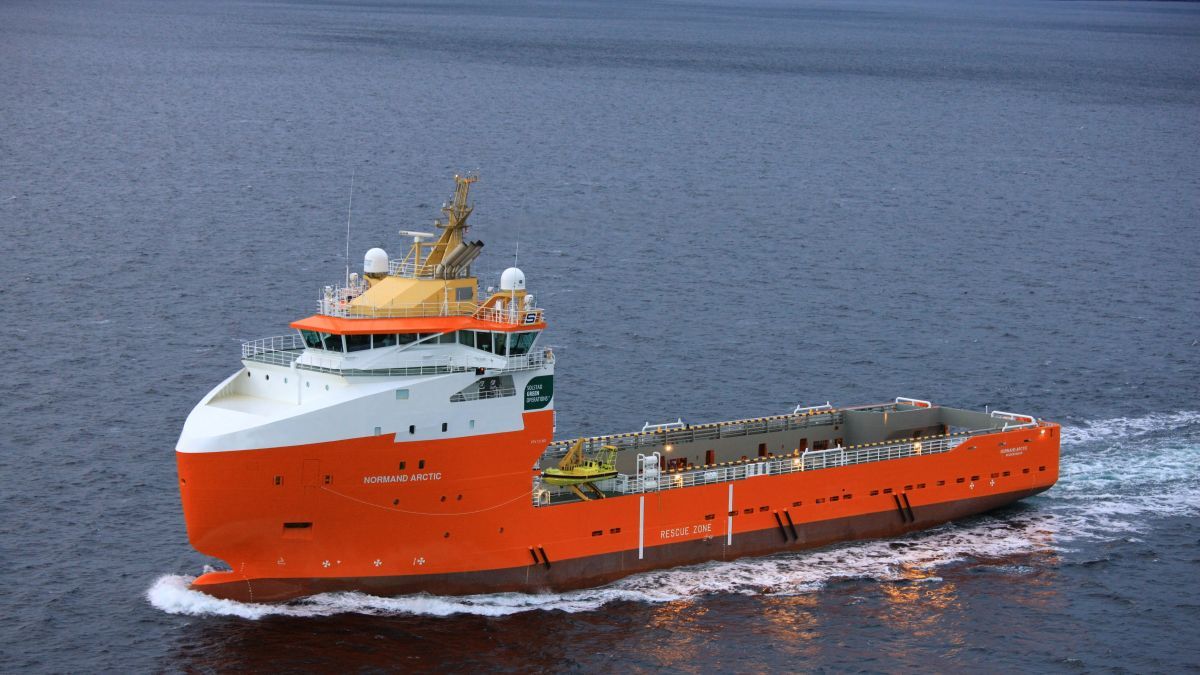
Norway’s Solstad Offshore is investing US$34M to install batteries and shore power connections on 11 OSVs to lower emissions over the next three years. Solstad’s plans are being underpinned by a US$9.6M grant from Innovation Norway. By 2025, Solstad will operate 21 battery-hybrid OSVs in its fleet.
The planned upgrades will lead to an annual reduction of 12,000 tonnes of CO2 emissions, with Solstad targeting a 50% reduction in global fleet emissions by 2030.
“This major grant from Innovation Norway allows us to step-up our green technology investment program,” said Solstad Offshore chief sustainability officer Tor Inge Dale.
Innovation Norway special advisor Sigbjørn John Huun says the funding will “assist on speeding up both the needed work to recycle older offshore vessels, as well as provide considerable contributions to fund important decarbonisation projects in this segment.”
“It is not only the expectations of our clients, but also society as whole”
Leading battery supplier Corvus Energy says that even when grants have not backed battery installations, such as in Brazil and the US, owners are making the investment. “This trend shows us that we have reached an inflection point; [battery] technology is proven and considered mature,” says Corvus marketing and communications manager Sonja Hansen.
“Battery systems onboard offshore vessels will increase even more as energy storage is the enabler for all future fuel solutions; we already see several initiatives for zero-emission OSVs, as well as initiatives for offshore charging.
“At Corvus, we like to say that battery has become ‘the license to operate’”, she says.
The compelling business case and the challenging liquidity situation among OSV owners over the past few years led Corvus to develop the ‘battery on board’ (BOB) concept and leasing solutions.
Using a standardised battery container can reduce time for the project phase, reduce installation time and cost, and increase the value of the system when it is time for a second life. A BOB system also adds the flexibility of increasing energy capacity as needed, says the company. Having a standard system that can be moved to another vessel or owner enables leasing as an option, notes Corvus. “Not everyone is able to fund their required emission reductions; leasing can be a very good option,” says Ms Hansen.
The first 20-ft BOB container with Orca Energy is being delivered to the Corvus factory in Bergen, Norway. The first 10-ft BOB container with Orca Energy and the first 20-ft unit with Blue Whale is on order.
Related to this Story


Events
Offshore Support Journal Conference, Middle East 2025
09 Dec 2025DUBAI
Maritime Regulations Webinar Week
16 Dec 2025GMT - ONLINE
Maritime Decarbonization Conference, Americas 2026
22 Jan 2026HOUSTON
Offshore Wind Journal Conference 2026
02 Feb 2026London
© 2024 Riviera Maritime Media Ltd.


