


Business Sectors
Events
Offshore Support Journal Conference, Middle East 2025
 09 Dec 2025
 DUBAI
DUBAIContents
Register to read more articles.
Batteries lead net-zero charge for ferry sector
The electrification of ferries is firmly underway, while other alternative fuels are starting to make inroads as the sector strives to decarbonise


Ferries are leading the charge when it comes to battery power, with a slew of newbuilding orders highlighting the way this type of propulsion is quickly gaining momentum.
As of May 2024, there was a global fleet of 8,704 passenger ferries, according to Clarksons’ data, with 38 new ferries scheduled for delivery this year. Many of these ferries will be propelled by alternative fuels or batteries.
DNV Alternative Fuels Insight highlights the ferry sector’s prominent position when it comes to battery power. There are currently operational 346 car and passenger ferries, with 98 on the orderbook. This puts the sector at the top of the list of all shipping segments when it comes to batteries.
Ferry trade association Interferry chief executive, Mike Corrigan, also highlights the importance of electrification for the sector, saying that it already leads shipping’s charge towards electrification and hybridisation. “To be fair, that’s hardly surprising given the nature of the business,” he says. “With a myriad of short to medium-long routes, most ferry crossings take between 30 minutes and two hours, making ferries the prime ship type to adopt battery technology for propulsion.”
A recent flock of new order announcements highlight the further strong growth that this sector is set to experience when it comes to battery propulsion.
In May, DFDS announced that it was investing in six electric ferries for the Channel. The first two electric vessels will be in operation by 2030, while the rest are expected to follow before 2035.
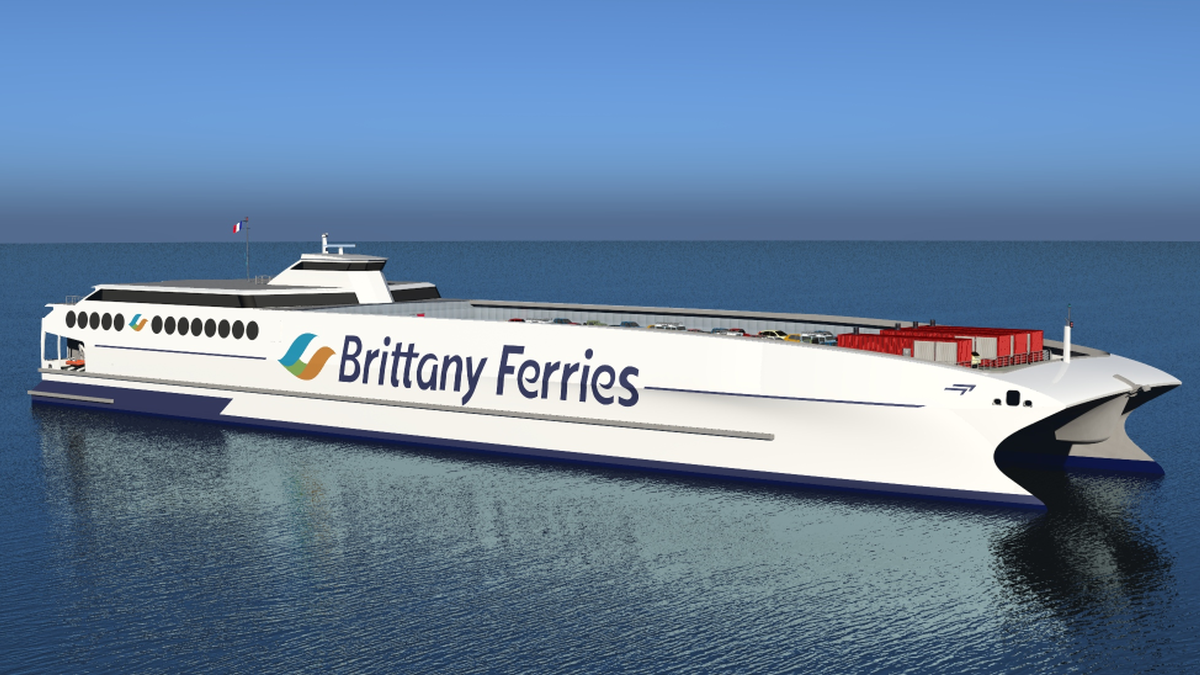
And in June it was announced that Brittany Ferries has partnered with Incat Tasmania and Wartsila to explore designs and technical requirements for a zero-emissions craft.
“We know that battery electric propulsion, coupled with lightweight aluminium vessels, is the ideal choice to eliminate emissions,” says Incat chief executive, Stephen Casey.
Incat Tasmania is one of the leading shipyards when it comes to battery power and it revealed earlier this year that its prime focus is the electric ferry market.
Incat founder and chairman, Robert Clifford, says: “Electric propulsion is very interesting, and the industry is red hot for it. We think the industry will be all electric and we don’t think we will be building diesel ships in the future.”
Indeed, the Hobart, Australia-headquartered shipyard is building the world’s largest all-electric ship to date for South American customer Buquebús.
Elsewhere, Stena RoRo’s E-Flexer newbuilding programme has just delivered its first battery-powered ropax. The Ala’suinu is under a five-year lease to Marine Atlantic, a Canadian operator based in the province of Newfoundland and Labrador. The ship, the tenth E-Flexer design from Stena RoRo, deploys a 2 MWh battery and dual-fuel LNG and diesel propulsion.
Highlighting the expansion of battery power in the ferry segment, two new Brittany Ferries E-Flexers are currently being built, which will have significantly larger batteries, at 11.5 MWh each vessel.
The development of electric propulsion within the ferry sector is also becoming more technologically sophisticated. For example, at Posidonia trade fair, DNV and a UK-based vessel designer signed a memorandum of understanding (MoU) on the development, certification and operation of electric foiling vessels. Hydrofoils use a foil to lift the vessel up from the water as it gathers speed, boosting energy efficiency.
DNV and Artemis Technologies will work on 100% electric foiling vessels. The MoU builds on their co-operation on the Artemis EF-24 passenger ferry, with several under construction and rapidly progressing.
Regent is also progressing with its hydrofoiling wing-in-ground-effect (WIG) ferries. Its groundbreaking work here is expected to open the market for this kind of seaglider craft.
Regent’s 12-passenger zero-emissions Seagliders will operate a few meters above the water’s surface, combining the higher speeds of a light aircraft with the low operating costs of a maritime vessel.
Taking a risk-based approach in the absence of existing rules and regulations, Lloyd’s Register (LR) will support Regent through the maritime certification process, including advancing its design basis agreement with the US Coast Guard and defining the certification pathway for non-US seagliders. This will help define LR rules for future WIG vessels, including Regent’s 100-passenger Monarch seaglider. Regent aims to have humans on board its 12-passenger seaglider prototype this year, with vehicles to market by mid-decade.
Helping the development of electric propulsion within the ferry sector is the development of green corridors. Decatrip, which began in 2022, is a joint project undertaken by shipbuilder Rauma Marine Constructions (RMC), Viking Line, Åbo Akademi University and Kempower, a developer of electric charging technology.
The project envisions a carbon-neutral green corridor between Turku, Finland and Stockholm, Sweden through which cargo and passengers can travel. RMC’s role was to investigate the technology needed to modernise Viking Line’s vessels and retrofit them with batteries. Viking Line developed a commercial model based on carbon-neutral maritime transport. Kempower developed retrofittable charging devices for electric vehicles on ships, while Åbo Akademi developed a simulation model to optimise battery and electric vehicle charging devices. The project partners will assess the viability to scale this and develop similar corridors elsewhere.
And the UK’s first green shipping corridor is moving forward, with electric power expected to play a key role. The green corridor will be established between the Ports of Dover, Calais and Dunkirk as part of the UK’s Clean Maritime Demonstration Competition.
While Europe is the part of the world where battery propelled ferries are most dominant, electric power is also ramping up quickly on other continents. More electric ferries are expected to be built for the US market after the US Department of Transportation’s Federal Transit Administration (FTA) announced that it would be pumping US$316M into modernising ferry services. Part of this is the Electric or Low Emitting Ferry Program which will allot US$49M in federal funding in 2024 to transit agencies to purchase ferries that reduce emissions by using alternative fuels or onboard energy storage systems.
But, despite the adaption of battery power by the ferry segment, there is still a major challenge to be overcome to allow this propulsion option to reach its full potential. There is still not enough onshore power supply (OPS) to charge the batteries. Mr Corrigan says: “Around the world, OPS deployment has often been up to 10 years behind shipboard battery installations. Most existing capacity is limited to ‘cold ironing’ consumption at berth, so recharging levels are insufficient for propulsion systems. This leaves operators uncertain about ordering new full-electric or hybrid ships, as I know full well from various Interferry members.”
A key Interferry mission is to lobby governments, port authorities and electricity utilities to prioritise OPS development.
While electric power is undoubtedly leading the way in the decarbonisation of the ferry sector, there are advances being made within other alternative propulsion routes. LNG is a tried and tested alternative fuel within the sector. According to DNV’s latest Alternative Fuels Insight, there are currently 43 ropax vessels that deploy LNG and LNG hybrid propulsion, with six newbuildings on the orderbook.
Hydrogen and methanol take shape
Hydrogen and methanol have also started entering the ferry market. Norled’s MF Hydra, entered service last year. Hydra uses both batteries and liquid hydrogen fuel cells and is the world’s first ship to sail on liquid hydrogen.
Elsewhere, the first US hydrogen fuel-cell ferry Sea Change has been approved for commercial operations. The 70-foot, 75-passenger zero-emissions, hydrogen fuel cell-powered, electric-drive ferry, owned by SWITCH Maritime, will operate in the California Bay Area and has been built by All American Marine (AAM).
This ferry is expected to be instrumental in driving forward hydrogen usage.
Incat Crowther designed the vessel. Incat Crowther managing director - North America, Grant Pecoraro, says: “Sea Change aims to demonstrate the viability of this fuel and demonstrate a pathway to commercialisation. In that context, the advantages and benefits of Sea Change go way beyond the single vessel and its own footprint.”
The project is funded by private capital from impact investment platform SWITCH, which seeks to work with ferry operators to help facilitate their adoption of zero-carbon vessels to replace aging diesel-powered vessels, leveraging significant experience from the technologies used in the build of this first ferry.
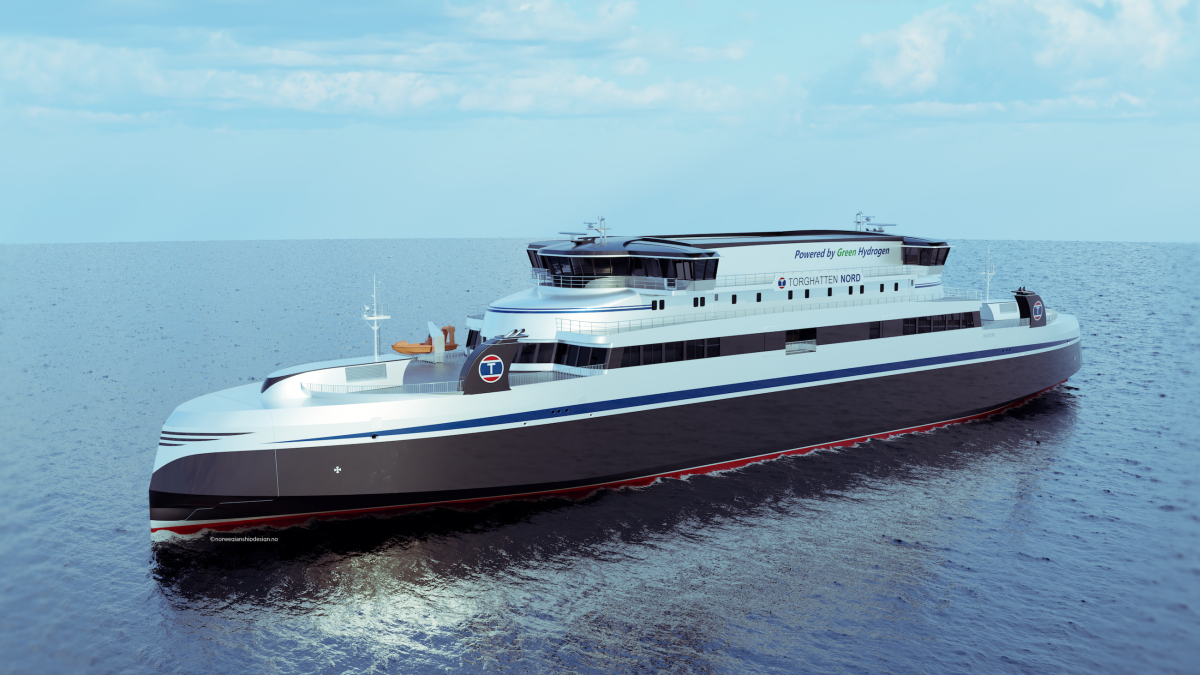
Current hydrogen newbuild ferry orders include two passenger ferries ordered by Norwegian transport company Torghatten. At 117 m long with a 120-car capacity, the duo will be the world’s largest hydrogen-powered ships, operating on green hydrogen at least 85% of the time. A hydrogen storage unit onboard the vessel will feed gas to the fuel cells, creating electricity to propel the vessels and power their auxiliary systems, reducing CO2-emissions on the route by around 26,500 tons each year.
While slower moving than hydrogen, methanol is also starting to make inroads in the sector. Stena Line is converting Stena Superfast VII and Stena Superfast VIII to methanol propulsion. This comes on the back of the conversion of Stena Germanica in 2015.
Stena RoRo is also investigating methanol as part of its E-Flexer programme. The company says that “on the drawing table” are some methanol-ready E-Flexer projects.
There is no doubt that the ferry sector is active in its drive to decarbonise. There is a mix of alternative propulsion options on the table, with batteries the top choice.
Related to this Story

Events
Offshore Support Journal Conference, Middle East 2025
09 Dec 2025DUBAI
Maritime Regulations Webinar Week
16 Dec 2025GMT - ONLINE
Maritime Decarbonization Conference, Americas 2026
22 Jan 2026HOUSTON
Offshore Wind Journal Conference 2026
02 Feb 2026London
© 2024 Riviera Maritime Media Ltd.


