


Business Sectors
Events
Offshore Support Journal Conference, Middle East 2025
 09 Dec 2025
 DUBAI
DUBAIContents
Captured CO2 levels plummet at Chevron’s Gorgon plant
In a worrying trend, the world’s largest carbon capture facility is failing to capture much carbon


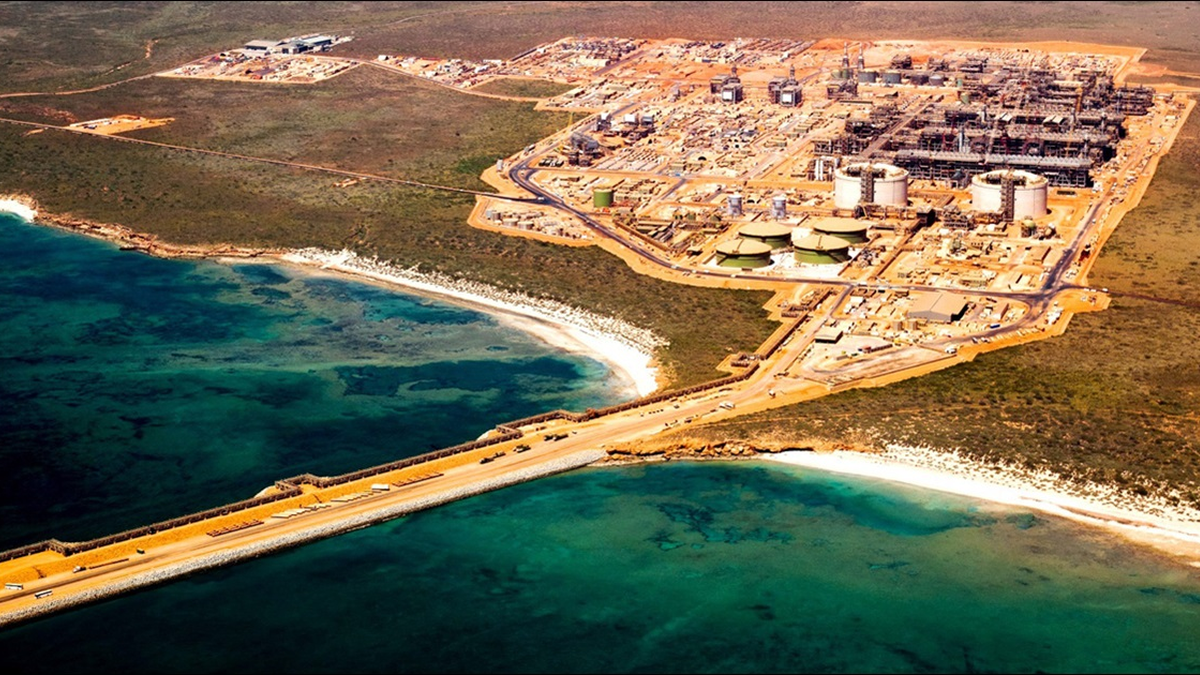
Analysis has highlighted the low volumes of CO2 being captured at the world’s largest carbon capture and storage (CCS) plant, Chevon’s Gorgon facility in Western Australia. The data casts further doubt on the viability of the technology, much-vaunted by the world’s leading oil and gas producers, to offset emissions from fossil-fuel burning facilities.
According to recent analysis by the Institute for Energy Economics and Financial Analysis (IEEFA), the CCS facility – which sits alongside Chevron’s Gorgon LNG plant – has hit a new low in terms of capturing the planet-heating emissions released by the Barrow-Island-based LNG project.
IEEFA claims Gorgon CCS captured just 1.33M tonnes of CO2 in the full year 2024-2025, which it said represents “a fraction” of total emissions from the adjoining LNG plant.
“The project has not achieved its target in any single year”
To put that ‘fraction’ into perspective, IEEFA said in a Gorgon CCS planning document, Chevron estimated that if all the gas from the project were consumed at gas-powered generation stations in the Asia-Pacific, emissions would amount to 50M tonnes of CO2 a year. Based on the assumptions in that scenario, Gorgon CCS captured just 2.66% of the total emissions from extracting, processing and burning gas from the Gorgon fields, notes IEEFA.
Costs
Reporting on data for FY 2023-24, IEEFA highlighted a familiar trend, noting, “Since the start of its operation, the project has not achieved its target to capture 80% of the CO2 it removes in any single year. Instead, over the last five years, it underperformed by 45% against that target, and over the last three years by 60%.”
In part, this poor performance can be explained by ongoing issues with reservoir pressure. The company continues to implement measures to mitigate these concerns, but in doing so has ramped up the costs of the project significantly.
"More energy consumption yields more CO2 emissions, not less"
IEEFA noted in its Key Findings for its November 2024 report, Gorgon CCS underperformance hits new low in 2023-24, “The cost per tonne of CO2 (tCO2) captured for the project has increased from an initially estimated US$70/tCO2 to more than US$200/tCO2 captured.”
Inconsistencies
Carbon capture and storage has long been touted by industry players as a means of reducing emissions while continuing to burn fossil fuels; sceptics, however, have raised concerns over a technology extolled by big oil and gas that effectively empowers a ‘business as usual’ approach.
In its Great Carbon Capture Scam report, published June 2022, Greenpeace noted several inconsistencies with the technology. For example, citing EnergyWashington Week, as reported by Oil Change International and the US Environmental Protection Agency, it noted, “A power plant equipped with a CCS system … would need roughly 10% to 40% more energy than a plant of equivalent output without CCS.”
Its conclusion: more energy consumption yields more CO2 emissions, not less.
It also highlighted the enormous infrastructure necessary to facilitate carbon capture, citing The American Petroleum Institute’s own report, Carbon Dioxide Enhanced Oil Recovery, which stated, “The amount of infrastructure necessary to perform geologic storage on a meaningful level is equivalent to the existing worldwide infrastructure associated with current oil and gas production.”
Underperformance
Critics will seize on the latest findings from Gorgon as further evidence of the technology’s shortcomings, especially given the raft of CCS projects that have either stalled, failed or exceeded budgetary constraints over the last two decades. In its November 2024 report, IEFFA noted, “The underperformance and technical issues faced by the Gorgon project are not an exception. In 2022, IEEFA conducted a global review of 13 flagship CCS projects covering a range of sectors and countries, which represented half of the global CCS capacity. It found that of the 13 projects, only three achieved their targets. Two projects failed, one was suspended after four years of operation (recently restarted), five projects materially underperformed their own targets – by about 20% to 50% – and two projects provided no performance data.”
Added Greenpeace, “By the end of 2020, more than 80% of US CCUS projects had failed.”
Chevron has been approached for comment.

Related to this Story
Events
Offshore Support Journal Conference, Middle East 2025
09 Dec 2025DUBAI
Maritime Regulations Webinar Week
16 Dec 2025GMT - ONLINE
Maritime Decarbonization Conference, Americas 2026
22 Jan 2026HOUSTON
Offshore Wind Journal Conference 2026
02 Feb 2026London
© 2024 Riviera Maritime Media Ltd.


