


Business Sectors
Events
Offshore Support Journal Conference, Middle East 2025
 09 Dec 2025
 DUBAI
DUBAIContents
Register to read more articles.
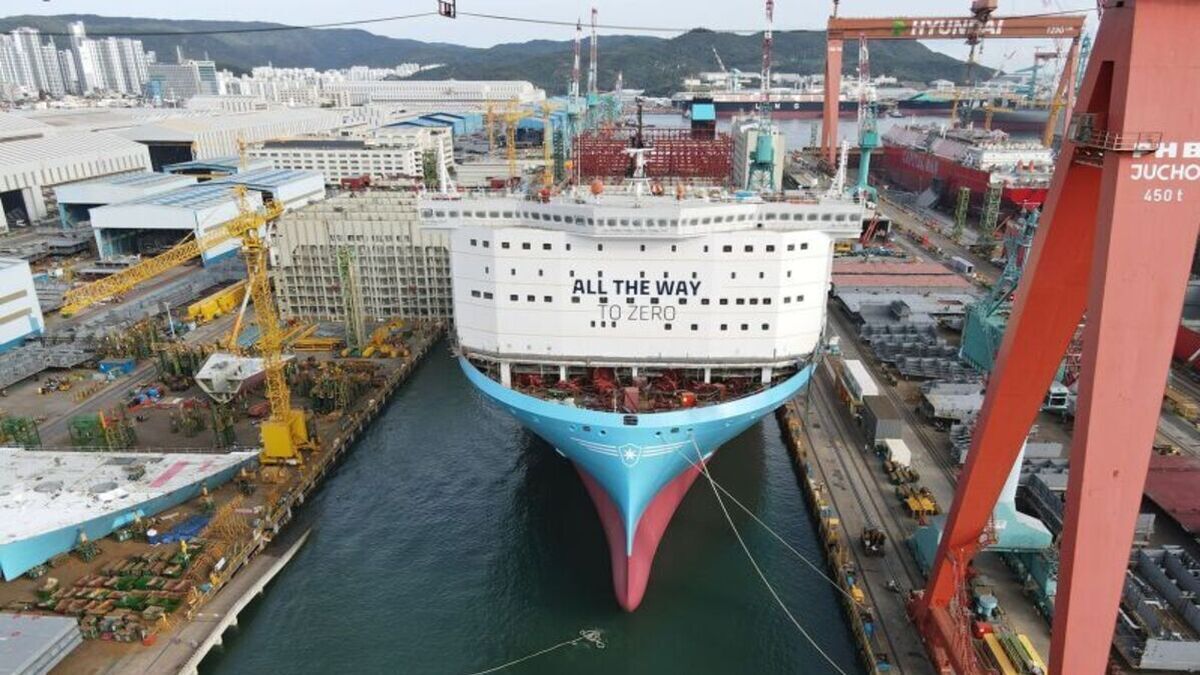
Clarksons: 45% of newbuilds ordered in 2023 alternative fuel capable
Shipbroker Clarksons reports 45% of newbuildings ordered last year are capable of running on alternative fuels


The latest edition of Clarksons Research’s Green Technology Tracker published data indicating nearly half of all vessels ordered in 2023 by tonnage will be capable of running on some form of alternative fuel.
539 units or 33.8M gt ordered were reported to have alternative fuel capability in 2023, which accounts for nearly 45% of ordered tonnage. The orderbook shows a trend of more and more alternative fuel-capable ships. In 2021, 31% of new tonnage ordered was for alternative fuel-capable vessels, up from 27% in 2020 and 8% in 2016.
LNG-capable dual-fuel vessels comprise the largest share of these new orders, tallying 220 vessels, with 152 being for LNG carriers. There are also 125 orders for methanol dual-fuel vessels, 55 orders for LPG and four ships that will be fuelled by ammonia.
Reflecting future ’optionality’, 579 in fleet and newbuilds have LNG-ready status, 322 are ammonia-ready and 272 are methanol-ready.
83% of container ship newbuild capacity ordered in 2023 (rising to 94% including orders with ready status) and 79% of car carriers (98% including ready orders) were ordered with alternative fuel capability, with much lower shares of bulkers and tankers.
Overall, Clarksons estimates about 6.0% of global fleet capacity is alternative fuel-capable, up from 2.3% in 2017 and the ship broker projects this will increase to about 23.0% of all fleet capacity by the end of the decade.
‘Green’ port infrastructure is continuing to expand: currently there are 188 active LNG bunkering ports and 82 planned facilities, while more than 2,743 vessels in the fleet are fitted or set to be fitted with shore power connections.
Wind propulsion has seen a boost, with 47 vessels now operating using some form of wind assistance and a further 47 currently on order. Air lubrication systems (ALS) have grown too, about 166 vessels in service now have an ALS installed and 268 newbuildings on order will come fitted with ALS.
However, Clarksons cautions that by 2026, around 45% of tankers, bulkers and container ships will still score D or E under IMO’s Carbon Intensity Indicator (CII) energy efficiency ratings.
Under CII, ships that achieve a D rating for three consecutive years or an E rating in a single year are required to develop a corrective action plan under Part III of the Ship Energy Efficiency Management Plan (SEEMP).
Riviera Maritime Media’s Maritime Decarbonisation Conference, Asia 2024 will be held in Singapore, 4-5 March 2024, click here for more information on this industry-leading event
Related to this Story

Events
Offshore Support Journal Conference, Middle East 2025
09 Dec 2025DUBAI
Maritime Regulations Webinar Week
16 Dec 2025GMT - ONLINE
Maritime Decarbonization Conference, Americas 2026
22 Jan 2026HOUSTON
Offshore Wind Journal Conference 2026
02 Feb 2026London
© 2024 Riviera Maritime Media Ltd.


