


Business Sectors
Events
Offshore Support Journal Conference, Middle East 2025
 09 Dec 2025
 DUBAI
DUBAIContents
Floating storage, China quotas steer tanker returns
Tanker and LPG earnings eased from recent highs as floating storage and China’s latest crude quotas reshaped sanctioned flows into Asia


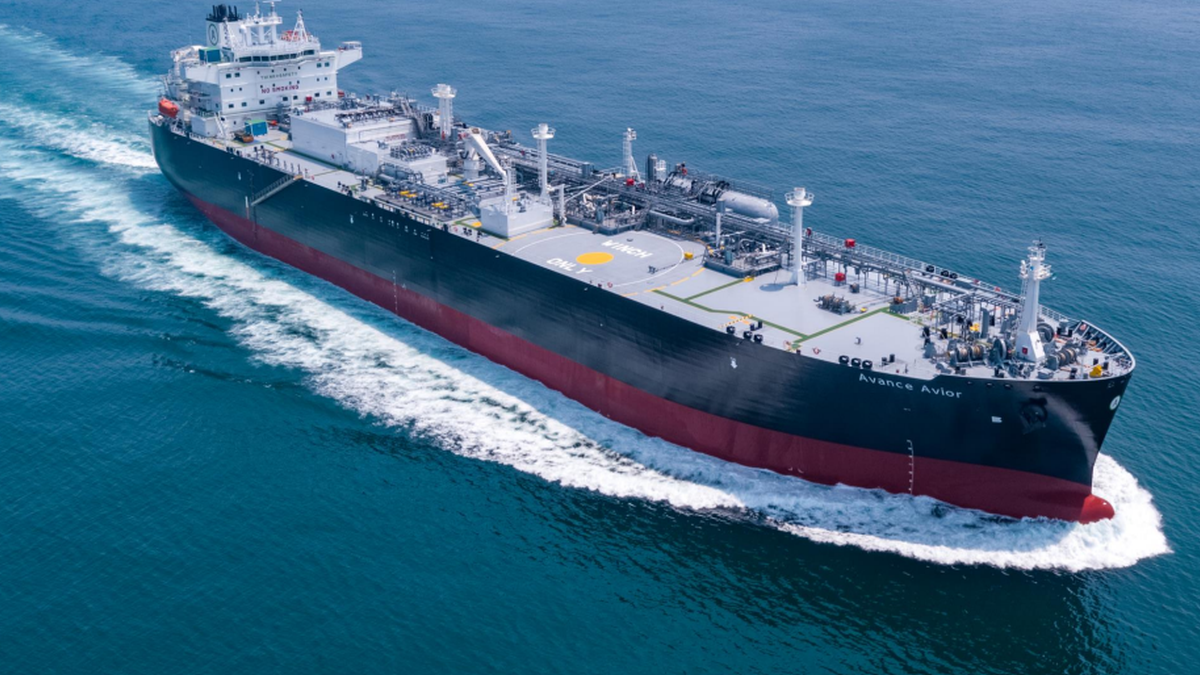
Tanker earnings softened over the past week, while LPG and LNG returns held at elevated levels against a background of persistent crude floating storage and shifting Chinese crude import quotas.
Clarksons reported average tanker earnings eased 8% week-on-week to a still-firm US$55,775 per day in early December.
In the crude sector, VLCC earnings on the MEG–China benchmark fell 7% week-on-week to US$123,285 per day, with average VLCC earnings for 2010-built tonnage at US$115,290 per day.
Clarksons described a largely balanced VLCC market, noting rates on the MEG–China route stayed in a narrow range as continued discharge delays in China slowed the resupply of ships.
Suezmax tankers saw sharper corrections, with West Africa–UKC earnings down 20% on the week to US$55,956 per day and average Suezmax tanker earnings falling 12%.
Aframax tanker returns were steadier: cross-UKC earnings held close to US$69,906 per day and Clarksons highlighted a “steady week overall in the North Sea market”, although sentiment in the Mediterranean dipped as cross-Med rates eased.
Product tanker markets presented a mixed picture.
West of Suez, limited enquiry and a lengthening MR position list in the UK Continent weighed on rates, with UKC–USAC MR earnings dropping 20% week-on-week to US$15,247 per day.
East of Suez, MR rates on the MEG–East Africa route corrected to WS 220 as fundamentals overrode sentiment, while LR1 and LR2 tanker rates on MEG–Japan softened to WS 180 and WS 155 respectively, though LR1s remained supported by a tight list.
In the dirty trades, Handy tankers in the Mediterranean benefited from strong activity and a tight list, with cross-Med earnings jumping 43% week-on-week to US$30,682 per day.
Gas markets stayed constructive: Clarksons recorded a firm week for VLGCs, with Ras Tanura–Chiba time charter equivalent earnings for a modern 84,000-m³ ship up 7% week-on-week at US$58,505 per day and MEG–Japan LPG rates at US$72 per tonne, 4% higher on the week.
Vortexa noted the December increase in Aramco’s LPG contract prices surprised some market participants who had expected another reduction, adding a further layer of uncertainty to winter LPG pricing.
Supply and demand fundamentals in the crude market continued to be shaped by floating storage and Chinese quota policy.
Signal Ocean reported, “Floating storage is rising sharply across the tanker segments” and offshore crude volumes are approaching the 150M-barrel threshold seen in late 2022.
As of 3 December, VLCCs accounted for 48% of floating storage, with Suezmax and Aframax tankers taking 28% and 24% respectively, and approximately 86% of floating barrels concentrated in the Singapore–Malaysia hub, dominated by Iranian crude.
Against this backdrop, Vortexa highlighted China’s latest crude import quota decision: Beijing issued a final batch of more than 7.5M tonnes of quotas, compared with 6.0M tonnes in the equivalent tranche last year.
The report argued the larger allocation reflects structural tightness in the quota system and stronger demand from independent refiners for discounted sanctioned barrels, and concluded the new quotas would sustain rather than materially increase China’s sanctioned crude inflows, with some volumes used to draw down inventories rather than drive fresh seaborne imports.
Sign up for Riviera’s series of technical and operational webinars and conferences:
- Register to attend by visiting our events page.
- Watch recordings from all of our webinars in the webinar library.

Related to this Story
Events
Offshore Support Journal Conference, Middle East 2025
09 Dec 2025DUBAI
Maritime Regulations Webinar Week
16 Dec 2025GMT - ONLINE
Maritime Decarbonization Conference, Americas 2026
22 Jan 2026HOUSTON
Offshore Wind Journal Conference 2026
02 Feb 2026London
© 2024 Riviera Maritime Media Ltd.


