


Business Sectors
Events
Offshore Support Journal Conference, Middle East 2025
 09 Dec 2025
 DUBAI
DUBAIContents
Register to read more articles.
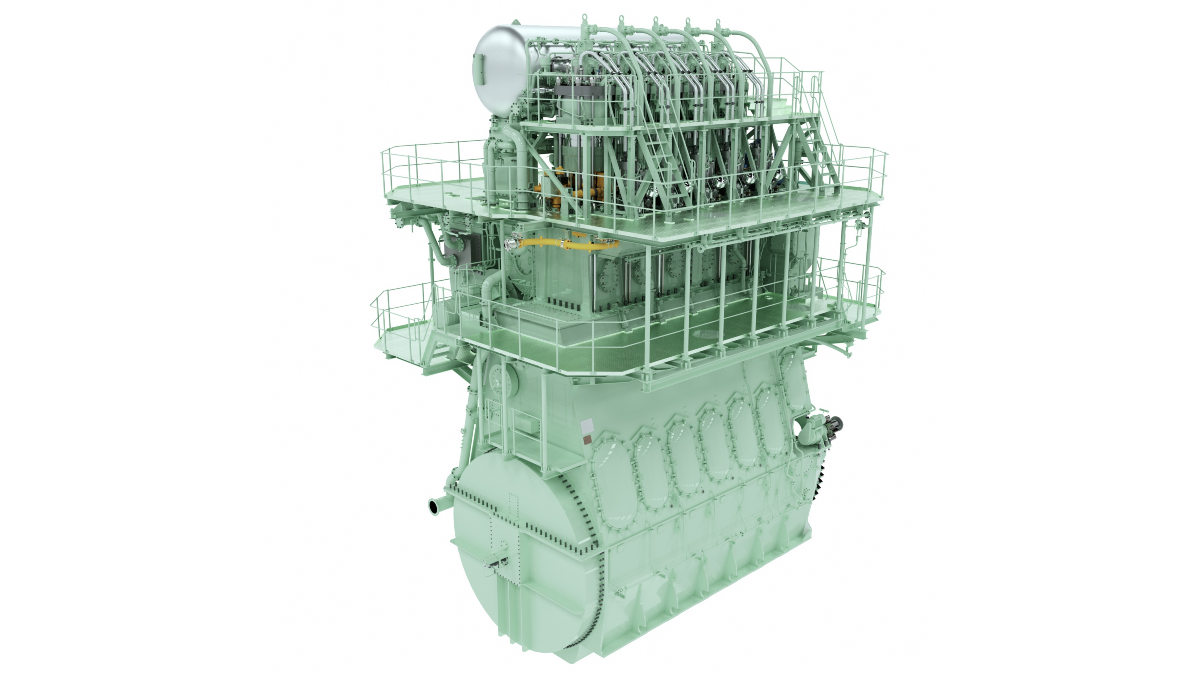
MAN ES cuts ME-GA from its two-stroke engine programme
Tightening IMO emissions regulations prompt engine designer to remove two-stroke, Otto-cycle LNG dual-fuel ME-GA from its engine programme


Citing forthcoming changes to IMO emissions regulations, MAN Energy Solutions has decided to pull the plug on its first low-pressure, LNG dual-fuel engine, ME-GA, just five years after announcing its development and three years after launch. The surprise announcement demonstrates how quickly shifting emissions regulations and navigating the waters of the transition from traditional marine fossil fuels to low- and zero-carbon fuels are treacherous for shipowners and suppliers alike.
In a letter sent to licensees and other stakeholders in October, MAN Energy Solutions noted it was standard practice to review its product portfolio.
“As part of this process, it is not uncommon for engines to be removed from the programme to align with our ongoing development strategies.”
Specifically, the Danish engine designer cited changes to IMO regulations, effective from 2027, that will mandate new environmental standards.
“With respect to the engine G70ME-C10.5-GA, our review of our product portfolio would call for significant technical updates and investments. Therefore, MAN ES has decided to no longer offer the engine G70ME-C10.5-GA.”
Methane slip
At issue appears to be methane slip – unburned methane (CH4) that escapes into the atmosphere during combustion.
Methane is a powerful greenhouse gas (GHG) – with 28 times the heat-trapping potential of carbon dioxide (CO2) on a 100-year timescale, according to the US Environmental Protection Agency.
IMO is developing guidelines to regulate methane emissions from international shipping, which are expected to enter into force in 2027. Additionally, the European Union’s FuelEU Maritime policy will begin regulating methane in 2025, and the EU’s Emissions Trading System (EU ETS) will require ships calling at European Union ports to pay for GHG emissions, including methane, starting in 2026.
The loss of the engine line is a tough blow for the Danish engine maker, which has invested hundreds of millions of euros in R&D to meet marine customer demand for low- and zero-carbon engine technology. Exact investment figures in developing the ME-GA were not publicly disclosed.
The low-pressure, Otto-cycle, two-stroke LNG dual-fuel engine was developed specifically for the LNG carrier market, targeting lower capex for owners, and as a rival product to WinGD’s X-DF engine.
MAN Energy Solution’s high-pressure, Diesel-cycle, two-stroke LNG dual-fuel engine, ME-GI, was already well established in the LNG carrier market and across multiple vessel segments.
The ME-GA burst on the scene when it was launched in April 2021, securing 100 engine orders in a matter of eight months. More than 260 engines have been ordered to date, with at least 40 in service on LNG carriers.
Each ME-GA engine comes equipped with exhaust gas reduction (EGR) that reduces methane-slip emissions by up to 50% compared with first-generation, Otto-cycle engines without EGR. The EGR also improves fuel efficiency in both gas and fuel-oil operation, actively reducing emissions and improving efficiency in both Tier II and Tier III.
Riviera’s Maritime Decarbonization Conference, Americas will be held in Houston, Texas, 4 December 2024. Click here to register your interest in this industry-leading event.
Related to this Story

Events
Offshore Support Journal Conference, Middle East 2025
09 Dec 2025DUBAI
Maritime Regulations Webinar Week
16 Dec 2025GMT - ONLINE
Maritime Decarbonization Conference, Americas 2026
22 Jan 2026HOUSTON
Offshore Wind Journal Conference 2026
02 Feb 2026London
© 2024 Riviera Maritime Media Ltd.


