


Business Sectors
Events
Offshore Support Journal Conference, Middle East 2025
 09 Dec 2025
 DUBAI
DUBAIContents
Register to read more articles.
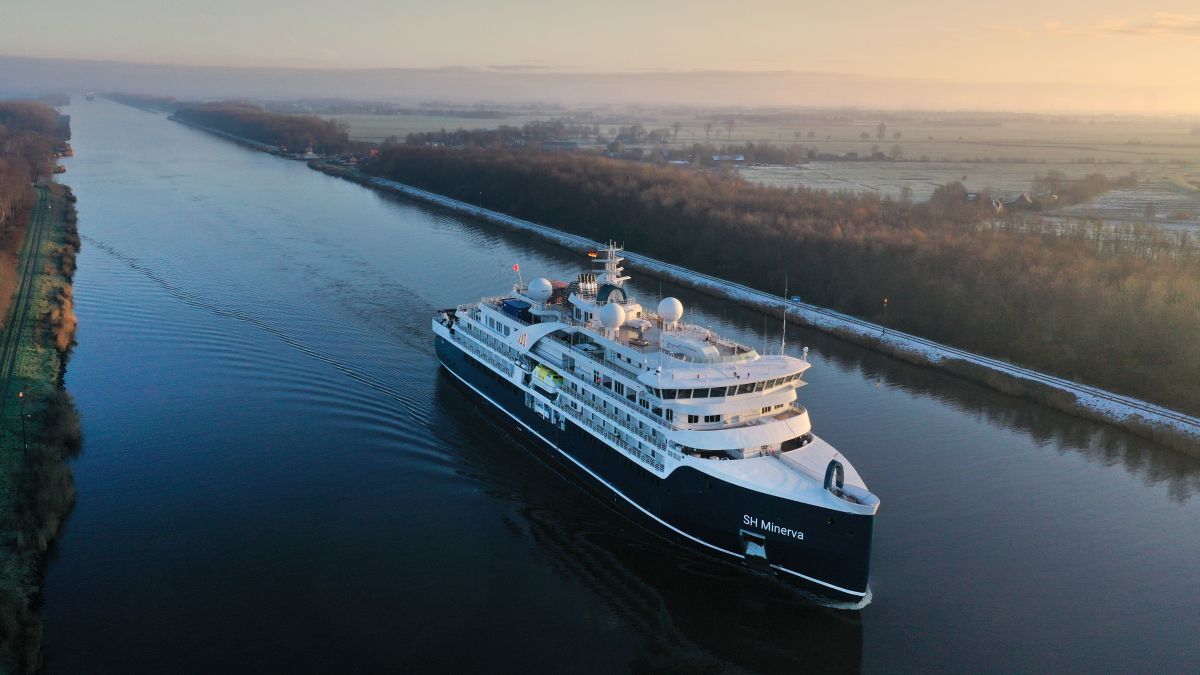
SH Minerva: built for remote and polar regions
Swan Hellenic chief executive Andrea Zito explains the technology behind the brand’s first cruise ship


Swan Hellenic’s SH Minerva has been built for the remote and polar regions it will sail in, with features including PC-5, safe return to port and a design that allows it to be upgraded to hybrid power.
The arrival of the new ship, which started on its maiden cultural expedition cruise of the Antarctic, a nine-day New Year celebration of discovery, symbolises the restart of the iconic Swan Hellenic brand, established 70 years ago. A group of entrepreneurs acquired the Swan Hellenic brand rights in 2020.
Aside from SH Minerva, Swan Hellenic has two other expedition cruise ships on its orderbook, all being built by Helsinki Shipyard.
The ethos of the new cruise ship and its brand is about cultural experience. Its chief executive Andrea Zito summed it up to Passenger Ship Technology in a previous article last year. “The common denominator is about the adventure and excitement of visiting remote places, and it is about cultural enrichment. We have small vessels and people are going to be immersed in the destination and travel deeply in terms of knowledge.”
Due to it visiting remote places, building the vessel with extra layers of safety was a primary focus, and led to the ship being classed to Polar Code 5 (PC-5) which allows year-round operations in the polar regions.
Layers of safety
Mr Zito tells PST, “From a technical point of view, it is one of the few expedition cruise ship vessels classed to PC-5. We want to operate in favourable seasons, however we decided on PC-5 to provide extra strength to the hull, propellers and appendages, because we want to travel longer than others, with a safety margin for our operations.”
It allows the cruise ship to navigate in maximum safety in ice. Mr Zito adds, “In tank tests it was capable of navigating 0.9 m of ice keeping six knots. In some areas we will operate in, like in Antarctica, the sea might close behind us because of the movement of ice and the wind. SH Minerva is capable of navigating in such conditions and this is extremely important for safety.”
To boost safety further, the ship has been classed as safe return to port. This is a mandatory measure for ships over 120 m, but as SH Minerva is under 120 m, this is a voluntary measure Swan Hellenic has applied.
Mr Zito explains, “We decided to do this as a voluntary measure because as we are operating in very remote areas, we want an additional layer of safety.”
The engineroom consists of an integrated system from Wärtsilä, from propeller to power conversion and the engines themselves.
Mr Zito comments, “It is a very modern, efficient and innovative diesel-electric system – a prototype using cutting-edge technology.”
There are four diesel generators, two in each engineroom and two propulsion motors. The diesel engines are Tier III and selective catalytic reactors are deployed, leading to lower NOx emissions.
The propulsion power totals 2.3 MW, and Mr Zito says, “We can guarantee a top speed of almost 16 knots which is quite exceptional for its class.
“The vessel has a very refined hydrodynamic design, and the performance at sea trials was outstanding and 10% better than the prediction in terms of power and consumption.”
Battery ready
SH Minerva has also been designed to be battery ready. Mr Zito expands, “The vessel is fitted to be upgraded to hybrid as the electric plant on board is designed to be fitted with a plug and play battery pack up to 3-MW power. We did not install this initially, as we are not 100% happy with the battery technology because it is still evolving and not yet mature.”
When batteries are installed, the cruise ship will be able to stay six hours in port with no emissions and sail for two to three hours at very low speed in marine sanctuaries, allowing it to be noiseless and emissions free.
Asked for a timeframe for when the batteries might be installed, Mr Zito estimates around three to four years. He adds, “We are working with a couple of suppliers and integrators. We have the space on board.”
Manoeuvrability and stability were important considerations and boosted using very large stabilisers – a pair of Mitsubishi oversized stabilisers. Mr Zito says, “These performed extremely well in sea trials and beat expectations. They are increasing passenger comfort.”
Indeed, SH Minerva has achieved the highest Lloyd’s Register comfort class for noise and vibration and “had an ample margin in this class in tests,” says Mr Zito.
Two Becker rudders in addition to one stern thruster of 750 kW and two bow thrusters of 500 kW each are deployed allowing crabbing and mooring with adverse winds up to 30 knots.
Elsewhere, dynamic positioning is used to allow the vessel to stay in position without needing to anchor in sensitive areas. “This is important from an environmental point of view as anchors are quite damaging for the seabed in some protected areas,” says Mr Zito.
Wärtsilä Transas navigation provides navigation radar from the bridge.
An Evac advanced generation wastewater treatment plant is deployed which deals with both black and grey water, allowing the vessel to be emissions free from a wastewater point of view.
Plastic is limited on board and the brand has decided not to deploy helicopters, to prevent noise disturbing the ocean wildlife.
12 zodiacs for expeditions are stored on open deck and aft.
Elegant interior design
The ship was designed by Tillberg Design of Sweden. Mr Zito says, “The instruction we gave was to have a vessel at a very high and elegant but unintrusive standard and the result has beaten expectations. There are a lot of windows for guests to appreciate the scenery. We have great open decks and in front have a ‘swan nest’, which is an observation deck placed far forward. Guests can have a good look at the waves and wildlife such as orcas and dolphins.”
An important area is the multi-functional area for lecturers. “The core of our brand is cultural cruising, so we carry high-quality speakers with a sophisticated recording and filming system so guests can be in the lounge or can watch from their rooms,” says Mr Zito.
The ratio of guests versus crew is high, at 160 passengers with 120 crew members. Mr Zito says, “The crew is fantastic, with a high standard and a lot of experience.”
Reflecting on the previous Minerva cruise vessel, which ran under the old Swan Hellenic brand, Mr Zito says the new SH Minerva combines the comfortable and authentic qualities of the previous vessel with a more international theme and brand.
He sums up, “What we want to create is very ambitious.”
Marine Propulsion Lubricants Webinar Week will be held from 24 January 2022. Register your interest here.
Related to this Story
Events
Offshore Support Journal Conference, Middle East 2025
09 Dec 2025DUBAI
Maritime Regulations Webinar Week
16 Dec 2025GMT - ONLINE
Maritime Decarbonization Conference, Americas 2026
22 Jan 2026HOUSTON
Offshore Wind Journal Conference 2026
02 Feb 2026London
© 2024 Riviera Maritime Media Ltd.


