


Business Sectors
Business Sectors
Events
Contents

Register to read more articles.
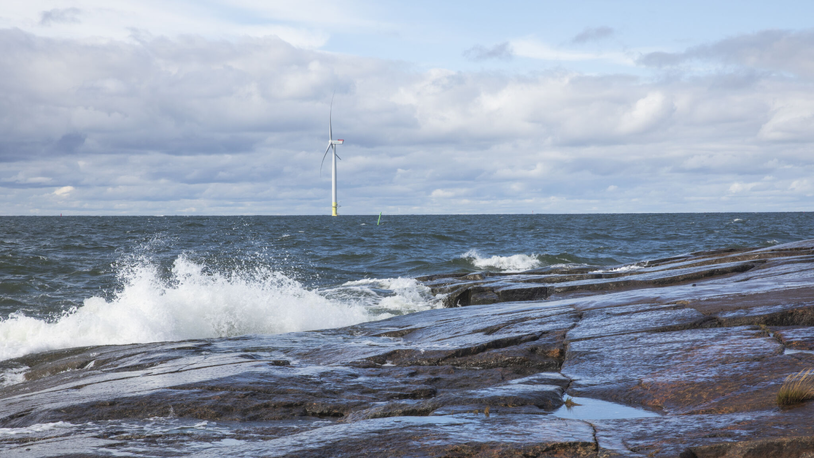
Finland to hold auction for offshore windfarms in its EEZ
Finland’s Energy Authority (Energiavirasto) has confirmed that it is preparing the country’s first tender for offshore wind in its exclusive economic zone (EEZ)


Energiavirasto said it aims to launch a competitive process "in 2026" but did not elaborate on exactly when it will take place. At the time of writing, it had not replied to questions from OWJ asking for clarification. The statement said the planned offshore windfarms ‘"are large in size" but did not indicate how much capacity might be supported in the auction.
Energiavirasto said it aims to publish a procurement notice regarding the auction mid-year. However, the tender can only take place once a decree specifying the rules for competitive tendering is in force and wind energy areas identified by the Finnish government have become legally binding.
In a statement, the Energiavirasto said, “We are preparing a tender for offshore wind areas in the Finnish exclusive economic zone. The tender will be organised in accordance with the Act on Offshore Wind Power in the Exclusive Economic Zone. The winner will be decided based on the offered exploitation fee and qualitative criteria.”
Energiavirasto tendering manager Roland Magnusson said, “The winner will have the right to apply for an exploitation permit from the government, which gives them the right to conduct research in the area and utilise it for an offshore wind project.”
Energiavirasto said the suitability of four areas for offshore wind has been assessed in an environmental impact assessment process. Two of the areas are located in the Bay of Bothnia and two in the Bothnian Sea. The process of assessing them is expected to be completed this spring, after which the government will make a decision on which areas to be put up for auction.
Development of windfarms in Finland’s EEZ has attracted plenty of interest, with 23 research permits having been applied for, with 20 granted, some of which cover partly overlapping areas.
Responding to the announcement, AFRY vice president and head of renewables and energy storage Jonathan Sistonen said there had been a “clear shift” toward a structured, state‑led framework for offshore wind development.
“Under the new legislation, the Finnish government will designate suitable offshore wind areas, and Energiavirasto will organise transparent and non‑discriminatory tenders. This approach brings greater predictability to early‑stage projects and aligns Finland with offshore wind models used in more mature European markets,” he said.
“What stands out from Finland’s approach so far is that there is clear regulatory direction and a defined legal framework for offshore wind in the EEZ, replacing the earlier open‑door approach.”
Mr Sistonen said structured market design, with state‑led area selection combined with competitive tendering, was another benefit of the Finnish government’s approach. He said the country also has strong delivery fundamentals, including robust port infrastructure along the west coast, solid steel and foundation fabrication capability, and strong engineering expertise.
Finland also has what he described as “cold‑climate readiness” with proven national capability in FEED, seabed characterisation, ice‑load modelling, and cold‑climate foundation design.“Although offshore wind in Finland is still at an early stage, the building blocks now in place are significant,” Mr Sistonen concluded.
“Experience from other markets shows that early clarity on rules, roles, and processes can be decisive. The upcoming EEZ tender will be an important moment to test whether recent regulatory and market‑design changes can translate earlier interest into bankable projects and initial deployment, particularly under the unique conditions of the Baltic.”
Sign up for Riviera’s series of technical and operational webinars and conferences:
- Register to attend by visiting our events page.
- Watch recordings from all of our webinars in the webinar library.

Related to this Story

Events

© 2026 Riviera Maritime Media Ltd.


