


Business Sectors
Business Sectors
Events
Contents

Tanker reported hijacked by six armed people in Gulf of Aden
The hijackers are assessed to be in control of the vessel and redirecting it towards Somalia


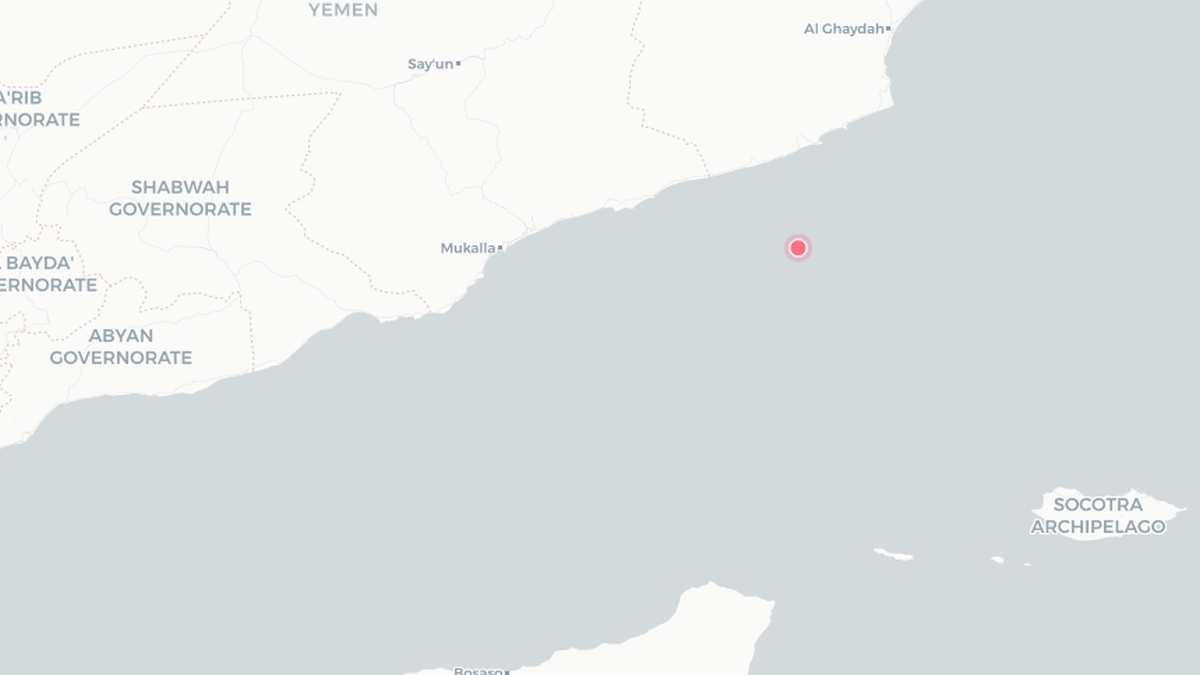
A 25-year-old, 32,238-DWT tanker with unclear ownership and a false Eritrean flag has reportedly been hijacked approximately 136 nautical miles east of Al Mukalla, Yemen.
The Royal Navy-led United Kingdom Maritime Trade Operations (UKMTO) Centre reported the hijacking based on a distress call and later updated with what it said was "confirmation that the tanker has been boarded by six armed persons who are now in control of the vessel and redirecting to Somalia".
UK-based maritime security firm Vanguard Tech first reported a vessel sounding a distress call over VHF Channel 16 two times, between 10:10 and 10:12, local time. The distress broadcasts claimed the ship was under pirate attack and said the Indian Navy had attempted to make contact, but did not receive a response.
Several hours later, Vanguard and Greece-based Marisks named the vessel as Seamull, which is "also known as Sibu 1," according to Vanguard.
Marisks said the vessel is subject to US sanctions for the transport of Iranian petroleum. The Open Sanctions database lists Seamull as under sanctions by the US’ Office of Foreign Assets Control (OFAC), beginning in December 2025.
Vanguard, Marisks, UK-based Ambrey Intelligence and Greece-based Diaplous Group all reported that the hijacked tanker had been approached by an ’unauthorised’ vessel from which pirates had boarded and taken control of the vessel.
Multiple reports said that the status of the vessel and crew on board remains unconfirmed and uncertain.
"At the time of writing, the vessel was understood to have been redirected and transiting toward Somalia. No casualties had been reported. Regional authorities were investigating the incident," Ambrey’s report said.
Marisks said the vessel’s AIS destination had been subsequently changed to “PIRATES ONBOARD HELP”.`
"This incident reinforces the significant resurgence of piracy and armed maritime activity across the Gulf of Aden and wider Somali basin. It follows the hijackings of Eureka on 2 May, Asana on 17 July and Lutuf on 17 August, alongside multiple suspicious approaches, armed-skiff sightings and attempted attacks," Marisks said.
Cameroon-flagged general cargo vessel Lutuf was first reported hijacked on 17 August by UKMTO.
Marisks cited reports that the eight armed pirates who hijacked Lutuf had been working from a ’mothership’, a previously hijacked vessel called Sward.
The St Kitts and Nevis-flagged general cargo ship acting as the mothership for the Somali Pirate Action Groups (PAG) is listed in the Equasis database as 8,501 DWT and under ownership of a Marshall Islands registered company, Asena Shipping.
The combined use of a mothership and the PAG’s ability to hijack Lutuf despite the presence of an armed security team on board represents a significant evolution in the capabilities of the pirates, according to Marisks’ analysis.
Marisks noted that there are understood to be a total of 10 hostages on Lutuf, including two armed security personnel.
"The crew reportedly mustered in the citadel following the boarding. While there are conflicting accounts regarding whether an exchange of fire occurred between the [armed security team] and attackers, the pirates subsequently breached the citadel, removed the crew, moved them to the bridge and assumed control of the vessel," Marisks reported.
The security company’s shore-based security personnel reportedly retained access to onboard CCTV, which showed approximately eight armed individuals carrying AK-47-type weapons onboard.
The speed of the attack by the pirates indicates that reaction time, lookout effectiveness, physical barriers, vessel speed, routing and early detection remain as important as the presence of weapons onboard, according to Marisks.
Sign up for Riviera’s series of technical and operational webinars and conferences:
- Register to attend by visiting our events page.
- Watch recordings from all of our webinars in the webinar library.



Related to this Story


Events

© 2026 Riviera Maritime Media Ltd.


