


Business Sectors
Business Sectors
Events
Contents

Register to read more articles.
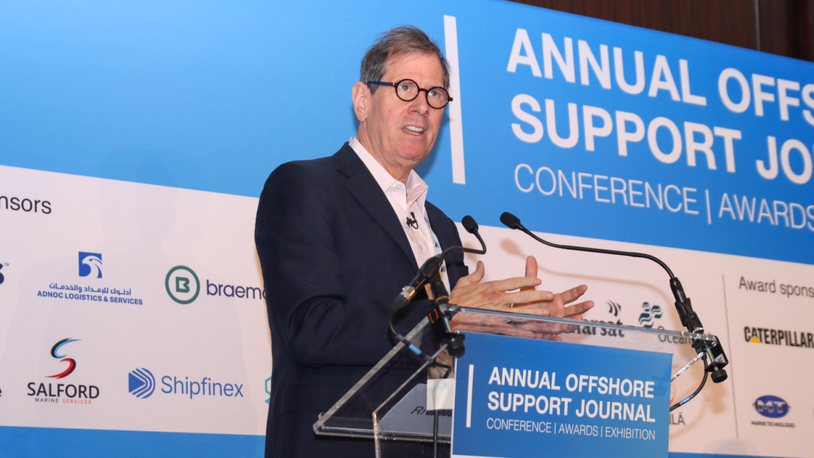
Tidewater boss Quintin Kneen says Q2 ‘outperformed his expectations’
Tidewater president and chief executive Quintin Kneen says the company’s second quarter of 2026 “came in nicely above expectations,” driven by revenue outperformance and lower than expected operating expenses


In the quarter, the company had revenue of US$342.3M, a 4.9% increase compared to the first quarter of 2026, and adjusted EBITDA of US$133.8M.
Announcing Q2 2026 results, Mr Kneen said, “Day rate and utilization both outperformed, with revenue for the quarter coming in at US$342.3 million. Gross margin of 46.9% came in well ahead of our expectations due to the increase in revenue and lower than anticipated operating expenses, but was down modestly from the first quarter due to costs associated with the conflict in the Middle East.
“Realized day rates improved materially during the quarter, up US$655 per day, representing the largest sequential day rate improvement since the third quarter of 2024.” Mr Kneen said the improvement in day rates was driven primarily by Tidewater’s largest class of platform supply vessels, with day rate momentum realized across multiple regions. The company said day rates for new term contracts also increased.
Mr Kneen noted that, to date, Tidewater has not experienced material activity disruption in the Middle East, and realized its highest utilization and day rate in recent memory during the second quarter. “From a cost perspective,” he explained, “we incurred less costs in the quarter than anticipated, though our costs do remain somewhat elevated compared to our cost structure prior to the commencement of the conflict.”
Mr Kneen said the longer-term outlook for the market remains constructive. “Our conversations with customers continue to point to a broad pick-up in offshore activity as we progress through this year and into 2027, with the pace of tendering for new contracts and opportunities increasing.
“We believe that the opportunity set we’re currently seeing is a function of projects already contemplated for commencement and new projects contemplated in response to the reshaping of the global energy supply chain that have yet to be developed and commercialized.
“We anticipate that over time there will be incremental projects developed in response to regional energy security considerations, but the lead time to these projects is often measured in years rather than months, solidifying the long-term durability of the offshore cycle.
“We remain confident that the geographic diversification of our fleet and an established onshore infrastructure in every major offshore market globally provides us a distinct advantage to capitalize on the broad-based offshore activity increase.” Overall, the company expects that global offshore investment will accelerate through 2027 and 2028, driven by deepwater activity.
Mr Kneen said the company now expects to close the acquisition of Wilson Sons Ultratug around 1 September 2026.



Related to this Story
Events

© 2026 Riviera Maritime Media Ltd.


