


Business Sectors
Events

Floating energy: successfully unlocking stranded gas using FLNGs and FSRUs
 24 Feb 2026
 GMT - ONLINE
Contents
Register to read more articles.
VLCC surge lifts tanker rates 42% in a week
Clarksons reported VLCC earnings up 42% week on week, with product segments mixed as market sentiment tightened in key basins


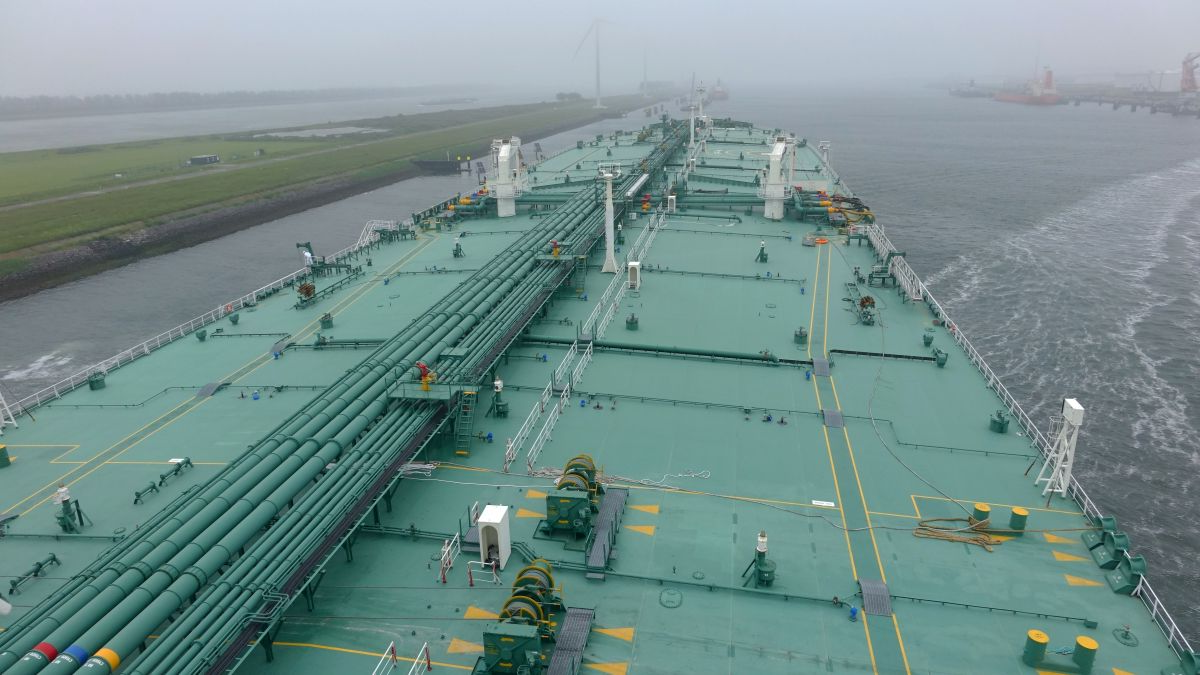
Clarksons’ latest Shipping Intelligence Weekly recorded a sharp upswing in crude-tanker earnings, led by very large crude carriers (VLCCs), while product tanker performance diverged across routes and sizes.
Average VLCC earnings rose 42% week on week to US$117,541/day, the highest since April 2020, supported by firmer sentiment, a tighter position list and an influx of Middle East Gulf (MEG) cargoes.
Clarksons noted that enquiry slowed late in the week as charterers held back, but owners sought to preserve momentum.
Suezmax tankers also firmed, with weighted-average earnings up 19% week on week. West Africa–United Kingdom Continent (UKC) trades reached WS 150, while East of Suez enquiry strengthened into the weekend.
Aframax tankers were broadly firm, with cross-UKC edging to WS 160 and US Gulf (USG)–UKC rising, though cross-Mediterranean held at WS 205 amid limited prompt tonnage.
Clean product markets presented a mixed picture after long range 2 (LR2) MEG–Japan earnings climbed 19% week on week to about US$31,600/day, aided by strength in the crude market.
Long range 1 (LR1) tankers firmed modestly and in the Atlantic, medium range (MR) tankers were two-speed: UKC–US Atlantic Coast (USAC) improved (up 92% week on week on the 37,000-tonne leg), while USG-origin routes softened.
East of Suez, charterers steadily cleared MR tonnage, with the LR segments drawing some support from larger sizes
Dirty product Panamax tankers averages increased 7% week on week as Caribs–USG strengthened.
Beyond tankers, Clarksons’ ClarkSea Index reached a year-to-date high of US$31,216/day, up 5% week on week and 28% above the 10-year trend, reflecting firmer conditions in several segments.
LNG carrier spot rates for a 174,000-m³ two-stroke engine carrier jumped 62% week on week to US$49,750/day on Atlantic tightness, while in LPG, very large gas carrier returns rebounded in the West.
Policy developments also had an impact and Clarksons reported the US–China “trade-war truce” included a reduction of bilateral tariffs and a one-year suspension of recently implemented port fees, a change it suggested could unwind some fee-related deployment shifts even as participants remained cautious about further moves.
Riviera’s Tankers 2030 Conference, Singapore will be held 19-20 November 2025. Use this link for more information and to register for the event.


Related to this Story

Events
Floating energy: successfully unlocking stranded gas using FLNGs and FSRUs
24 Feb 2026GMT - ONLINE
© 2024 Riviera Maritime Media Ltd.


