


Business Sectors
Business Sectors
Events
Contents

Register to read more articles.
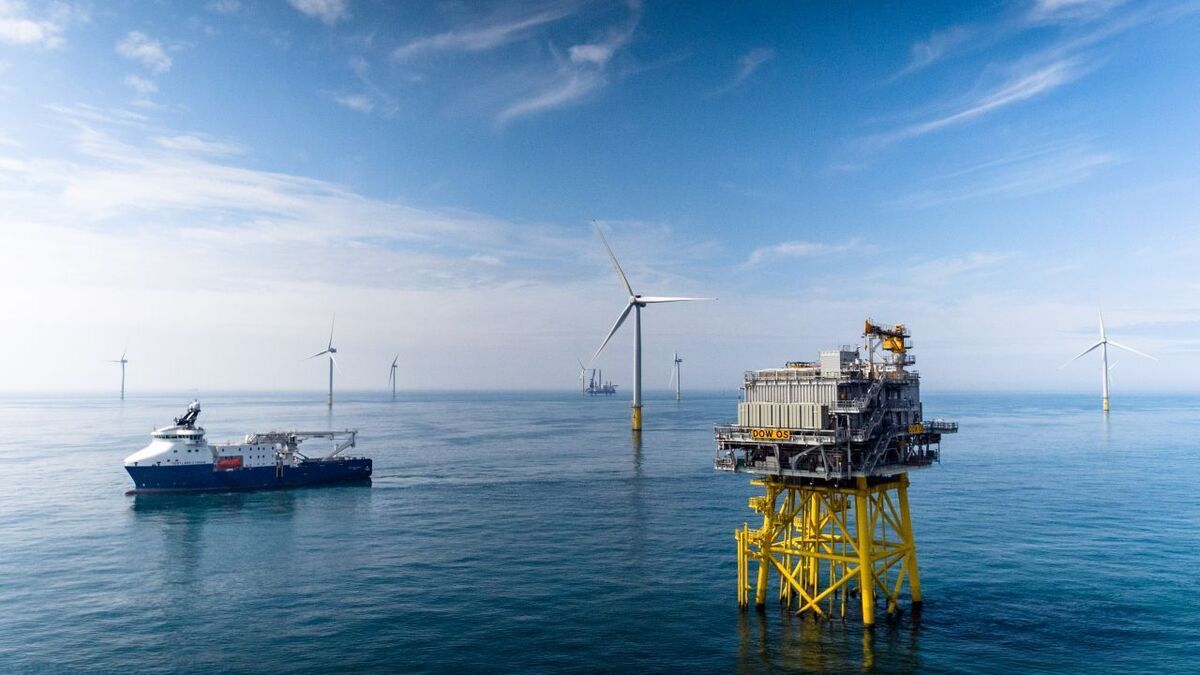
North Sea countries join forces to protect offshore infrastructure
Six countries bordering the North Sea have agreed a declaration to protect and enhance the resilience of offshore infrastructure


At the North Sea Summit on 24 April 2023 in Belgium, national security advisers from nine countries met to discuss better co-operation on the security of energy and telecommunications infrastructure. This resulted in a joint declaration on co-operation regarding protection of infrastructure in the North Sea. That declaration was formally signed on 9 April 2024 by six North Sea countries: Belgium, the Netherlands, Germany, Norway, the UK and Denmark.
The declaration sets out an agreement to co-operate and share information on the protection of underwater infrastructure such as cables for offshore windfarms, fibre optic cables, gas and oil pipelines and interconnectors that transmit power generated offshore between countries.
“Due to the interconnected nature of subsea infrastructure across North Sea territories, the need for a regional approach to its security and protection is clear,” said the signatories to the declaration. “Adopting a joint approach when it comes to resilience and security is in the interest of all North Sea countries. These shared interests are now confirmed by Belgium, the Netherlands, Germany, Norway, the UK and Denmark with the signing of the declaration. The aim is to join forces in order to take appropriate measures and exchange information and best practice. The declaration focuses on resilience and prevention and is complementary to NATO’s endeavours, which all participants involved are part of.”
Belgian Minister for the North Sea Paul Van Tigchelt said, “The first condition for energy independence is securing energy independence. Threats and challenges have increased considerably in recent months.
“At the North Sea Summit last year in Ostend, we decided to work together to ensure that data cables, oil and gas pipelines and windfarms will be secured at the same level.” The Minister said the six countries will report incidents on a secure platform. He explained that the six countries will also work closely with institutions such as NATO and EU. “Together we can make a difference and protect our critical infrastructure at sea,” he said.
German Minister of State at the Federal Foreign Office, Tobias Lindner said, “With its many ports and terminals, subsea pipelines and cables, as well as offshore windfarms, the North Sea is one of the areas with the highest density of maritime infrastructure.
“It is becoming increasingly important to securely provide Europe with sustainable energy. This makes it all the more important that we co-operate with neighbouring countries in order to protect critical infrastructure. We have taken an important step, deepening co-operation, which we are also driving forward in the EU and NATO.”
UK Minister for Nuclear and Renewables Andrew Bowie said, “The North Sea is the powerhouse driving Europe’s renewable and net-zero ambitions, helping to bolster energy security on the continent. It is crucial that we protect critical energy infrastructure now and in the future. Strengthening ties with northern European neighbours will do just that, ensuring the infrastructure is resilient against those who may seek to threaten or disrupt it.”
Sign up for Riviera’s series of technical and operational webinars and conferences:
- Register to attend by visiting our events page.
- Watch recordings from all of our webinars in the webinar library.
Related to this Story


Events

© 2026 Riviera Maritime Media Ltd.


