


Business Sectors
Business Sectors
Events
Contents

Register to read more articles.

ABS highlights growing demand for floating wind support vessels
Demand for vessels to support floating offshore windfarms is expected to strengthen in the late 2020s, and the current fleet may not be best-suited to responding to that demand


Availability constraints could emerge in some segments as early as 2029, according to a new report from ABS.
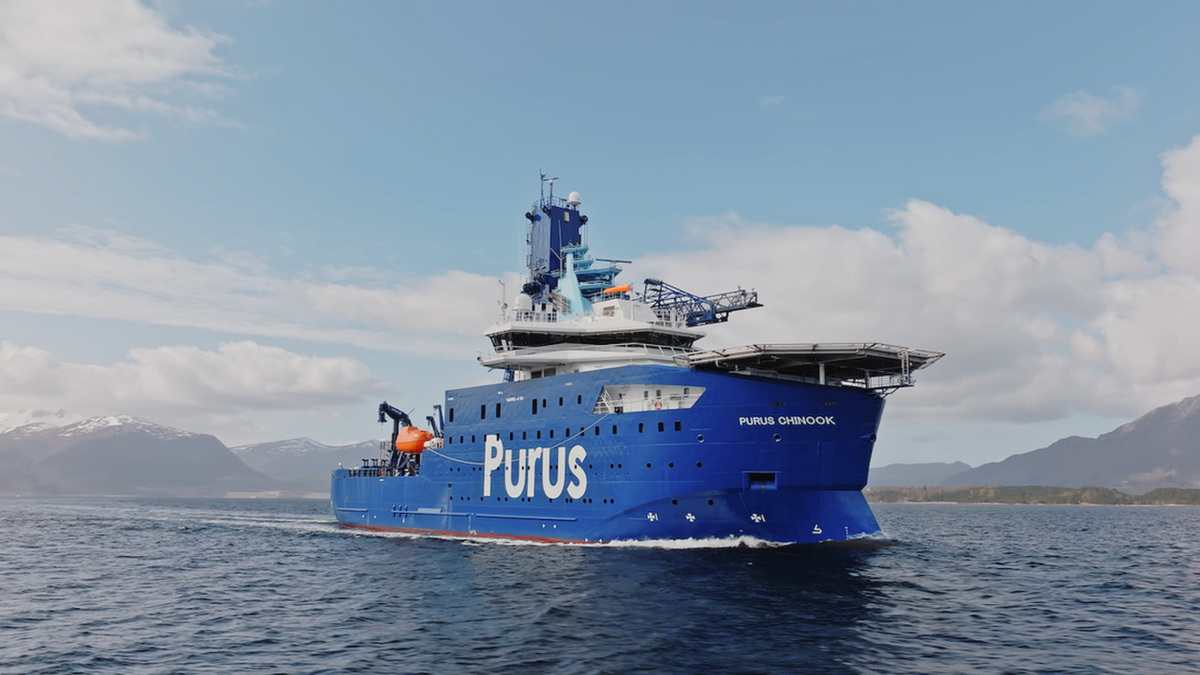
Produced by ABS in collaboration with Intelatus Global Partners, ‘Floating Offshore Wind and the Vessels That Support It’ examines the role large anchor handling tug supply vessels (AHTS) and multipurpose support vessels (MPSVs) are expected to play in project execution, as well as the implications for vessel suitability, upgrades and future fleet needs.
“Floating offshore wind presents a distinct set of challenges, particularly around vessel capability, mooring systems and project execution,” said ABS vice president global offshore markets Rob Langford.
“This report highlights where existing offshore experience can be applied, while also identifying the areas where planning, investment and technical readiness will be increasingly important as projects develop.”
The report indicates floating wind projects are expected to increase demand for vessels supporting towing, mooring installation, hook-up and cable operations. As projects advance in Europe and Asia-Pacific, the industry will need enough vessels capable of supporting those activities.
For owners and operators, the report highlights the need to assess whether existing offshore vessels can be adapted for floating wind service or whether upgraded or purpose-built vessels may be needed for certain applications.
The report noted that much of the existing fleet was developed to support offshore oil and gas activity, including drilling rigs, floating production systems and subsea infrastructure. Although technically capable of supporting floating wind projects, many of the large oil and gas support vessels were not built to accommodate the sizes and volumes of floating wind components.
The authors of the report said floating wind will require vessels capable of loading more mooring components per project compared to the requirements of offshore oil and gas. They will need to be able to handle larger anchors, heavier and larger diameter chain and, in some cases, large volumes of large diameter fibre rope handling capability.
As a result, vessel suitability, deck capacity, chain locker and handling capacity, number and capacity of winches, active heave compensated crane capacity, and offshore construction functionality will become increasingly important differentiators as projects move from demonstration to commercial execution.




Related to this Story


Events

Maritime Regulations Webinar Week
 16 Dec 2025
 GMT - ONLINE

Floating energy: successfully unlocking stranded gas using FLNGs and FSRUs
24 Feb 2026GMT - ONLINE
© 2026 Riviera Maritime Media Ltd.


