


Business Sectors
Business Sectors
Events
Contents

Register to read more articles.
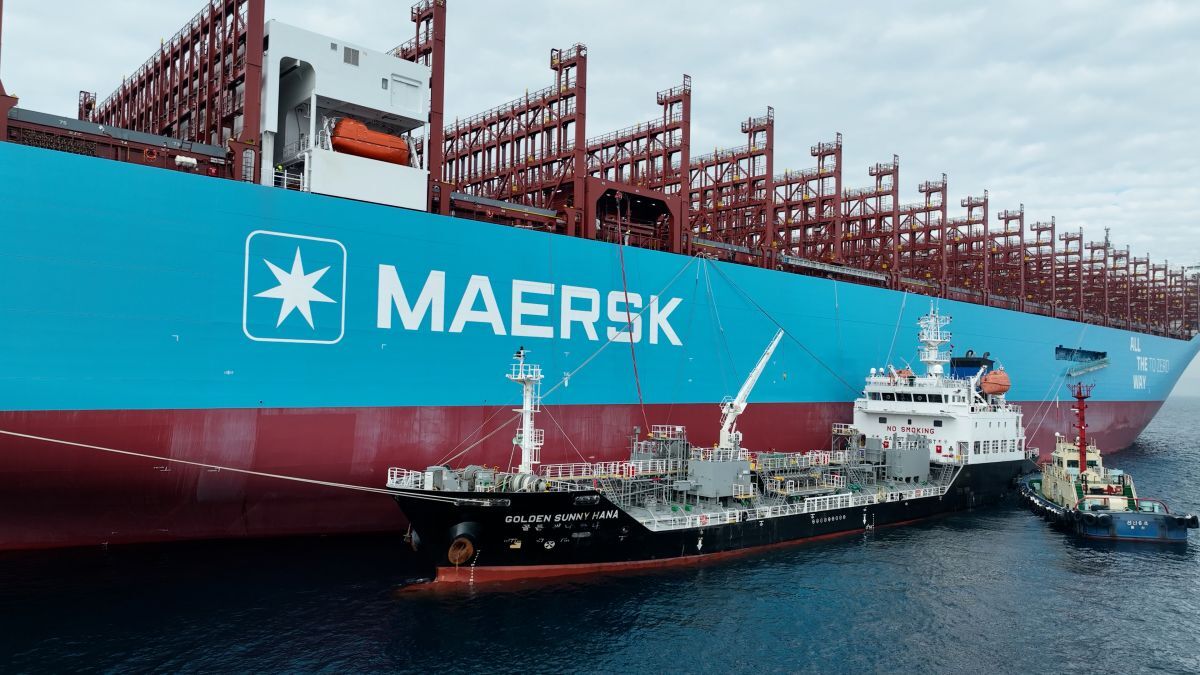
Clarksons: 6% of world fleet tonnage now 'alternative fuel capable'
Of vessels with emissions-related improvements, 31% have been fitted with so-called energy-saving technologies and 32% with ‘eco’ engines


Clarkson Research’s biannual forecast for global shipping markets, Shipping Review & Outlook, has found broadly positive market conditions across the industry’s sectors.
The shipping industry analysts pointed to market pinch points including "geo-political disruption to trade patterns and increasing emissions regulation" as drivers.
Both total shipbuilding output and newbuild prices increased by 10% in 2023, according to a February report from the brokerage, and highlight figures from last year include China’s shipbuilding industry reaching half of total yard output and Clarksons’ definition of alternative-fuelled vessels nearing 50% of total orderbook tonnage.
Trade volumes grew by 3% to reach 12.4Bn tonnes in 2023 with Chinese trade particularly supportive, and Clarksons’ projected further growth of 2% to 12.6Bn tonnes in 2024.
The broker noted underlying trends towards longer-haul voyages in the Atlantic oil and iron ore export sectors, and the events in Red Sea where vessels are being targeted by Yemen’s Houthi militants have amplified the “distance kicker” to overall shipping demand. Last month, Frontline Tankers boss Lars Barstad said the disturbances and the resulting diversions could actually benefit the larger vessel classes, “offering economies of scale as oil and products move around the Cape of Good Hope.”
Traffic through the Red Sea accounts for about 10% of global trade but has seen transits decline by 70% as vessels re-route via the Cape, extending voyage distances, corroborated by a recent post on X from industry money manager Joakim Hannisdahl. Red Sea rerouteing has also offered at least a brief rates reprieve to a container market that suffered record lows last year.
Updated data on #shipping #SuezCanal transits via the #RedSea pic.twitter.com/Kl2lPLAu5w
— Joakim Hannisdahl (@JHannisdahl)Updated data on #shipping #SuezCanal transits via the #RedSea pic.twitter.com/Kl2lPLAu5w
— Joakim Hannisdahl (@JHannisdahl) March 27, 2024
"We estimate the diversions are today generating additional global vessel demand of 3% (equivalent to an entire year of typical trade growth), increasing to 11% for the container sector alone. Restrictions on transits through the Panama Canal (2.5% of global trade) due to low water levels have also been impacted, with tonnage transits down a third. And the tonne-mile impacts of redistributed Russian oil and gas exports (and European imports) also continue. In our base case (for the moment factoring Red Sea disruption across the first half of the year) global tonne-mile trade grows by 3.9% this year (2023: 4.6%), continuing a trend of outpacing expansion in tonnes," the Clarksons report said.
Clarksons said it expects newbuild orders to continue to come in, categorising interest levels from the tanker sector as “red hot”, and noting ongoing "active" ordering of gas carriers and broad environmental fleet renewal programmes being enacted by cargo and and liner companies.
Through the introduction of a carbon price mechanism – via the European Union’s legislation extending the Emissions Transfer Scheme (EU ETS) to the maritime sector – Clarksons said it expected a bill of US$6Bn by 2026 and further spending from shipowners to improve vessel and fleet environmental performance.
"We also estimate that last year 65% of the deepsea cargo fleet was A-C rated under CII (35% D-E). We expect impacts ahead on speed trends, [energy-saving technology] retrofits and ‘tiering’ of markets," the report said. "Green technology uptake continues with 6% of fleet [gross tonnage] now alternative fuel capable (50% of orderbook), 31% fitted with [energy-saving technology] and 32% with ‘eco’ engines. Significant fleet renewal is expected in the coming years as the fleet ages."
Shipbuilding slot availability is very tight, with yards averaging 3.5 years of forward cover for shipbuilding contracts and prices up 40% since 2020. Recycling has been limited while the sale and purchase markets have been very active, Clarksons said. Older tonnage that would otherwise have been sold for scrap has found new employment at a premium. Overall spot freight rates are double early December 2023 levels with charter rates up 37%. Data from shipowners’ association Bimco shows an increase of 41% on the same period, while average time charter durations have been extended by three months.
Click here to read the latest Bulk news and follow the International Bulk Shipping Community for exclusive content and offers.
Visit our Bulk webinar library to explore our highly successful Bulk Carriers Webinar Series.
The International Bulk Shipping Conference 2024 will discuss critical issues shaping the world’s largest shipping sector. Register your interest to learn more about this event.




Related to this Story

Events

Maritime Regulations Webinar Week
 16 Dec 2025
 GMT - ONLINE
Floating energy: successfully unlocking stranded gas using FLNGs and FSRUs
24 Feb 2026GMT - ONLINE
© 2026 Riviera Maritime Media Ltd.


