


Business Sectors
Business Sectors
Events
Contents

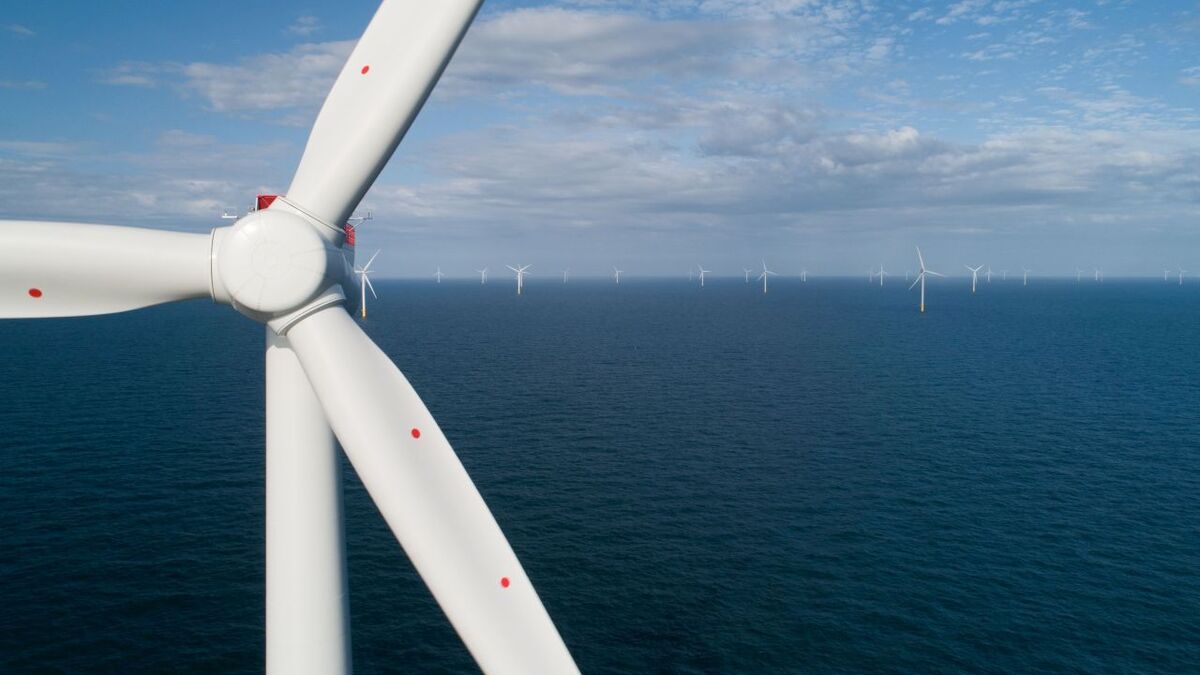
Europe unveils strategy for 25-fold increase in offshore wind capacity
The European Commission has launched its much-anticipated Offshore Renewables Strategy, a document that sets goals for a massive increase in the continent’s offshore wind capacity


The strategy foresees 60 GW of offshore wind in the EU by 2030 and 300 GW by 2050. Europe currently has around 12 GW of offshore wind capacity.
Under the strategy, offshore wind is set to be the number one source of electricity Europe consumes by around 2040.
The European Commission believes that achieving these objectives would not only bring significant benefits in terms of decarbonisation of electricity generation, but also important co-benefits in terms of jobs and growth, contributing to the post-Covid 19 recovery.
It believes that the scaling up and development of the offshore wind industry would occupy less than 3% of the European maritime space and can be achieved in a way that is compatible with “strong protection of the environment and biodiversity.”
The strategy describes offshore wind as a story of “undisputed European technological and industrial leadership” and highlights “vast potential” in Europe’s seas – from the North Sea and Baltic to the Black Sea, and from the Atlantic to the Mediterranean.
“Nonetheless,” it says, “it is a very challenging horizon… that offshore renewable energy capacity should be multiplied by 25 times by 2050.” The investment needed is estimated up to €789Bn (US$933Bn).
“Going for 300 GW of wind by 2050 means a massive change of scale for the sector… at a speed that has no equivalent in any other energy technologies in the past,” the strategy says.
Today 3 GW of capacity are added per year, a rate that is expected to reach 7 GW after 2030. “Such a pace of change requires overcoming a number of regulatory and practical obstacles and ensuring that throughout the supply chain all players can step up and sustain the expected increase in rates of deployment.”
The strategy says market forces, technological advances and price development will continue to drive offshore renewable energy growth in the coming years, but greater involvement of the EU and member states is needed. Under stated policies, the current and projected installation pace would lead to only approximately 90 GW in 2050.
To change gear, the strategy says, the EU and member states should provide a long-term framework for business and investors and promote the harmonious coexistence of offshore installations with other uses of the sea, without negatively impacting the environment and biodiversity.
To meet such ambitious targets, the EU and member states will also need to facilitate grid infrastructure development, enhance cross-border co-operation and co-ordination, provide research funding, promote the competitiveness and resilience of the entire EU supply chain and encourage it to fully leverage its export potential on global markets.
To achieve this pace of growth, much emphasis will also need to be placed on marine spatial planning and on the development marine spatial plans (MSPs). The Commission plans to work together with member states to integrate offshore wind into national maritime plans, which are to be published in March 2021. It will also facilitate effective cross-border co-operation between states in each sea basin in the preparation of MSPs and support multi-use pilot projects with states and regional organisations and foster the development of a common, holistic approach to MSPs. In parallel with the development of the offshore wind strategy, the Commission has presented a guidance document on wind energy developments and EU Nature Legislation.
Responding, WindEurope said it welcomed the Offshore Renewable Energy Strategy and said the European wind industry is ’ready to deliver.’ However, it also noted that “beefing up offshore wind requires large-scale investment in ports, grids and the supply chain.”
“A 25-fold increase in offshore wind requires major investment in infrastructure. Huge investments are needed in offshore grid connections and in the reinforcements of onshore grids,” WindEurope said.
“Ports need €6.5Bn of investment over the next 10 years. They need extensive space, heavy loading quays and deep berths. Ports are the hubs for operation and maintenance of offshore windfarms and they will become the assembly base for floating offshore wind.”
WindEurope said Europe also needs a sound industrial policy to expand its offshore wind supply chain. Today the supply chain produces 3 GW of turbines a year; in the future it will need to produce 18 GW.
“Innovation and trade policy need to be right too,” WindEurope said. “Offshore wind is now taking off in Asia and will do shortly in the US. This presents additional export opportunities for the European wind industry.”
WindEurope chief executive Giles Dickson said, “This is a very good strategy. It confirms the vision for offshore wind to be Europe’s number one source of electricity. It is also spot on in recognising the necessary investments to deliver that – in grids, ports and the supply chain.
“And it identifies all the right policies that will drive those investments: industrial policy; state aid rules; and the mechanisms to ensure predictable revenues for offshore windfarm developers at least cost to society.
“Offshore wind is cheap now but it requires high upfront investments. So minimising financing costs is crucial to keeping overall costs low. Revenue stabilisation is central to this. If banks see stable revenues they lend at low levels of interest.”
Mr Dickson also highlighted the key role for the contract for difference (CfD) mechanism, which many countries now use to finance offshore wind. “”CfDs are the best mechanism,” Mr Dickson said. “Not least as it reduces costs for governments: they pay out but the windfarms pay them back when prices are high. It is very good the strategy highlights the importance of revenue stabilisation.”
WindEurope also highlighted the employment opportunities growth in offshore wind capacity will bring and its ability to help economic recovery. “77,000 people work in offshore wind in Europe today. That will be 200,000 if governments deliver on their offshore wind plans for 2030,” it said. “Each new offshore wind turbine generates €15M of economic activity. The EU Recovery Plan can help support the necessary infrastructure investments, notably in grids and ports. Member states should reflect this in their recovery and resilience plans.”
Mr Dickson also highlighted the way the strategy provides an enabling framework for offshore windfarms connected to two or more countries. “These so-called ‘hybrid’ offshore windfarms will play an important role. They save money and space and improve energy flows between countries and the enabling framework for them must be implemented as soon as possible,” he said. Up to 7 GW of offshore hybrids are already in the pipeline.
“Another good thing about the strategy is that it is a truly European strategy that will enable all European coasts to benefit from offshore wind,” Mr Dickson said. “It supports the further expansion of floating offshore wind, which will be needed for the deeper waters in the Atlantic, Mediterranean and Black Sea, which will help islands too. Europe has two small floating windfarms today but will have 300 MW of floating by 2022 and 7 GW by 2030. The scale-up needs financial support, which the strategy recognises.
“It is important to invest in new technology and innovation. Floating offshore will be up to a third of all offshore capacity by 2050. Now is the time to invest in large-scale demonstration projects to reduce costs. But continued R&I investments in bottom-fixed technology will also pay off. The learning curve is far from over yet,” Mr Dickson concluded.

Related to this Story

Events

Maritime Regulations Webinar Week
 16 Dec 2025
 GMT - ONLINE
Floating energy: successfully unlocking stranded gas using FLNGs and FSRUs
24 Feb 2026GMT - ONLINE
© 2026 Riviera Maritime Media Ltd.


