


Business Sectors
Business Sectors
Events
Contents
French auction has kick-started floating wind’s commercial journey
The outcome of France’s first commercial-scale floating wind tender shocked the industry and, although the feasibility of the winning bid is being questioned, others believe the result is a big step forward for floating wind, particularly in southern Europe


The outcome of France’s first commercial-scale floating wind tender shocked the industry and, although the feasibility of the winning bid is being questioned by some, others believe the result brings new hope for floating wind, particularly in southern Europe.
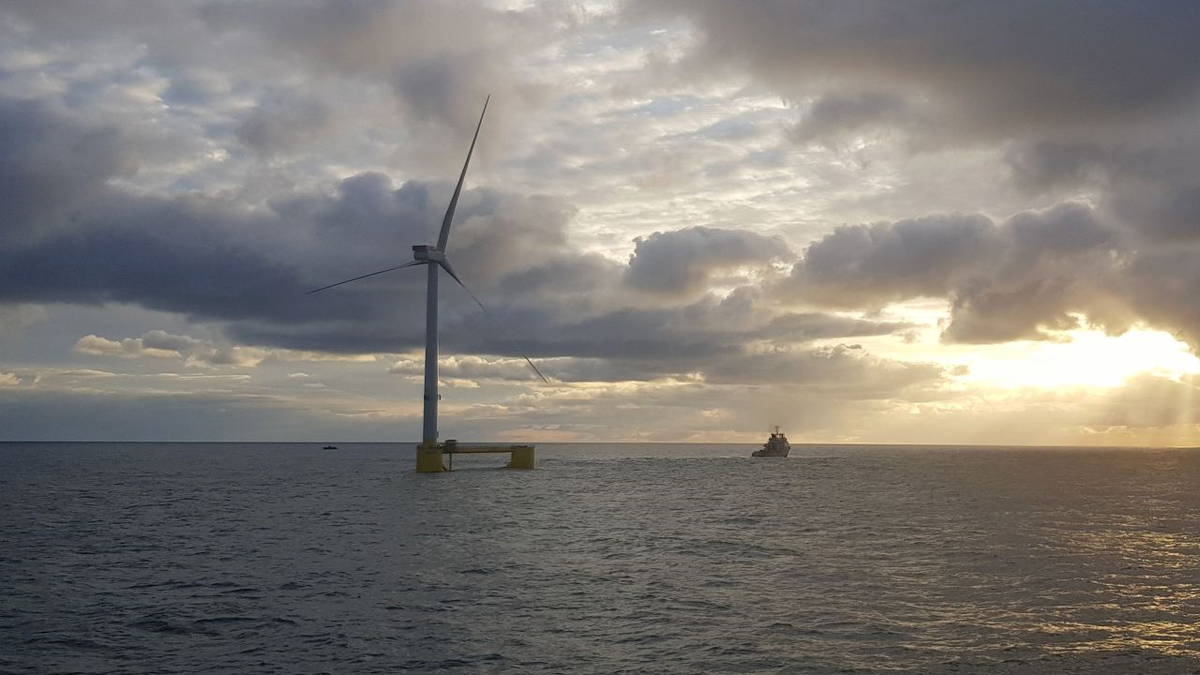
In May 2024, a consortium between Elicio and BayWa r.e won the AO5 tender for 250 MW of floating wind capacity. The award was the outcome of a competitive tender initiated in 2021 for a floating wind project of 230-270 MW off the coast of Lorient in Brittany.
The Pennavel floating offshore wind project developed by Elicio, which is based in Belgium, and BayWa r.e, which hails from Germany, will be the first commercial-scale floating windfarm to be awarded a long-term contract for difference. In line with the French government’s ambitious goal to commission 45 GW of offshore wind by 2050, the Pennavel project will play a pivotal role in driving the floating wind industry in France.
Speaking at the time the award was announced, Elicio chief executive Alain Janssens said he was confident it would contribute to the success of competitive floating offshore projects in France, “combining sound project execution with a unique local footprint.”
What surprised the industry was the winning bid came in at €86/MWh (US$94/MWh), which is a record-low for floating offshore wind. The auction was competitive: 10 consortia prequalified and six ultimately submitted bids. The winning bid was well below the €140/MWh ceiling price.
But WindEurope has cautioned governments should not think this is a new benchmark for floating wind development in Europe. “Floating wind is a relatively young industry. The technical and commercial risks are still pretty high,” says WindEurope. “As of today, Europe has 208 MW of floating wind in operation, spread mostly across four small windfarms. It is too early to tell what the price range for large-scale floating wind is going to be in Europe.”
As the industry body notes, prices for floating wind are going to vary greatly across Europe – between countries but also from site to site and the French tender was unique in many ways. Firstly, project developers did not have to pay for the grid connection – they will not have to pay for export cables or for the offshore substation because French transmission system operator RTE will build and operate the grid connection and cover the costs.
Secondly, conditions at the AO5 site are extremely good with strong wind speeds and favourable water depths. Third, the CfD offered is robustly indexed to inflation, considering different raw material prices. The actual price that is paid when the windfarm is built will be higher than €86/MWh.
WindEurope chief executive Giles Dickson says, “We congratulate the winners. But governments around Europe must not be mistaken, this auction was unique and the €86/MWh winning price is not the new benchmark for floating wind in Europe.
“Governments must consider the specifics of this particular auction when defining their auction budgets and ceiling prices. Don’t take the €86/MWh bid price as a benchmark. Otherwise, you might find yourself in a similar situation to the UK last year. The UK’s 2023 offshore wind auction had a low ceiling price because they made the wrong assumptions about costs – and nobody bid.”
In the South Brittany tender, the price criterion made up 75% of the total assessment of the different bids, with 5% based on the robustness of the contractual and financial arrangements. The remaining 25% was determined by award criteria linked to social and territorial development as well as environmental protection and sustainability.
“It’s good France is using prequalification and non-price award criteria,” Mr Dickson says. “And that they’re offering extensive indexation. But the non-price criteria used in the South Brittany auction were not optimal and the Commission de Regulation de l’Énergie, the French energy regulator has said the 5% robustness criteria should be reinforced in future auctions.
As WindEurope also notes, the South Brittany auction also encouraged bidders to build their project with as few turbines as possible. This pushed bidders to plan their projects with wind turbines of 20 MW and more – turbines that do not exist in the current market. This increases project risk. And the risk of bidders having to go for a non-European turbine, in turn threatening Europe’s energy security and undermining France’s Offshore Sector Deal targets.
The award criteria used in the South Brittany auction also failed to ensure differentiation between bids. On the social-territorial development criteria all bidders scored the maximum, effectively increasing the weight of the price criterion in differentiating the single bids.
“It is important these changes come in as soon as possible,” says Mr Dickson. “France is running two more floating wind tenders of 250 MW each (Med I+II) and will launch three more offshore wind auctions later this year. Two of them will be bottom-fixed auctions of 1 GW and 1.5 GW (AO7, AO8). The third will be a floating wind auction of 2.5 GW (AO9). Another auction of up to 8-10 GW of capacity (AO10) could also be prepared later this year.”
If successfully executed, the South Brittany auction opens the door for big volumes of floating offshore wind to come. Europe could have 3 GW of floating offshore wind by 2030 if the relevant auctions are completed by the end of 2025, and data and intelligence provider Aegir Insights believes the AO5 result and the prices achieved could be feasible – under the right conditions. In an analysis of the results of the AO5 tender the company says collaboration between countries to develop a pipeline of projects and regulatory support could enable even lower prices to be achieved.
“Following on from this result, we can anticipate even lower prices at other favourable sites in southern Europe,” the company states. “Our latest analysis reveals Spain and France as having the most attractive areas for floating wind, closely followed by Portugal and Greece.” Although Aegir Insights believes the lowest levelised cost of energy sites may lie in France and Spain, the highest merchant prices may be in Italy and Greece.
“Collaboration among southern European countries will be crucial to establish a sustainable regional pipeline of floating wind projects,” says the company. “Co-ordinated timing and capacity of tenders can create synergies between regional projects, preventing bottlenecks.”
Supportive regulatory frameworks will also be highly important. Aegir Insights says southern European countries “must be prepared to support floating wind during its early stages by creating favourable regulatory frameworks, establishing subsidies and revenue stabilisation mechanisms, and by implementing long-term electrification policies and flexibility measures.”
Aegir Insights says the AO5 tender has ‘kick-started’ the commercial journey for floating wind, with more tenders for floating wind expected by the end of 2024, potentially adding another 2.5 GW to the pipeline. “It remains to be seen whether the price achieved in France will encourage Spain and Portugal to advance their floating wind journey,” it concludes. “Should they proceed, we might witness the first commercial offshore wind tenders in both countries, with multiple GW auctioned by the end of the year.
“Greece too has significant potential, with multiple sites and attractive fundamentals, although there is uncertainty around its timeline. Conversely, Italy, despite having the most expensive sites, may find floating wind a viable option because electricity prices there are high.”
Sign up for Riviera’s series of technical and operational webinars and conferences:
- Register to attend by visiting our events page.
- Watch recordings from all of our webinars in the webinar library.

Related to this Story

Events

Maritime Regulations Webinar Week
 16 Dec 2025
 GMT - ONLINE
Floating energy: successfully unlocking stranded gas using FLNGs and FSRUs
24 Feb 2026GMT - ONLINE
© 2026 Riviera Maritime Media Ltd.


