


Business Sectors
Business Sectors
Events
Contents

Register to read more articles.
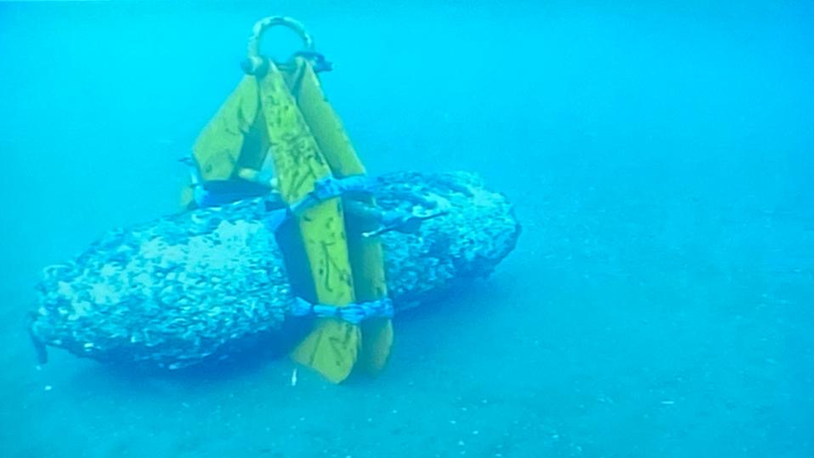
Guidance notes for UXO identification and disposal issued
The Society for Underwater Technology (SUT) has issued guidance notes for the identification and disposal of unexploded ordnance (UXO) in offshore windfarms


‘Guidance Notes for Risk Identification & Common Mitigations Related to Unexploded Ordnance (UXO) for Offshore Renewable Energy Developments’ was developed by the SUT’s Unexploded Ordnance (UXO) Special Interest Group. It is now available online. A sub-committee of the SUT UXO SIG, drawn from offshore wind industry specialists, spent two years working on the project.
Developed for offshore renewable energy developers, operators, offshore installation service providers and government agencies, the guidance notes provide a comprehensive framework for identifying and mitigating risks related to UXO in offshore renewable energy developments. UXO military munitions that failed to detonate can remain dangerous and could present significant safety risks during offshore construction and operations.
The final draft of the Guidance Notes was shared with a wide range of over 20 industry and academic organisations and individuals in late 2025 and early 2026 for review and feedback. These organisations included developers, consultants, contractors, warranty surveyors and academia. Their feedback was incorporated into the current document, which is now available free of charge to SUT members and £5 for non-members here.
The 62-page guidance notes, which are neither a standard nor a set of specifications for UXO risk identification and mitigation, outline a standardised, phased approach to UXO risk management, building upon established industry guidance while incorporating new knowledge and best practices. By following this guidance, stakeholders can implement appropriate, cost-effective risk mitigation measures that ensure personnel safety throughout project lifecycles.
The introduction to the guidance notes embraces its purpose and scope, intended audience, CIRIA publication (C754) and other publications; UXO risk in offshore renewable energy; health and safety considerations; risk management framework; ALARP and Best-Efforts approaches; risk mitigation implementation; and document structure and navigation. Thereafter chapters follow a structure aligned with the phased approach to UXO risk management. It is a sequential process from desktop study to reactive risk management.
Each chapter addresses a specific phase of the process. These include desktop studies, geophysical investigation surveys; target discrimination; inspection and mitigation; ALARP sign-off; risk management; and future innovations, including emerging technologies and approaches for UXO risk management.
Each chapter also provides practical guidance that can be adapted to specific project requirements while maintaining consistency with industry best practice.





Related to this Story



Events

Maritime Regulations Webinar Week
 16 Dec 2025
 GMT - ONLINE

Floating energy: successfully unlocking stranded gas using FLNGs and FSRUs
24 Feb 2026GMT - ONLINE
© 2026 Riviera Maritime Media Ltd.


