


Business Sectors
Business Sectors
Events
Contents

Register to read more articles.

Industrialization, standardization could reduce offshore wind costs by up to 28%
Standardizing turbine designs and securing predictable project pipelines could reduce the average lifetime cost of electricity from North Sea offshore wind by up to 28% by 2050


This is the main finding from a DNV led joint industry project (JIP) with eight companies in the European offshore wind supply chain. The project was undertaken in response to rising project costs, uneven auction results and stop-start development pipelines.
DNV energy systems chief executive Ditlev Engel said, “Suppliers invest against projects and firm capacity commitments. Europe’s offshore wind targets show the scale of long-term demand, but the industry also needs visible, investable project pipeline.
“Steadier demand and longer production runs can make better use of existing capacity and show where investment is needed in support of the business case, firm delivery is the most important KPI of all and for bringing down the cost.”
DNV global segment leader offshore wind Peter Constantin Brun said, “Industrialization and standardization have been discussed for years, but their economic impact had not been quantified in this detail. Our partners trusted DNV to lead frank discussions about commercially sensitive information.
“We have now documented significant cost-reduction potential, up to 28% under favourable deployment conditions, giving the industry and governments a basis for practical work to make European offshore wind more cost-effective over the next decade.”
The study models the levelized cost of energy (LCoE) under three North Sea scenarios from 2025 to 2050. It assesses longer production runs for current turbine platforms as an additional route to lower costs alongside turbine upscaling.
The scenarios show how market growth and production-run length affect costs. In a ‘business as usual’ scenario, the study predicts moderate growth and a short production run for the current turbine platform reduce LCoE by about 5% by 2035. In the ‘Longer production run’ scenario, under the same market growth, the reduction is approximately 14% by 2035 and 25% by 2050. In the ‘Highest-volume’ scenario, sustained deployment increases cost reduction to approximately 19% by 2035 and 28% by 2050.
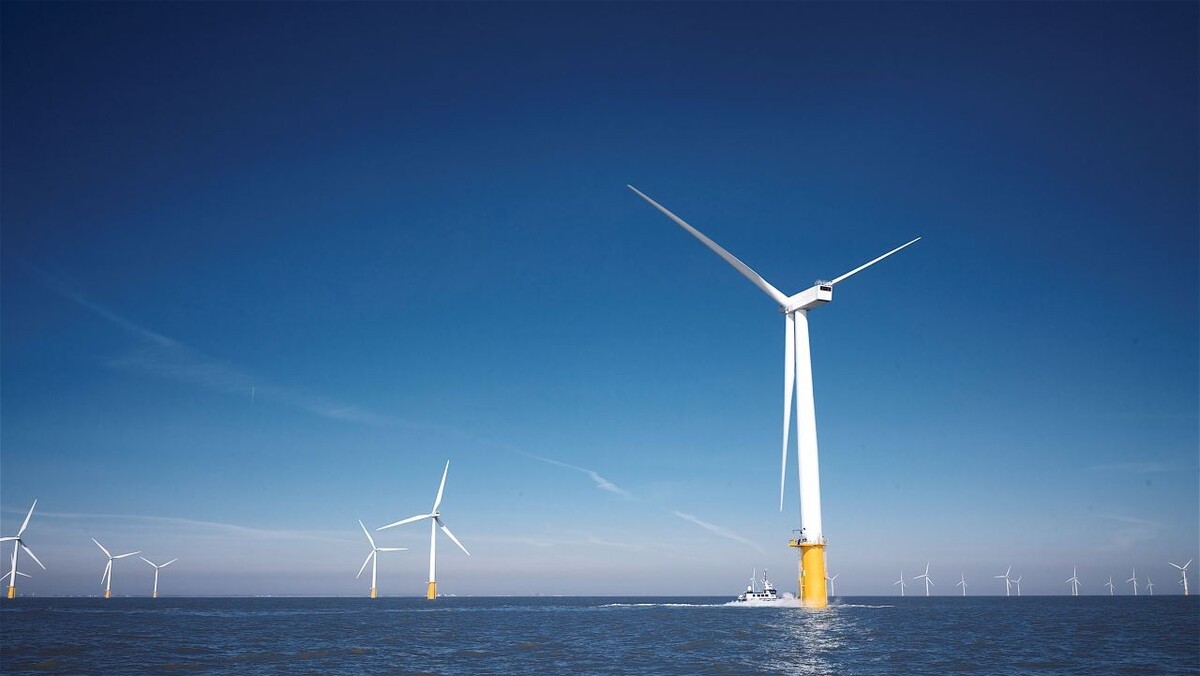
The model uses turbines around 15 MW on monopile foundations as a reference platform, without identifying 15 MW as the optimum size or limiting future turbine development.
The report calls on policymakers to turn deployment targets into visible project pipelines and consistent auction schedules; developers and turbine manufacturers to align earlier on design envelopes and interfaces; and suppliers to invest in identified constraints before broader capacity expansion.
Most of the modelled reduction comes from lower capital expenditure, led by turbine and project-development costs. Installation and substructure costs provide further savings. Stable platforms can also improve reliability and energy output, while shorter schedules bring generation online sooner.
DNV found that existing European capacity can broadly meet near-term demand for turbines of around 15 MW. In the high-volume scenario, however, ports become a constraint and installation capacity approaches its limit, requiring expansion and selected upgrades. The immediate risk is underuse: irregular project flow weakens the case for investment and the industry’s ability to respond when demand rises.
Stable designs and processes could also reduce waste, rework, transport and energy use. Bringing projects online sooner could provide further environmental gains by displacing fossil-fuel generation.
To capture the full cost-saving potential identified in this study, policymakers should provide long-term certainty through consistent auction schedules, predictable project pipelines, and regulatory frameworks that enable greater industrialization and standardization across the offshore wind supply chain
The scenarios draw on DNV’s Energy Transition Outlook 2025 and North Sea Forecast, project pipeline data, and the deployment ambitions in the Ostend and Hamburg declarations.
The JIP Partners included DNV, EEW Special Pipe Constructions, Fred Olsen Windcarrier, Groningen Seaports, Iemants, Jan De Nul, Vestas Wind Systems, Van Oord and Vattenfall.



Related to this Story


Events
Maritime Regulations Webinar Week
 16 Dec 2025
 GMT - ONLINE
Floating energy: successfully unlocking stranded gas using FLNGs and FSRUs
24 Feb 2026GMT - ONLINE
© 2026 Riviera Maritime Media Ltd.


