


Business Sectors
Events
Contents

Register to read more articles.

Korea reduces offshore wind target but focuses on the essentials
An intergovernmental task force led by South Korea’s Ministry of Climate, Energy and Environment has set out new plans for the construction of offshore windfarms


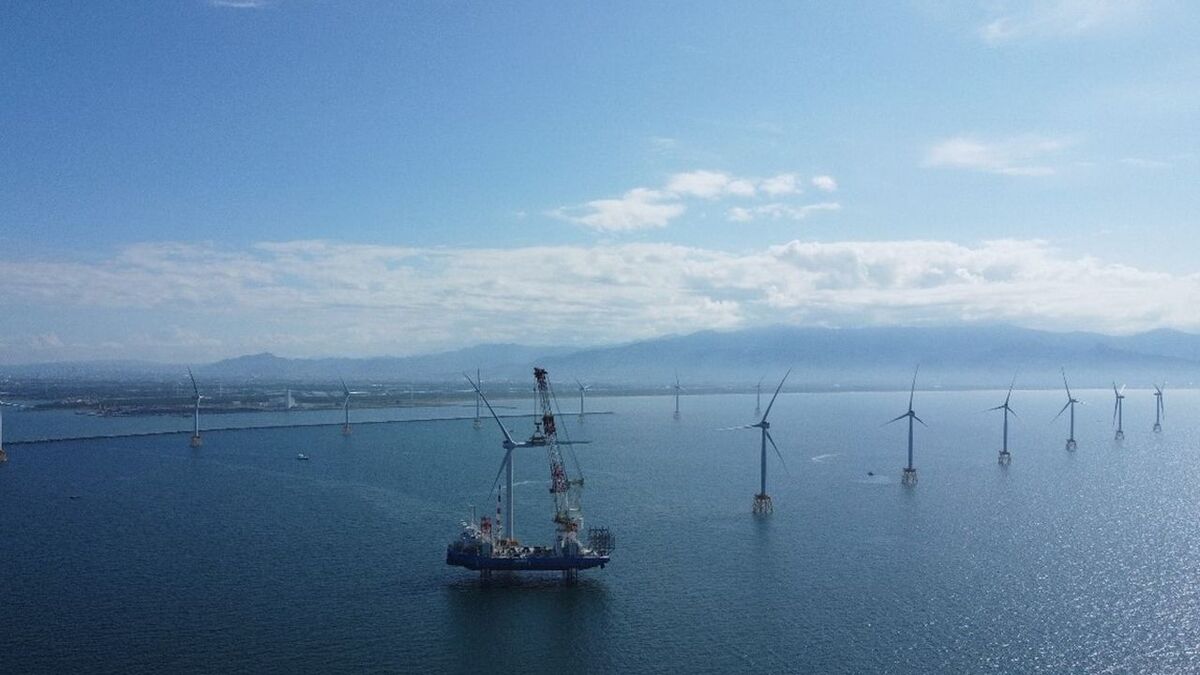
Intended to accelerate the deployment of offshore windfarms in the country’s waters, the plan marks a shift from declarative targets to an implementation-focused approach across the offshore wind value chain.
The still-ambitious targets include the implementation of 4.0 GW of offshore wind capacity a year, and a cumulative 10.5 GW to be installed or under construction by 2030. Previous announcements by the Korean government targeted a still more ambitious 14.3 GW by 2030. The plan also envisages a cumulative capacity of 25.0 GW by 2035.
The new plan, discussed at the interagency meeting, also focuses heavily of cost reduction, targeting a levelised cost of energy of KRW250 (US$0.17) per kWh by 2030 and KRW150/kWh by 2035.
To accelerate the deployment of offshore windfarms, the plan proposes expanding port capacity from 0.6 GW today to 4.0 GW per year by 2030 and securing sufficient installation vessel capacity. It targets the availability of four vessels capable of installing 15-MW wind turbines by 2023 and six wind turbine installation vessels from 2035 onwards.
The new plan includes the early launch of a dedicated Offshore Wind Promotion Taskforce; additional support for permitting, ‘conflict resolution, and project execution;’ streamlining a review of potential conflicts with military operations; and using competitive bidding linked to a pre-assessment process. A long-term roadmap for tenders for offshore wind will be released in H1 2026.
The Korean plan aims to reduce development timelines from 10.0 years to around 6.5 years, foresees the development of a 20-MW domestically developed offshore wind turbine and a 100-MW floating offshore wind demonstration project, and the use of Korea’s shipbuilding and offshore engineering capability to strengthen local supply chain participation. A ‘standard model’ for community benefit sharing will also be introduced.
Responding to the new plan, Ocean Energy Pathway South Korea country head Daul Jang said, “This new plan marks an important turning point. It moves beyond a narrow focus on deployment targets to address the essential foundations required for the offshore wind industry, including ports, vessels, supply chains, finance and social acceptance.
“We hope that, drawing on the experience of leading offshore wind countries, a permanent public–private governance framework will be established. Such a structure would enable continuous dialogue and help ensure strategies to develop the industry fully reflect realities on the ground.”
Riviera’s Offshore Wind Journal Conference will be held in London on 2 February 2026. Use this link for more information and to register for the event.

Related to this Story

Events

Maritime Regulations Webinar Week
 16 Dec 2025
 GMT - ONLINE
Floating energy: successfully unlocking stranded gas using FLNGs and FSRUs
24 Feb 2026GMT - ONLINE
© 2024 Riviera Maritime Media Ltd.


