


Business Sectors
Business Sectors
Events
Contents

Register to read more articles.
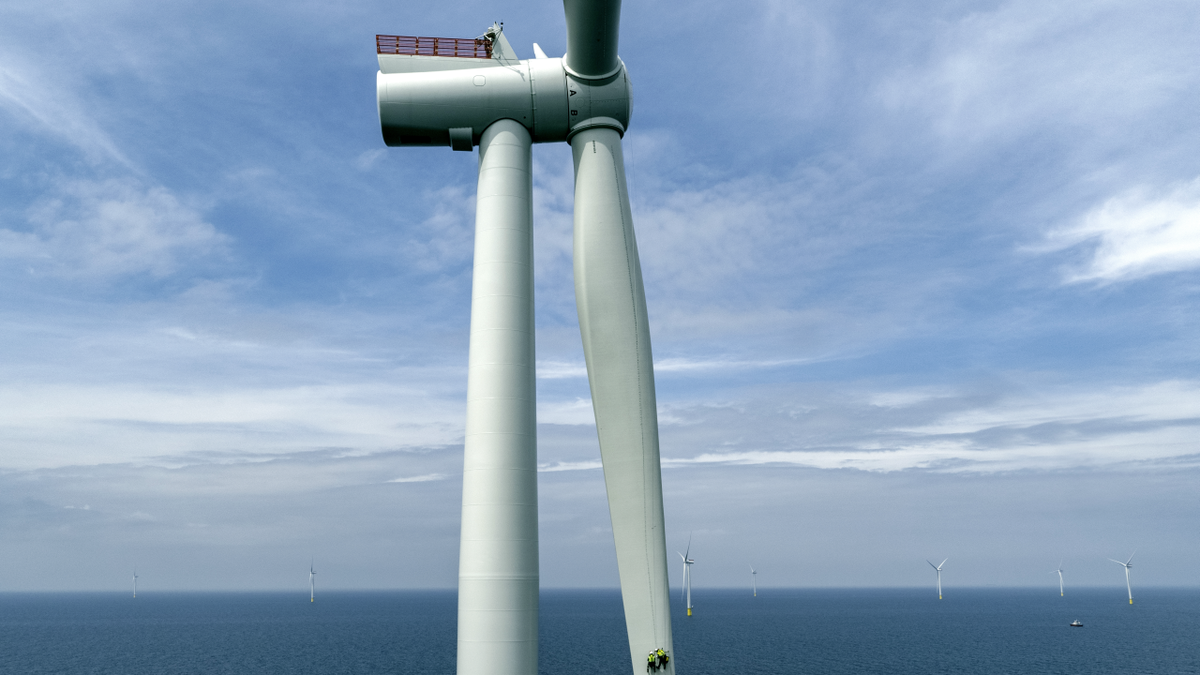
New Zealand seeks synergies with Australia as government legislates for offshore wind
The New Zealand government is to introduce a Bill to enable a regime for offshore renewable energy to be in place by mid-2025


The government’s aim is to open an initial round of feasibility permitting in late 2025, using a regime that will give developers greater confidence and certainty to invest.
The Bill is part of a raft of measures introduced by the government to speed up the electrification of the energy system in the country. The measures will make it easier and cheaper to consent, build and maintain renewable electricity generation as well as electricity distribution and transmission, said Energy Minister Simeon Brown.
“New Zealand has an exciting future powered by clean and green renewable electricity, buttressed by fossil fuels. Through electrification, we can supercharge our economy, tackle climate change, and strengthen our energy security,” Mr Brown said.
“Electrifying New Zealand’s economy is a key part of the government’s plan to grow our economy and reduce emissions to achieve Net Zero 2050. The government’s Electrify NZ plan means taking advantage of New Zealand’s abundant renewable energy resources, so that our cars, buses, trains, ferries and manufacturers are increasingly powered by wind, water, and the sun.”
In a 30 August 2024 analysis of the plans announced by the government, Russell McVeagh partners corporate advisory Michael Loan and Mei Fern Johnson said the Bill to enact an offshore renewable energy regime is expected to be introduced by the end of 2024 and passed in mid-2025, with the first feasibility permit round initiated by late 2025 and the first permits granted in 2026. Consultation on the Bill will take place during the select committee process, once the Bill has passed its first reading – this is expected to be between January and June 2025.
They explained the New Zealand government is “moving at pace” to establish a credible permitting regime, aligning it with other existing regimes. “The design of the regime purports to ‘borrow the best’ from more mature regimes in the United Kingdom, Netherlands, Denmark and Australia and adapt it to New Zealand’s settings,” they said.
“The government has indicated a key driver of the short timeline for passing legislation and launching the offshore renewable energy regime is to allow developers to align activities and supply chains with Australia. Many of the regime’s features align with the Australian framework, which will be welcome news for developers planning or undertaking projects in Australia who might also consider offshore wind in New Zealand.
“It is important that New Zealand acts quickly and establishes a credible and easy-to-use permitting regime for the development of offshore renewable energy facilities,” they explained. “By aligning many aspects of our regime with Australia, there are time and cost savings to design and implement the regime.”
Mr Loan and Ms Johnson said New Zealand is expected to use a two-permit regime with ‘use it or lose it’ provisions to address the risk of seabed banking. Feasibility permits will provide the holder with the exclusive right to apply for a commercial permit for a specified area. Commercial permits will enable the building and operating of offshore renewable energy infrastructure and will be required before construction can begin. They may be sought at any time within the seven-year duration of the feasibility permit.
“The cost of administering the proposed regime will be funded by fees paid by developers,” the lawyers explained. “The government considers that revenue-gathering mechanisms such as royalty schemes would deter investment and the costs would flow on to consumers. This differs from the approach taken under the Crown Minerals Act, but aligns New Zealand’s approach with the Australian regime, which does not include royalties.
“The government has also signalled it is not intending to offer any price support. This is despite most offshore wind projects internationally having been supported by some form of government-backed price support mechanism,” they concluded. “The government considered such a mechanism would be a material departure from the market-based electricity model in New Zealand.”
Responsibility for offshore transmission infrastructure will consist of a hybrid model between permit holders and New Zealand’s transmission system company, Transpower.
Riviera’s Offshore Wind Webinar Week will be held 10 September 2024. Click here to register for this free-to-attend event.


Related to this Story


Events

Maritime Regulations Webinar Week
 16 Dec 2025
 GMT - ONLINE
Floating energy: successfully unlocking stranded gas using FLNGs and FSRUs
24 Feb 2026GMT - ONLINE
© 2026 Riviera Maritime Media Ltd.


