


Business Sectors
Business Sectors
Events
Contents
Register to read more articles.
Westwood says China ‘reshaping’ the market for offshore wind foundations
As debate rages about the use of Chinese wind turbines in the European offshore wind industry, Chinese manufacturers are quietly but rapidly gaining ground in the market for turbine foundations, analysis suggests


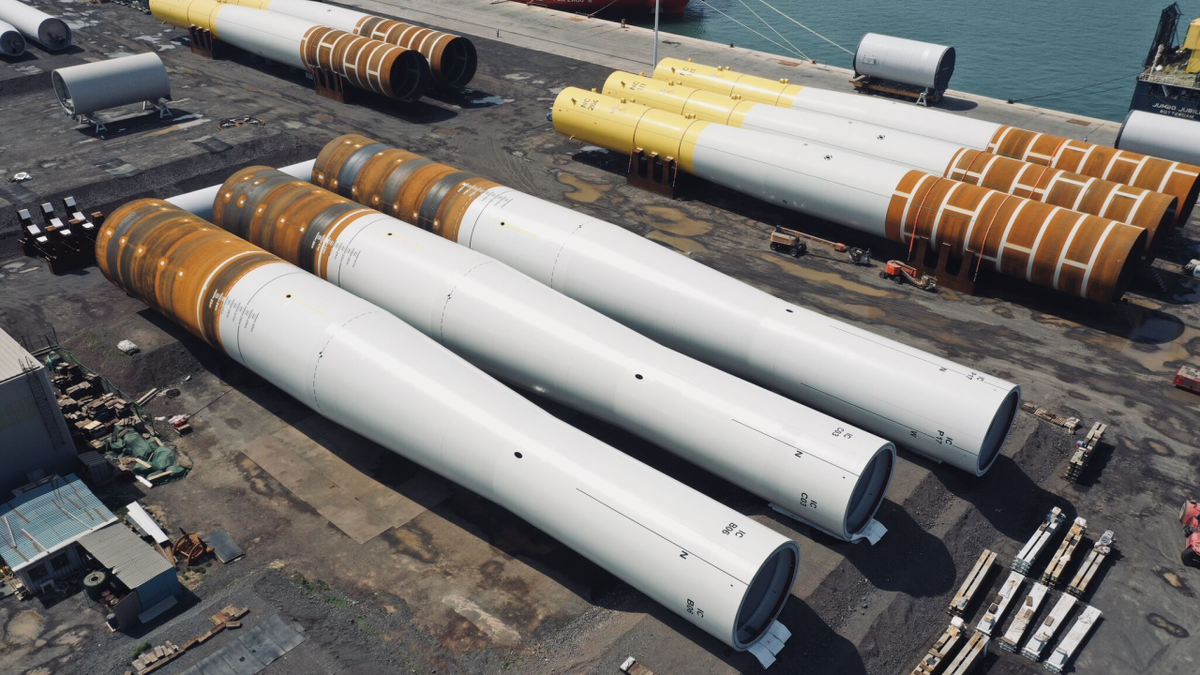
As Westwood Global Energy senior analyst Hui Min Foong explained, in 26% of all turbine foundations installed globally – excluding those installed in mainland China – were supplied by Chinese manufacturers, up from virtually zero in 2020.
“This shift marks a major reconfiguration in the global supply chain, creating much-needed supply availability and could help to drive down offshore wind project costs at a time when the sector continues to face inflationary pressures,” she explained.
“Although much discussion focuses on Chinese offshore wind turbines and turbine OEMs, it is Chinese-manufactured offshore wind turbine foundations that have expanded rapidly into the global market, supported by a strong domestic track record, fabrication capacity and production cost advantages.”
As she explained, although turbines often receive the most attention, foundations are typically the second-highest cost component in offshore windfarms. Westwood forecasts turbine foundations to comprise 19% of global EPC spend on major component orders from 2026-30, so securing competitively priced turbine foundations can therefore have a sizeable impact on reducing total project cost.
Chinese manufacturers became the world’s leading producers of offshore wind turbines in 2022, thanks to the domestic industry boom in mainland China. However, turbine exports out of mainland China have been minimal due to tighter regulatory scrutiny or perceived cybersecurity risks, limiting their adoption in other markets. However, the situation is different for foundations.
“Offshore wind turbine foundations have attracted fewer concerns,” said Westwood Global Energy’s analyst. “International adoption of Chinese-manufactured foundations has grown steadily as global developers increasingly view them as viable or even preferred options,” although, as he noted, the sector did face an early setback in 2011, when monopiles produced by Zhenhua Heavy Industries (ZPMC) used for the Greater Gabbard project off the UK were found to have defects. Since then, however, Chinese manufacturers have established a track record of installations through large-scale domestic projects over the past decade, demonstrating consistent delivery performance and gaining economies of scale, supporting the expansion into international exports.
Since 2021, exports have accelerated. Westwood Global Energy’s analysis shows that between 2015 and 2020, the majority of turbine foundations installed globally were procured primarily from European manufacturers. But supply chain dynamics have shifted dramatically since then, with Chinese manufacturers capturing more than a quarter of the global market in 2025, growing from virtually zero in 2020. Taking Mainland China’s domestic projects into account further lifts the 2025 figure to a majority share of 51%.
Westwood Global Energy’s analysis shows that several factors underpin China’s rise as a major global supplier. The first is its large manufacturing capacity. Built to meet mainland China’s domestic offshore wind boom, this capacity is now being leveraged for exports as domestic demand stabilises and European manufacturers face production bottlenecks. This is further supported by the ability to manufacture extra-large monopiles at scale, as global projects increasingly require larger foundations for next-generation turbines.
The second advantage China has is cost. Access to less expensive domestically produced steel and lower labour costs enable globally competitive pricing. Improving quality is another advantage, with Chinese manufacturers increasingly meeting international technical standards and certification requirements.
As Westwood Global Energy’s analysis demonstrates, Dajin Heavy Industry has played a breakout role in global supply. “A few key companies have emerged amid China’s rising prominence on the global stage,” the company said. “Accounting for foundations currently installed or under construction, recent international orders have been placed with four different manufacturers, with Dajin Heavy Industry emerging as a leading choice.”
Factors contributing to Dajin’s success in international markets mirror the drivers behind China’s rise on global stage. Dajin has a large domestic manufacturing capacity which it continues to expand – the company’s newly-built Caofeidian manufacturing facility in Tangshan, Hebei province, is currently ramping up for large-scale commercial production following earlier trials in December 2025.
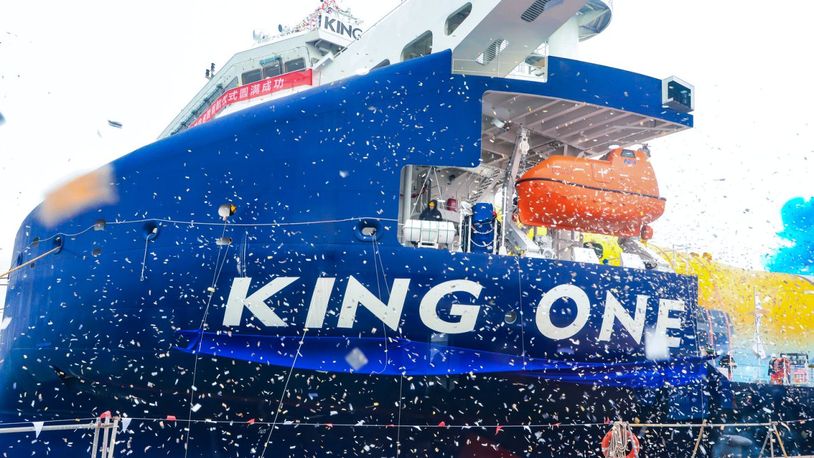
Dajin is also developing vessels to transport components, in order to allow for more integrated, end-to-end logistics services. These include the King One, a heavy-lift vessel which embarked on its maiden voyage in February this year to carry monopiles to Europe. Furthermore, the company is also strengthening its presence in the European logistics space, having secured a reservation agreement for 10 hectares of space at the Odense port in Denmark until 2030, which will serve as a regional storage and marshalling hub for European wind farms. In November 2025, it signed an additional memorandum-of-understanding to develop an offshore wind hub at the Port of Cuxhaven in Germany. Successful execution of its international order pipeline would reinforce investor confidence and affirm Dajin’s capability to meet global market expectations.
Ms Foong said that, beyond Dajin, Titan Wind Energy is another manufacturer headquartered in China that is also expanding its European footprint with a new monopile factory under construction in Cuxhaven, further underscoring the growing presence of Chinese suppliers in the international landscape. While no monopile orders have yet been publicly announced, the facility is building capacity aimed at supplying monopiles to international offshore wind projects, including in the North Sea and Baltic.
As the global offshore wind industry continues to grow while navigating cost pressures, Westwood expects Chinese manufacturers to maintain and expand their leading role in the foundation supply chain, a trend exemplified in February 2026, when the UK’s Hornsea 3 project cancelled its turbine foundation contract with European supplier EEW and subsequently divided a revised order between three manufacturers, including Dajin.
“Chinese manufacturers offer an attractive option for project developers, with available fabrication capacity, an established track record, competitive pricing, and a diversification beyond European-dominated supply,” said Ms Foong. “Mainland China is therefore well-placed to grow as a hub for foundation production as the global offshore wind industry continues to navigate cost pressures and seek out supply chain availability beyond just turbines.”
To sustain long-term momentum, he suggests, Chinese manufacturers will need to consistently deliver high-quality foundations and adhere to agreed delivery timelines to maintain confidence among international developers. As he also noted, although external factors such as potential political pushback or introduction of local-content requirements do not currently present major barriers for foundations, these remain a wider consideration that could shape how export opportunities evolve in future.

Related to this Story


Events

Maritime Regulations Webinar Week
 16 Dec 2025
 GMT - ONLINE
Floating energy: successfully unlocking stranded gas using FLNGs and FSRUs
24 Feb 2026GMT - ONLINE
© 2026 Riviera Maritime Media Ltd.


