


Business Sectors
Business Sectors
Events
Contents

Register to read more articles.
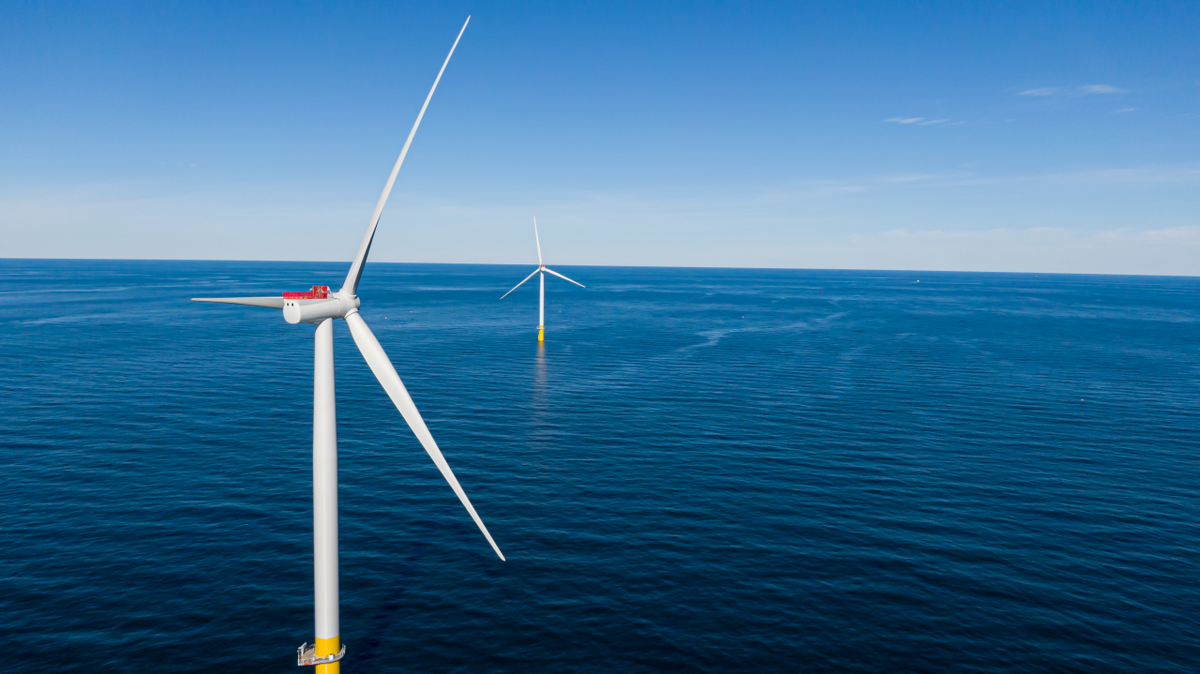
Offshore wind industry ‘set to rebound’ in 2025
Rystad Energy says the global offshore wind industry is poised for a rebound in 2025, with 19 GW of new capacity due to become operational by the end of 2025 and sectorwide expenditure of US$80Bn


The recovery Rystad Energy is anticipating follows a slowdown at the end of 2024, when new installations dropped to approximately 8 GW, that is, 2 GW lower than the previous year.
Rystad Energy says a ‘record wave’ of lease auctions is driving the resurgence, with the world’s largest offshore wind market, mainland China, accounting for 65% of new capacity. With this increase, total additions will exceed the previous peak in 2021 by about 1 GW, surpassing the 7.7 GW added in 2024, 10.2 GW in 2023 and 9.3 GW in 2022.
However, despite optimism about bottom-fixed offshore wind, Rystad Energy notes that supply chain constraints could affect the floating wind sector. “These challenges could hinder the advancement of floating wind technology in the short term, with capacity estimates of less than 7 GW by 2030,” says the energy analyst. “To overcome these hurdles, increased government support is crucial.”
Rystad Energy also noted that, although new capacity additions demonstrate progress, “uncertainty lingers” regarding lease agreements.
“A record 55 GW of offshore wind capacity was offered in lease auctions globally, excluding Mainland China, in 2024,” it says. “However, not all this capacity has yet been awarded, as offered capacity does not always translate into awarded capacity. For instance, the US saw no bids for its 3 GW floating wind auction in Oregon last year, while the Gulf of Maine auction awarded roughly 7 GW of the approximately 13 GW offered.
“Despite 2024’s record offerings, lease auction openings are projected to decline in 2025, with an expected 30-40 GW available. While significantly lower than 2024, this projected offered capacity is still significant, aligned with levels seen in 2021 and 2022.”
Rystad Energy senior offshore wind analyst Petra Manuel says, “Global offshore wind is set for a robust year in 2025, but some signals could affect its smooth upward trajectory. US federal policy is creating significant global ripple effects. President Trump’s executive order halting new leasing and approvals on the Outer Continental Shelf could last throughout his term, pausing new developments and creating continued uncertainty for ongoing projects.”
Rystad Energy says it expects the same level of FIDs in 2025 as in 2024 in Europe and Asia, and ‘some possible upside in the US.’ The UK, Poland and Germany are set to lead a surge in European FIDs, which could reach a level of 9.5 GW. Poland in particular is expected to see multiple windfarms reach FID, including Polenergia and Equinor’s Baltyk II and III, following the recent FID for Orsted and PGE’s Baltica 2 in late January 2025.
Sign up for Riviera’s series of technical and operational webinars and conferences:
- Register to attend by visiting our events page.
- Watch recordings from all of our webinars in the webinar library.

Related to this Story


Events

Maritime Regulations Webinar Week
 16 Dec 2025
 GMT - ONLINE
Floating energy: successfully unlocking stranded gas using FLNGs and FSRUs
24 Feb 2026GMT - ONLINE
© 2026 Riviera Maritime Media Ltd.


