


Business Sectors
Business Sectors
Events
Contents

Register to read more articles.
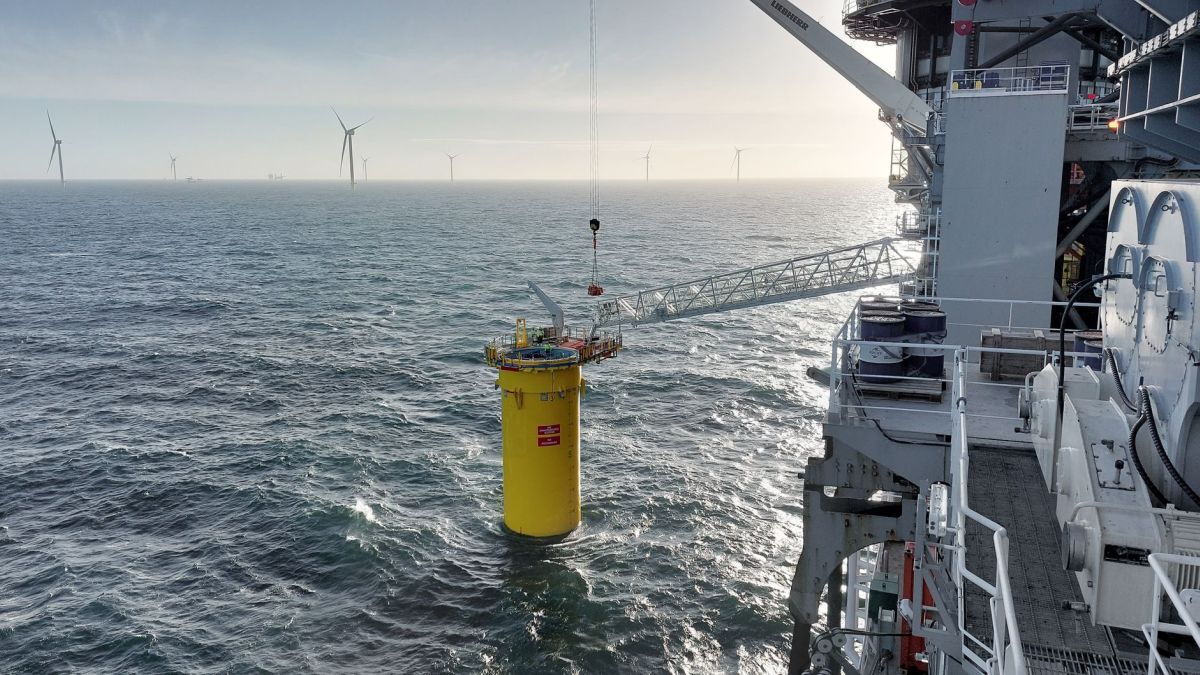
Poland agrees plan for even more offshore wind capacity
Next round of auctions will include up to 12 GW of capacity, compared with earlier plan for 5 GW


The Polish government has confirmed plans to significantly increase the volume of offshore wind capacity for which it holds tenders between 2025 and 2031.
The development is significant for a country that still relies very heavily on fossil fuels for power generation. In March 2023, 66% of electricity in the country was still being produced from coal, although this is set to change dramatically following the adoption in February 2021 of a new national energy policy that will see 40% of power produced from renewable energy sources (25% wind) by 2040.
Speaking at the WindEurope conference in Copenhagen in April, Polish undersecretary of state for climate and environment Anna Łukaszewska-Trzeciakowska said the government now plans to hold auctions for 12 GW of offshore wind in the 2025-2031 timeframe. This compares with the previously announced plan to tender for 5 GW between 2025 and 2031.
As Norwegian Energy Partners local energy advisor Poland and the Baltics Ewa Kwast told a 28 April 2023 webinar, the higher, 12-GW target will be met by holding two auctions for 4 GW of offshore wind capacity, and two more, each for 2 GW of capacity, in 2025, 2027, 2029 and 2031, respectively. The now superseded plan was for two 2.5-GW auctions in 2025 and 2027 – the increase comes as the Baltic state, already one of the region’s leading offshore wind provinces, seeks greater energy security in the wake of Russia’s invasion of Ukraine.
The additional capacity that will be procured in the 2025-2031 timeframe will take Polish offshore wind capacity to the 18 GW mark, with 5.9 GW of offshore wind projects having already secured a route to market in the form of contract for difference allocations in the first phase of the Polish government’s plan for new offshore renewables, in 2021.
Ms Kwast says recent months have seen several significant developments in the Polish offshore wind market. In December 2023, the country’s offshore wind legislation (Offshore Wind Act, which entered into law in 2021) was amended, to adjust the price for offshore wind energy to take account of inflation. Licences for offshore windfarms were also extended to 30 years. In January 2023, further amendments to the Offshore Wind Act were proposed, to enable the build-out of offshore wind capacity to be speeded up. January-February 2023 also saw the first results of applications to develop windfarms at 11 new sites: the highest score for an initial four was awarded to PGE, Poland’s largest state-owned energy enterprise. Scores for the remaining sites were due to be announced as this was being written.
To date, all the projects in Poland’s offshore wind pipeline are bottom-fixed windfarms, but there are areas in the Polish exclusive economic zone that are suitable for floating offshore windfarms, and these could be targeted by developers as more and more projects are added to the pipeline, Ms Kwast concludes.
With electricity from its first offshore windfarm due to be transmitted from 2026 onwards, Poland has huge potential for offshore wind capacity, as a late-2022 report suggested (see page 8 OWJ Q1 2023).
The report, The Potential of Offshore Wind Energy in Poland was prepared at the request of the Polish Wind Energy Association by the Morski Instytut UMG, Ramboll and KP Consulting and states, with the right conditions in place, Poland has the potential to become a 33-GW market. The report identifies 20 new areas in the Polish sector of the Baltic over and above those that are already being developed, including 18 in the exclusive economic zone and two in Poland’s territorial sea.
The fast pace of growth in the offshore wind market in the country means developers need to carefully analyse transmission system options for future windfarms, and high-voltage direct current (HVDC) could be the best option for far-from-shore windfarms in the Baltic, according to representatives of specialist renewables consultancy OWC.
In a recent webinar, experts at OWC noted there are already nine projects under development in Polish waters, with a combined capacity exceeding 8 GW, with first power generation expected in 2025. In addition, there are 11 other offshore wind sites waiting to be awarded to developers competing for them.
Unlike some other markets, in Poland the developer is responsible for grid connection, including the offshore substation, offshore and onshore export cable and onshore substation, with the grid operator providing the grid capacity and connection point.
OWC principal electrical engineer Bartosz Hunek says, “Until recently, HVDC has not really been considered in Poland. However, OWC encourages developers to conduct more site-specific assessments and consider HVDC in connection with Poland’s second seabed leasing round of far-offshore windfarms.
“Selection of transmission system technology is one of the most important decisions driving the design of Polish offshore windfarms,” he explains. “It will have a great impact on project performance, on availability, capital and operational costs.
“Compared to high-voltage alternating current (HVAC), HVDC can be used to export much more electricity, with fewer cables and has lower transmission losses over long distances. HVDC technology is more suitable for large-scale projects and projects with long cable routes, although there are still supply chain constraints associated with its use,” he says.
In a white paper, OWC analysed the HVDC technology and its benefits together with its impact on the development of offshore windfarms in Poland, their construction and operation. OWC also developed a technical and cost model, comparing the use of HVDC and HVAC for Polish projects.
“There are multiple good reasons for developers to consider HVDC technology for Polish windfarms, but they need to be aware HVDC also brings its own set of challenges,” say the authors of the white paper.
“Nevertheless, the main conclusion from our analysis is for key projects in the Polish sector of the Baltic, HVDC technology would be beneficial, and we would encourage more discussion around this subject in the Polish offshore wind market.”
OWC’s experts say developers should begin screening transmission system options for projects as early as possible, given lead times for procurement, engineering and delivery of the offshore transmission systems.
Sign up for Riviera’s series of technical and operational webinars and conferences in 2023:
- Register to attend by visiting our events page.
- Watch recordings from all of our webinars in the webinar library.

Related to this Story


Events

Maritime Regulations Webinar Week
 16 Dec 2025
 GMT - ONLINE
Floating energy: successfully unlocking stranded gas using FLNGs and FSRUs
24 Feb 2026GMT - ONLINE
© 2026 Riviera Maritime Media Ltd.


