


Business Sectors
Business Sectors
Events
Contents

Register to read more articles.
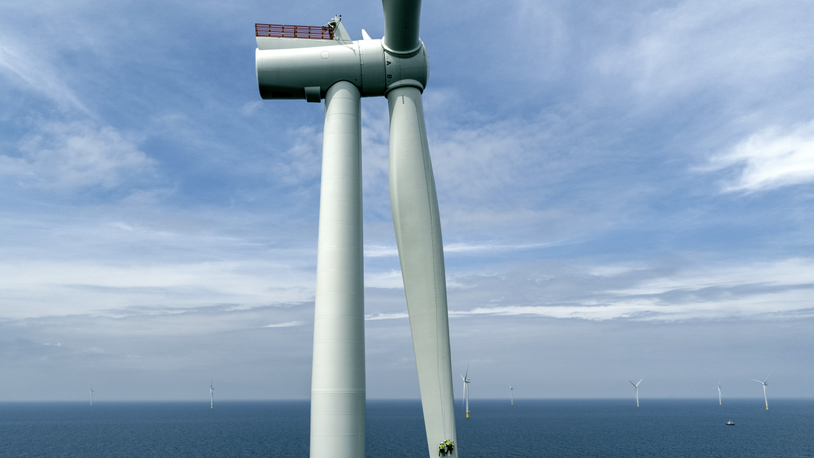
Policy framework sought for huge increase in Danish offshore wind
A coalition of business organisations has called for a political framework that would enable Denmark to massively expand the country’s offshore wind potential


In a new report, the ‘Offshore Wind 2050 Partnership’ calls for a framework that could enable the country to realise 40-80 GW of offshore wind by 2050.
The report contains a number of recommendations from, among others, the Confederation of Danish Industry, Insurance & Pension, Green Power Denmark, Danish Metal, Danish Business, think tank Hav and representatives of green hydrogen industry. All of the organisations in the partnership want to strengthen Denmark – and Europe’s – use of offshore wind and green electricity.
The organisations behind the report, ‘Havvind i Danmark frem mod 2050’ (Offshore wind in Denmark towards 2050) say access to cheap, green energy is crucial for Europe’s competitiveness and security of supply. Denmark has some of Europe’s most attractive offshore wind resources, they say, and is in a strong place to contribute to the European expansion of offshore wind.
This massive expansion of offshore wind capacity would be driven by the opportunity to electricity to neighbouring countries, especially Germany, but the rest of Europe too.
“Denmark has the opportunity to become the green power centre of all of Northern Europe and must exploit the full potential of offshore wind while taking into account the marine environment and the carrying capacity of the sea,” the authors of the report state.
“That expansion requires that a number of key framework conditions are in place,” says the Offshore Wind 2050 Partnership. “Among other things, there must be a comprehensive electrification of our society, to ensure competitive, profitable projects and sales of green electricity and the production of green hydrogen and green fuels, in Denmark, and to neighbouring countries. In addition, there is a need for robust and flexible models that support cross-border energy trade.
“In the future, greater production of renewable energy – including offshore wind – can contribute to lower electricity prices in Europe and thus strengthen European competitiveness broadly, just as the green electricity of the future contributes to making the European continent free from imported, fossil energy and strengthening security of supply.”
Danish Industry deputy director Troels Ranis said, “We are setting a clear direction for how we maintain and further develop offshore wind in Denmark. Political decisions must be made as soon as possible if we are to realize an aggressive expansion of offshore wind after 2035.
“An important prerequisite, and one on which we have a strong focus, is the expansion of grid infrastructure to neighbouring countries and fair cost-sharing with neighbouring countries. So we must strengthen the political dialogue across national borders and cooperation and coordination among the authorities.”
Insurance & Pension Denmark chief executive Kent Damsgaard said, “Investing in offshore wind has become riskier with higher interest rates, rising material prices, uncertain electricity prices and challenges in the supply chains. Denmark is in fierce competition with other countries for capital and the same investors.
“There is a need for stable and competitive framework conditions so that Denmark can also attract investments from, for example, pension companies. If we succeed, these investments will benefit Danish and European competitiveness and energy security.”
Green Power Denmark chief executive Kristian Jensen said, “A clear political direction must be set for the future expansion of offshore wind if the Danish wind industry is to maintain investments and jobs in Denmark.
“Without new expansion models, we risk a multi-year halt for offshore wind after the tenders for North Sea South and Bornholm Energy Island. The market is not in the best interest of this. Therefore, a political decision must be made early on about what comes next.
“The new report from the Partnership shows what is needed. Denmark must be Northern Europe’s green powerhouse, and the offshore wind of the future must make Europe more independent and strengthen our wind industry – not replace dependence on Russian energy with a new dependence on Chinese technology.”




Related to this Story


Events

Maritime Regulations Webinar Week
 16 Dec 2025
 GMT - ONLINE

Floating energy: successfully unlocking stranded gas using FLNGs and FSRUs
24 Feb 2026GMT - ONLINE
© 2026 Riviera Maritime Media Ltd.


