


Business Sectors
Business Sectors
Events
Contents

Register to read more articles.
Rigs report: Petrobras suffers setback on Amazon Basin drilling plans
Brazilian oil giant will continue to pursue licence and seek ‘administrative reconsideration’, while global offshore drilling remains tight, with utilisation hitting 90.7%


Brazilian state-run Petrobras suffered a setback to its plans to drill in FZA-M 59 block off the country’s north coast when state regulator IBAMA denied the oil giant’s request for a licence on 17 May. Environmentalists cheered the decision, after voicing concerns about the impact drilling activity would have on the Amazon River’s ecosystem. The block lies about 500 km from the mouth of the Amazon River.
In a press statement, Petrobras said it was surprised by the news that the environmental licensing process for block FZA-M-59 in Amapá Águas Profundas had been rejected, adding, it “will continue to pursue this licence and exercise its right to seek administrative reconsideration.” The Brazilian oil major believes it met all the conditions imposed by IBAMA to obtain the licence.
Commenting at the G7 Summit meeting in Hiroshima, Japan, Brazilian President Luiz Inacio Lula da Silva said: “If exploring this oil poses a problem for the Amazon, it certainly won’t be explored, but I find it difficult because it is 530 km away from the Amazon,” according to a report by Reuters.
The rejection dampened the previous day’s news that Petrobras had discovered oil in the Santos Basin pre-salt, in an appraisal well drilled by Constellation’s drillship Brava Star in water of 1,979 m in the Aram block.
“If exploring this oil poses a problem for the Amazon, it certainly won’t be explored”
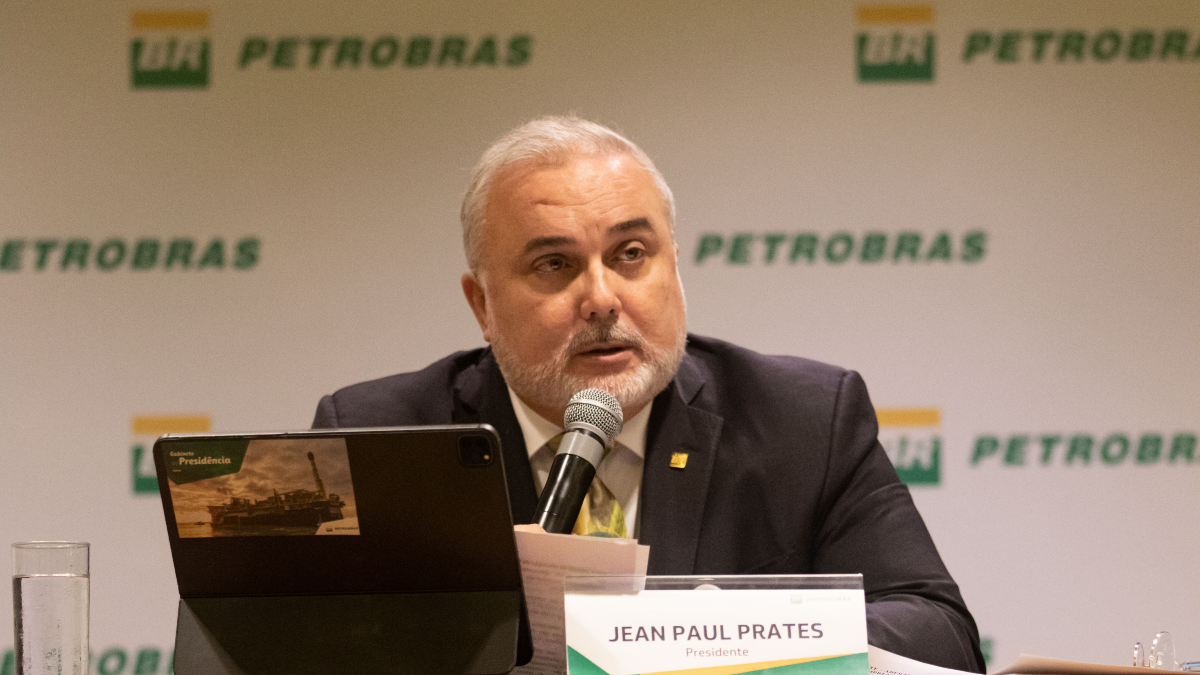
After posting profits of US$7.3Bn in Q1 2023 under new chief executive Jean Paul Prates, Petrobras continues to push efficiency, productivity and investments in the pre-salt, and spent US$2.5Bn in capex in Q1 2023. It started production from the floating production, storage and offloading (FPSO) vessel Anna Nery in the Campos Basin in May and is poised to add Almirante Basso in the Buzios field and Anita Garbaldi in the Marlim field; 13 other FPSOs will begin production by 2027.
“Pre-salt continues to be the driver of our revenues and operational cash flows, accounting today for 77% of our total production,” said Mr Prates. “In February, pre-salt reached a new monthly production record, with 2.13M barrels of oil equivalent a day, thanks to high wells productivity and the use of cutting-edge technologies that combine high efficiency with low carbon intensity. We are growing production, increasingly more efficiently and with lower emissions.”
Contracting activity
Petrobras has secured the ultra-deepwater drillship Noble Faye Kozack for 2.5 years from Noble Corp for operations at the BM-S-11 and Tupi fields, beginning in Q4 2023. The contract is part of US$1.1Bn in new contracts added by Noble in March to May, raising the drilling contractor’s backlog to US$4.6Bn.
Before it moves to Brazil, Noble Faye Kozack is on charter drilling in the US Gulf of Mexico, recently completing work for QuarterNorth, before going on contract with LLOG.
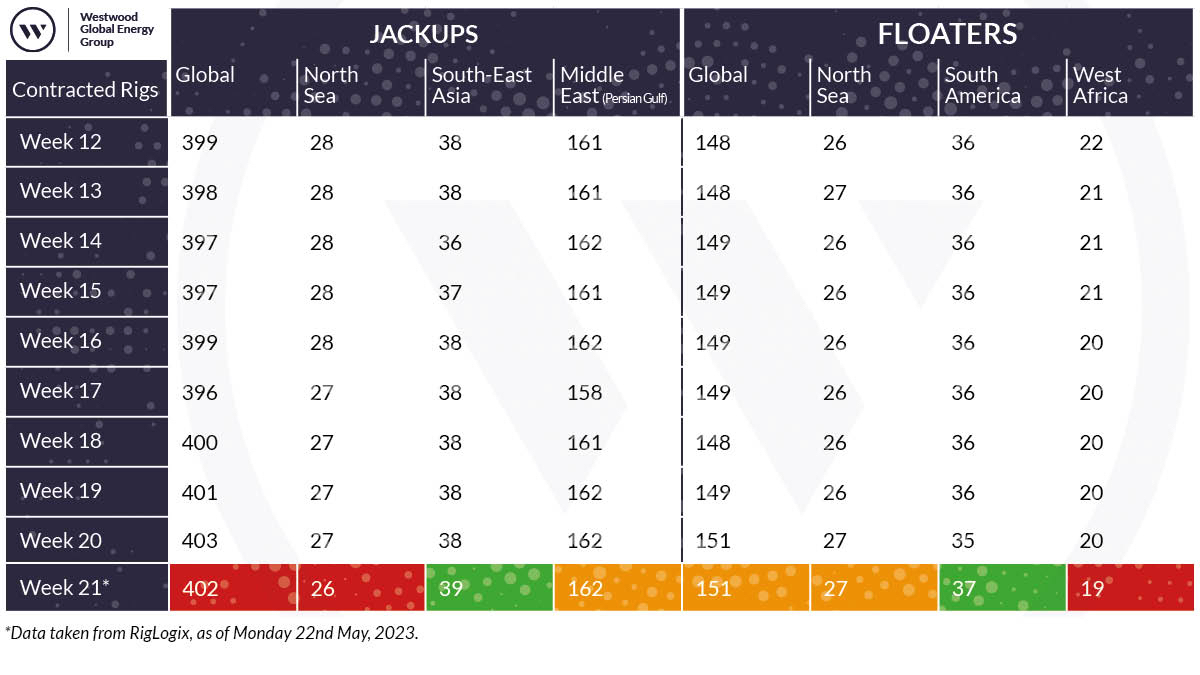
Offshore drilling in Brazil and Guyana is pushing floater activity to its highest levels of 2023, with 37 semisubmersibles and drillships under contract as of Week 21 of 2023, according to Westwood Global Energy’s RigLogix.
Globally, the offshore drilling rig market remains tight, with marketed utilisation rates for jack-ups and floaters at 90.7%, according to Petrodata.
RigLogix data shows some 402 jack-ups and 151 floaters under contract. This is the fourth week in a row that the number of contracted jack-up rigs has exceeded 400 — the highest level of the year.
Propelled by mega-projects in Saudi Arabia, Qatar and the UAE, jack-up activity remains strong in the Middle East. Rystad Energy expects the Middle East will exceed all other regions this year in terms of the offshore upstream sector. The Norwegian energy analysts forecast offshore investments in the Middle East will be about US$33Bn — nearly double the US$17Bn that was spent just two years ago. Rystad Energy said there is a “huge demand for oilfield services” in the Middle East, which “is pushing up prices in the supply chain due to capacity constraints, with a 30% yoy increase in demand of jack-up rigs.”
“The Middle East will exceed all other regions this year in terms of the offshore upstream sector”
In reporting the company’s Q1 2023 results, Borr Drilling chief executive Patrick Schorn disclosed the drilling contractor would reactivate its remaining two stacked rigs to commence contracts in the Middle East and Mexico in the second half of the year. Borr Drilling already has 11 rigs operating in the two regions — seven in Mexico and four in Saudi Arabia and Qatar.
Brent crude oil prices averaged about US$81 per barrel in Q1 2023, compared to US$99 and US$88 per barrel in Q3 and Q4 2022, respectively. Borr Drilling noted that these “lower prices, coupled with the global turbulent macroeconomic environment, have not affected global demand for offshore drilling services, including jack-up rigs, which remains strong.”
It sees “positive prospects for continuing work for our rigs that are finishing their contracts at the end of this year, both with current customers, as well as in new geographies with new clients.”
It has a fleet of 22 jack-ups, with two more under construction in Singapore.
Optimism in US Gulf of Mexico
There are signs of optimism in the US oil patch, which were clearly expressed in the most recent lease sale held by Bureau of Ocean Management (BOEM) on 29 March, which attracted a total of US$309.8M in bids and US$263.8M in high bids. This was an almost 38% jump from the winning bids, that totalled US$191.7M in the 2021 Gulf of Mexico lease sale.
The top five bidders in 2021 were Chevron, Anadarko, BP, Shell and ExxonMobil. In this latest lease sale, Equinor displaced Anadarko in the top five, with Chevron topping the leaderboard with US$107.96M in high bids.
While offshore rig activity in the US Gulf fell by one unit to 21 contracted rigs during the week 21 of 2023, it was still stronger than a year ago when 18 units were drilling, according to Baker Hughes. Among these is the jack-up WFD 400, which was purchased by White Fleet Drilling and reactivated following its retirement last year.
Managed by Enterprise Offshore, WFD 400 is on a 100-day assignment to Apache, according to Esgian. This campaign covers plug and abandonment work on 14 wells across three locations.


Related to this Story


Events

Maritime Regulations Webinar Week
 16 Dec 2025
 GMT - ONLINE
Floating energy: successfully unlocking stranded gas using FLNGs and FSRUs
24 Feb 2026GMT - ONLINE
© 2026 Riviera Maritime Media Ltd.


