


Business Sectors
Business Sectors
Events
Contents

Register to read more articles.
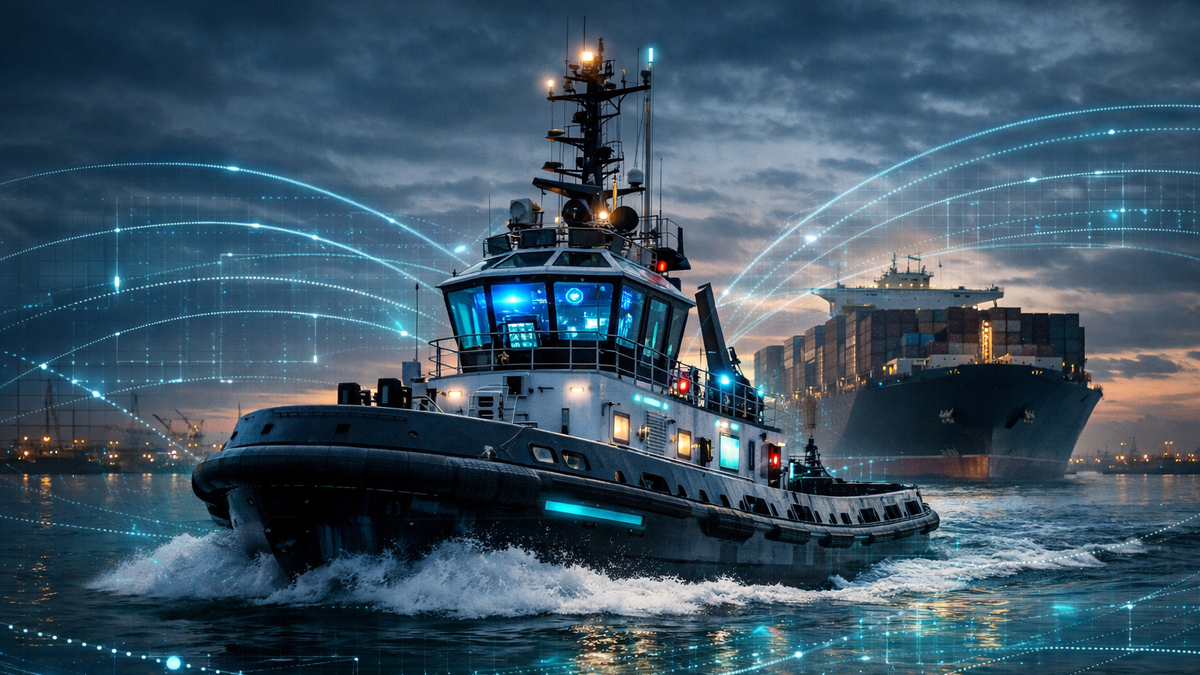
AI will be a gamechanger for tugs, salvage
Tug owners and port operators are increasingly deploying artificial intelligence and digitalisation to increase efficiency and lower operational costs


Artificial intelligence (AI) is playing a greater role in port operations and in managing tugboat fleets, but owners must invest in trained staff to get the most from these digital technologies. This was one of the conclusions from a panel debate involving tug owner executives at Riviera’s 28th ITS Convention, held in Gothenburg, Sweden in May 2026.
It is no secret that owners and ports are facing a raft of operational and commercial challenges, and in the face of so many competing demands, there is a real risk that the benefits of digitalisation could be overlooked.
Challenges for the towage sector include pressure to lower emissions, changing geopolitical situations and trade patterns, the increasing size of ships, port congestion and market consolidation.
Delegates at the conference cited these issues as they highlighted the need for owners to implement AI and digital tools to bolster efficiency across the board.
During these discussions, Svitzer managing director for Europe and chairman of the European Tugowners Association, Arjen van Dijk, said: “AI can be a gamechanger,” adding “we need to accelerate technology development and deployment.”
This sums up the difficulties faced by owners in terms of AI and digitalisation: they recognise the benefits but are struggling to implement the technology whilst tacking so many competing challenges.

In the panel debate, Noatum Maritime Marine Services commercial and business development director, Ferlin Brown, discussed the most effective ways in which to implement AI into port operations, optimising ship services and movements around harbours without increasing fuel consumption and emissions.
He suggested data should be captured from tugs and analysed using AI to improve port operations. He explained how information on ship position, berth capacity, tug and pilot availability and terminal operations could be used to enable just-in-time (JIT) port operations and tugboat deployments to improve efficiency.
Faster communications would enable stakeholders in ports, including ship agents, authorities, pilots, stevedores and tugboat operators, to co-ordinate in real time.
Shore-based employees and tugboat crews could use intelligence from AI agents to support operations, prepare documentation, raise compliance and minimise downtime.
Kotug International’s Maritime Excellence Centre director, Patrick Everts, highlighted how AI could also improve the training of tug masters and their communications and interactions with ship pilots and captains.
“We need to accelerate technology development and deployment”
Seaspan Marine Transportation president, Captain Jordan Pechie, warned that AI was an unlimited resource that needs to be deployed wisely and used effectively by people with knowledge of the technology.
He called on the towage industry to hire people who fully understand the technology to enable owners and operators to fully benefit from its power.
While there is little double that AI can help owners overcome the major challenges impacting the towage and ports sectors, it must be deployed correctly and integrated into harbour operations.
The data it provides should be analysed and interpreted by trained personnel who have authority to support operations if the benefits are to be fully realised.
Riviera will host TUGTECHNOLOGY ‘27 in Rotterdam, the Netherlands, 19-20 May 2027. Use this link for more information and to register.



Related to this Story
Events

© 2026 Riviera Maritime Media Ltd.


