


Business Sectors
Business Sectors
Events
Contents
Register to read more articles.
Study questions IMO net-zero funding mechanics
Gaps in penalty-reward flows and fuel availability risks in the proposed net-zero mechanism were revealed by Rystad Energy


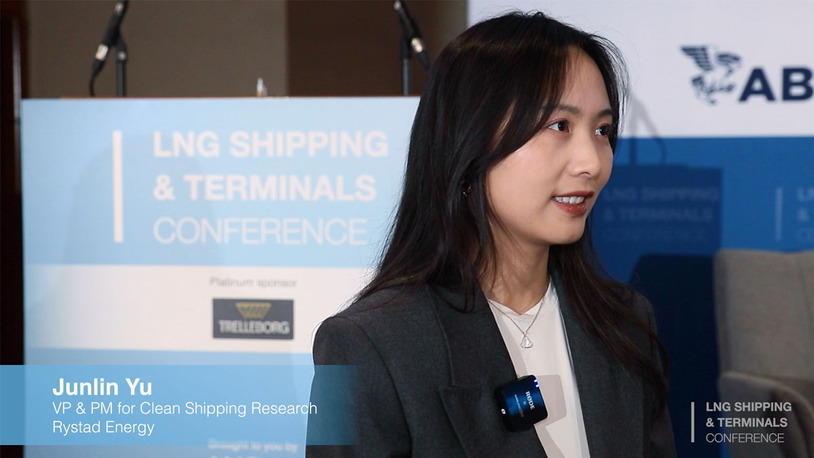
Rystad Energy vice president of clean shipping research, Junlin Yu, outlines findings from an analysis prepared before IMO’s extraordinary session of the Marine Environment Protection Committee (MEPC) in September 2025 that delayed a vote on the technological and economic measures associated with IMO’s net-zero framework of regulations for shipping decarbonisation.
Rystad’s work assessed how the proposed net-zero framework might perform in practice.
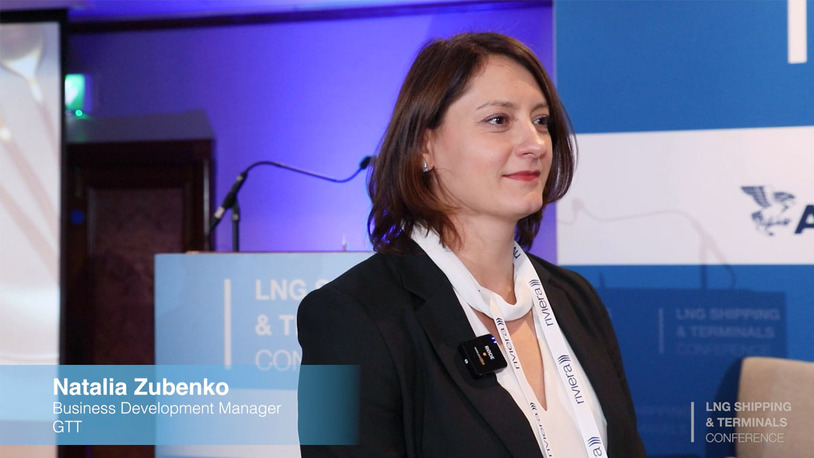
Speaking to Riviera, Ms Yu said the study compared a “realistic approach” scenario against an “IMO net-zero target” pathway and examined how penalties and rewards could circulate under the mechanism.
Ms Yu made it clear that Rystad Energy’s research is conducted in full support of the IMO’s net-zero ambitions: “As an independent research organization, we identify potential implementation challenges to strengthen, not oppose, the framework,” she said after the interview.
Ms Yu stated that the modelling indicated a structural gap between alternative-fuel supply and the demand implied by the target.
As she put it, “There is a substantial fuel-availability gap,” which, in turn, affected how much penalty revenue could be collected and redistributed.
Under the IMO-target scenario, even if enough alternative fuel were notionally available, the mechanism might “not manage to collect enough penalty revenue, and then you don’t have the money to reward back,” she said.
In the contrasting realistic-supply scenario, she continued, insufficient renewable or low-carbon fuel to meet the target, meant penalty revenues would be collected, but rewards would accrue to the relatively small cohort of owners that had secured qualifying fuels.
She added that such dynamics could leave “a large balance from the funds,” noting that if a reward of “US$300 per tonne CO2 equivalent” were assumed, the unallocated balance “by 2035” could reach US$160Bn, at which point “IMO may suddenly end up like a financial organisation.”
On that basis, Rystad Energy share these findings constructively to contribute to the ongoing dialogue around implementation.
While major changes to the framework may be unlikely at this stage, the delay in the MEPC vote provides valuable additional time for further research and, crucially, for the industry to prepare for the transition ahead.
Ms Yu said the report – described in the interview as an IMO potential-consequence study – is “publicly available” and can be downloaded from the Rystad Energy website.
Sign up for Riviera’s series of technical and operational webinars and conferences:
- Register to attend by visiting our events page.
- Watch recordings from all of our webinars in the webinar library.
Events
© 2026 Riviera Maritime Media Ltd.


