


Business Sectors
Business Sectors
Events
Contents
Register to read more articles.
Advances in LNG membrane containment systems
Additions to GTT’s menu included the NEXT1 next-generation, low-boil-off containment system; a slow-speed, large-capacity LNG carrier; VLEC upsizing to more than 100,000 m³; and a 150,000 m³-capacity ULEC


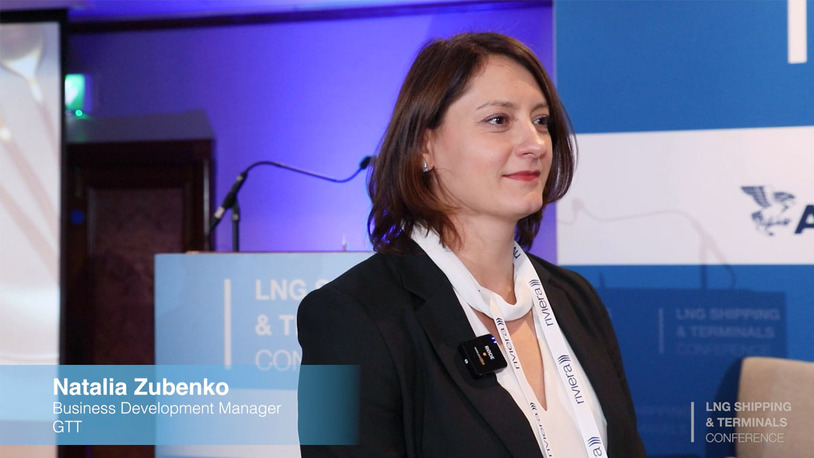
GTT business development manager commercial division Natalia Zubenko set out the structure and evolution of membrane containment and linked that development to concepts prioritising capacity at lower service speeds at the October 2025 LNG Shipping & Terminals conference.
Ms Zubenko described the core architecture in layered terms: a primary membrane in corrugated stainless steel in permanent contact with LNG, followed by insulation, a secondary barrier, and a further insulation layer, delivered in multiple variants across the Mark III and NO96 families.
Ms Zubenko stated successive iterations in these containment families are intended to improve thermal performance while remaining buildable at the South Korean and Chinese yards that offered them.
She also referred to a next-generation configuration combining benefits of the two membranes – Mark III for the primary membrane and an NO96-type secondary membrane – with polyurethane foam insulation between the barriers.
Turning to transport economics, Ms Zubenko argued market practice already points to slower steaming in service and design baselines could reflect this reality.
The concept GTT presented paired lower design speed with increased cargo capacity so that, over a voyage cycle, owners could move the same LNG volumes with fewer sailings.
In her words, the result promised “much less CO2 emissions” for the same transport work, subject to routeing and operational constraints, without departing from familiar terminal interfaces.
On ethane, Ms Zubenko said standard very large ethane carriers have clustered around 98,000 m³ and pushing above that figure with the usual geometry had been challenging.
She reported that, working with shipyards, the team had achieved about 103,000 m³ within the same overall hull dimensions on the latest projects, offering additional volume without a step change in the envelope.
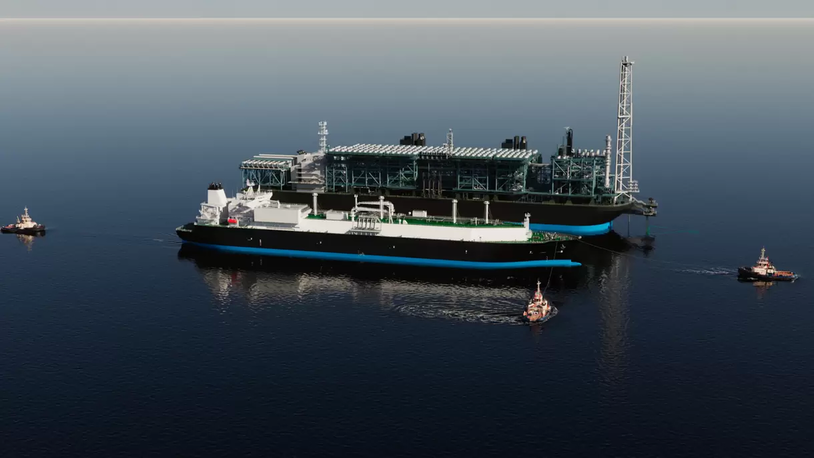
Alongside this, she outlined a 150,000-m³ ’ultra-large’ ethane concept, and while acknowledging a single larger ship implies higher unit capex, she framed the comparison against two conventional VLGC-scale ethane carriers and argued the larger design could deliver capex and opex advantages at the fleet-planning level.
An important factor to note is the concept preserves draught compatibility with existing terminals.
Sign up for Riviera’s November 2026 LNG Shipping & Terminals Conference:
- Register to attend here: The LNG Shipping & Terminals Conference.
- To take part in the Conference or webinars, please contact Ian Pow: ian.pow@rivieramm.com
- View the latest issue of LNG Shipping & Terminals here: LNG Shipping & Terminals.
Related to this Story
Events

© 2026 Riviera Maritime Media Ltd.


