


Business Sectors
Events
Offshore Support Journal Conference, Middle East 2025
 09 Dec 2025
 DUBAI
DUBAIContents
Register to read more articles.
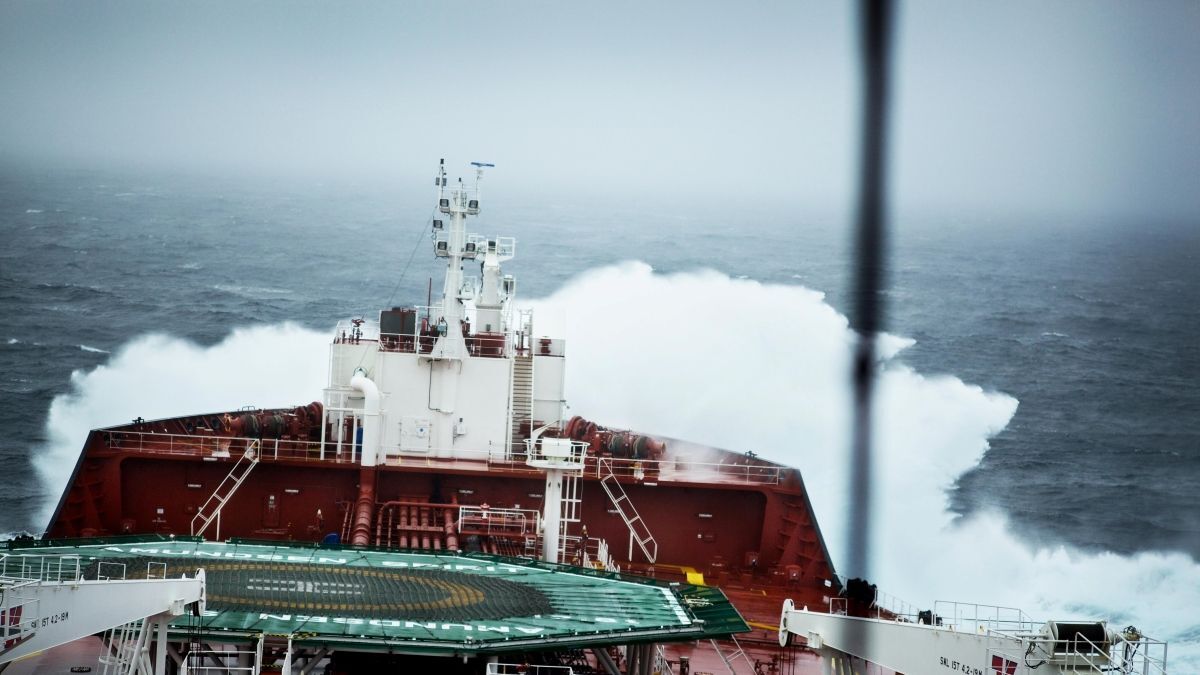
Brazil, Guyana shape shuttle tanker outlook
Shuttle tanker market growth driven by Brazil and emerging Guyana demand despite political risks


Brazil’s offshore oil production continues to underpin growth in the shuttle tanker segment, but the rise of Guyana as a new production hub is reshaping the market’s strategic outlook.
Speaking during the 1 July 2025 webinar Market dynamics and strategic partnerships in shuttle tanker operations, Maritime Strategies International (MSI) director Tim Smith and Jose Pereiro & Associates energy analyst Jose Chalhoub highlighted how fleet expansion, political risk and the geography of offshore development are influencing investment decisions.
Mr Smith explained the shuttle tanker market has remained resilient despite fluctuations in the broader conventional tanker segment, “The North Sea remains an established region, mostly using Aframax tonnage, but Brazil has become the key driver of growth. Its fields, such as Búzios and Mero, are ultra-deepwater and depend on shuttle tankers due to the absence of pipelines,” he said.
He noted a growing divergence between shuttle and conventional tanker trends, “Utilisation rates in the shuttle tanker sector are projected to reach 87% by 2027, while conventional one-year time charter rates have fallen 30% in 2025.”
MSI forecasts steady demand growth of around 4% per year, driven heavily by Brazilian offshore developments, and Mr Smith acknowledged “this is lopsided and heavily dependent on Brazil.”
He also highlighted new orders, such as the recent 10-vessel order by CTRAN (Chacol), will push the shuttle tanker orderbook-to-fleet ratio to around one-third, with most of the new tonnage in the Suezmax segment.
Mr Chalhoub focused on the potential for Guyana to emerge as the next major demand centre for shuttle tankers, “Guyana’s production has grown exponentially since ExxonMobil began offshore developments. Output reached 667,000 barrels per day in May 2025 and is forecast to reach 1.3M barrels per day by 2027,” said Mr Chalhoub.
He described how fields such as Liza and Payara in the Stabroek Block, supported by multiple FPSOs, are exporting crude directly to Europe – particularly the Netherlands – via offshore terminals.
Despite the optimism, both speakers acknowledged the risks.
“Guyana lacks a national oil company or robust regulatory framework,” said Mr Chalhoub, adding ExxonMobil effectively runs operations on behalf of the state.
He also warned of piracy and escalating territorial disputes with Venezuela over the resource-rich Essequibo region. “Geopolitical and territorial disputes are the number one risk to Guyana’s oil sector,” he said.
Mr Smith observed that shuttle tanker demand could be undermined in theory by pipeline investment. He argued Brazil’s offshore production remains too remote and technically challenging for such infrastructure. “Petrobras has just ordered nine Suezmax shuttle tankers. That tells you its commitment,” he said.
A webinar poll revealed that 56% of participants expect shuttle tanker consolidation only in select regions or vessel sizes, while 22% expect broad-based consolidation. When asked about Guyana’s biggest risk, 89% cited geopolitical and territorial disputes. Political and regulatory uncertainty was identified as the most pressing concern for both Guyana and Brazil (88%).

Webinar panel: from left to right – Jose Chalhoub (Jose Pereiro & Associates) and Tim Smith (MSI) (source: Riviera)
Related to this Story
Norvik chosen for Ports of Stockholm CO2 hub
Events
Offshore Support Journal Conference, Middle East 2025
09 Dec 2025DUBAI
Maritime Regulations Webinar Week
16 Dec 2025GMT - ONLINE
Maritime Decarbonization Conference, Americas 2026
22 Jan 2026HOUSTON
Offshore Wind Journal Conference 2026
02 Feb 2026London
© 2024 Riviera Maritime Media Ltd.


