


Business Sectors
Events
Contents

Register to read more articles.
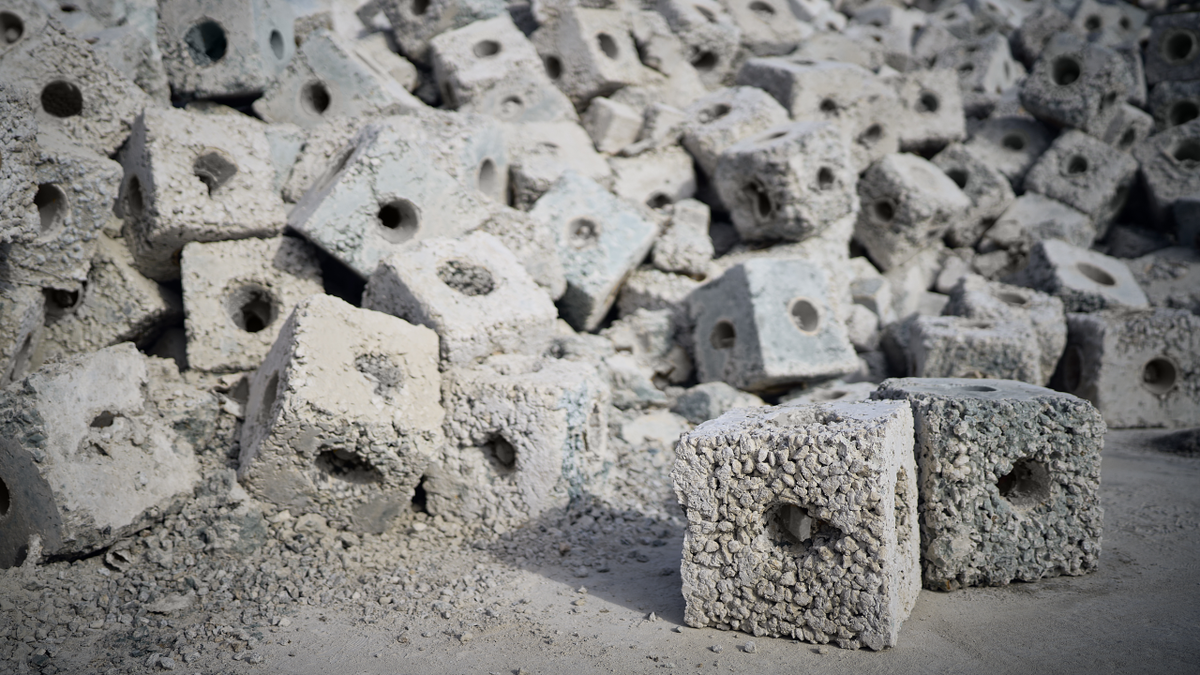
OranjeWind to use nature-inclusive, biodiversity-enhancing reefs around turbines
RWE and TotalEnergies, the partners in the OranjeWind offshore wind project, have signed an agreement with ARC marine to use ‘Reef cubes’ on the windfarm


Installation of the foundations of OranjeWind will start in 2026. Once the construction of the offshore windfarm is complete, 66 Reef cubes will be placed around 11 of the foundations for the wind turbines. The project will be one of the largest deployments to date of artificial reef structures at a windfarm in the North Sea.
RWE first trialled the Reef cubes in place of conventional scour protection on the Rampion offshore windfarm in the UK. The developer described the Rampion pilot as a ‘flagship project’ that could demonstrate and evaluate the potential of ‘nature-inclusive design’ solutions to effectively meet engineering and biodiversity requirements in the offshore wind market.
On the OranjeWind project, 1.5-m Reef cubes are being used purely as ‘biodiversity enhancement,’ on top of conventional scour protection, installed around selected turbine foundations to deliver targeted ecological uplift. Used in this way, they will provide an enhancement function, whereas the previous project with RWE was a form of ‘reef-enhancing scour protection.’
The Reef cubes will create 1,440 m² of surface habitat. Each cube weighs almost 6,000 kg, is 1.5-m high and is made of low-carbon, recycled materials that are certified as safe for the marine environment. Shell material will be included in the mix to promote native oyster settlement and long-term habitat formation. The cuboid design of the cubes is proven for stability, efficient transport and ease of deployment. They will remain in place for the full operational lifetime of OranjeWind.
The Reef cubes contain cavities and have a texture that makes them an attractive habitat for flora and fauna. Trials by ARC marine in the North Sea demonstrated that a wide range of species lived in and directly around the Reef cubes. The expectation is that similar results will be delivered at the OranjeWind windfarm. Cod and native oysters have been selected as focal species because they create wider ecological benefits. By providing the habitat and shelter they require, the project is expected to support a much broader community of marine life across the ecosystem.
ARC marine chief executive Tom Birbeck said, “This order marks the transition from pilot projects to commercial delivery. It shows that leading developers are implementing nature-inclusive design at scale, not just testing it.
“The OranjeWind project proves that biodiversity enhancements can fit seamlessly into offshore construction, providing measurable ecological value alongside asset protection.”
The 795-MW OranjeWind windfarm will be built 53 km from the Dutch coast. Offshore construction is expected to start in 2026. The windfarm is due to be fully operational early in 2028.
Riviera’s Offshore Wind Journal Conference will be held in London on 2 February 2026. Use this link for more information and to register for the event.
Related to this Story

Events

© 2024 Riviera Maritime Media Ltd.


