


Business Sectors
Business Sectors
Events
Contents
Register to read more articles.
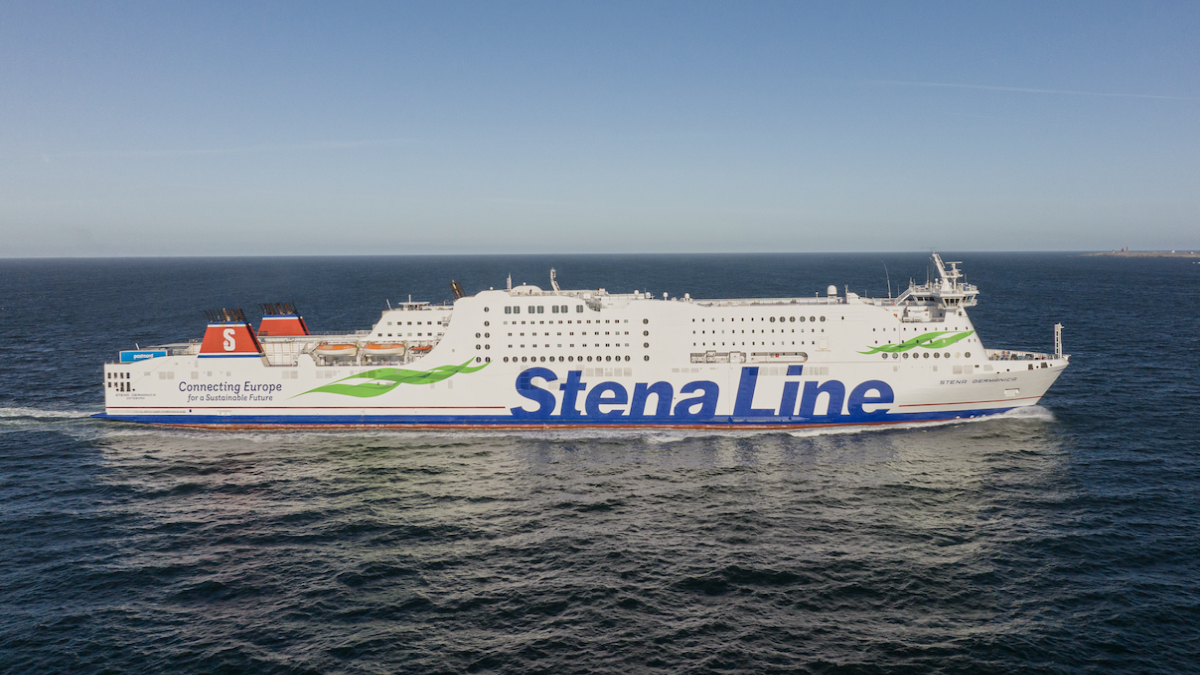
Stena Line trials AI roro cargo planner to enhance safety
A major Scandinavian operator of roro ships is trialling a digital tool that can automatically plan cargo loading and ship stability


Stena Line has supported development of stability management and cargo planning tools for its roro and ropax vessels to improve safety and shipment handling.
A digital solution, using artificial intelligence (AI) is being trialled on a vessel operating between Gothenburg, Sweden, and Kiel, Germany, before being implemented on more ships sailing on regular shortsea voyages in northern Europe.
Stena Line worked with Finland’s Napa to further advance and deploy an AI-assisted cargo loading and stability management device already used by cruise ship operators to prove its capabilities in the roro segment.
Roro and ropax operations pose a cargo management challenge unlike almost any other vessel type, according to Stena.
A single Stena ropax voyage can include up to 1,300 passengers, 90 trailers, 120 lorries, 45 containers, 180 cars, 25 cars with caravans, 30 mobile homes and 35 dangerous goods units, and in some cases, livestock and rail cargo.
For these voyages, officers plan cargo placement, verify stability, manage dangerous goods segregation requirements and confirm departure conditions within short turnaround windows, often in less than two hours, in ports.
Much of this work has been manual, and cargo manifests arrived by email, while information on dangerous goods is entered unit by unit into the loading computer.
Napa’s Stability for RoRo solution can do much of this automatically by connecting directly to the operator’s booking system, reducing time, raising accuracy and freeing up these officers for other important safety matters.
“The ability to import accurate booking data directly from our systems into the loading computer, with correct weights and cargo types, means we are making stability decisions based on real data, not estimates,” said Stena Line officer, David Svanström.
“The flexibility to switch between manual and auto mode means officers stay in control while the system does the heavy lifting on routine planning.”
According to Napa, cargo data - including unit types, weights, quantities and dangerous goods classifications - is imported automatically into the loading computer.
“Officers work from accurate, ready-to-use booking data for every journey, helping save time that can be reinvested into operational oversight and safety decision-making,” said Napa.
They can use a visual cargo planner to load units on vessel decks, split or move items, and see the impact of every loading decision on vessel stability in real time.
Crews can use AI-based software to optimise larger cargo batches and segregate dangerous goods in line with the requirements of IMO’s International Maritime Dangerous Goods (IMDG) Code.
“On a ropax vessel, getting the cargo in the right place is one of the most complex parts of every departure - stability, trim and fuel management, and dangerous goods segregation, all under time pressure,” said Stena Line’s captain of Stena Germanica, Jörgen Gustavsson.
“With Napa’s Stability for RoRo, the manual work is essentially gone. What used to take our officers hours in data entry and planning now takes 10 to 15 minutes,” said Capt Gustavsson. “That time goes straight back into the operation, where it matters most.”
Loaded cargo plans, including exact IMDG cargo locations, are shared with Napa’s fleet intelligence software, providing shoreside managers with real-time visibility of vessel loading conditions.
Napa said this has direct safety implications, as shoreside teams can respond immediately to an emergency or ship fire, with knowledge of the location of dangerous goods on board.
Riviera and Metis will host the AI in Fleet Performance Management: From Data to Decisions webinar at 09:30 – 10:30 GMT+1 on 12 May 2026. Use this link to join the webinar and for more details.
Related to this Story
Events

© 2026 Riviera Maritime Media Ltd.


