


Business Sectors
Business Sectors
Events
Contents
'Rain is coming': major Greek owners warn over swelling orderbook
Big-ticket Greek shipping names have voiced concerns over the aggressive newbuilding run of recent months, which has swelled the orderbook and raised fears of oversupply


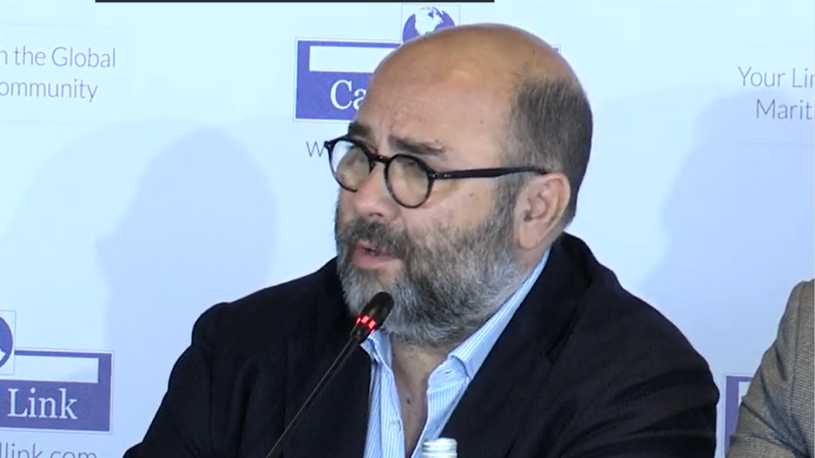
TMS Group founder George Economou told a Capital Link event during Posidonia that the industry’s main concern in terms of market fundamentals is now the growing supply of ships.
He likened the situation to gathering storm clouds, warning that rain may be on the horizon.
“When you order new ships, you never know how many others will follow and place orders after you. We ordered ships two to three years ago and have now taken delivery of almost everything,” Mr Economou said.
At the same event, Angelicoussis Group chief executive Maria Angelicoussis noted that there has been an exuberance of ordering activity, particularly in the VLCC sector.
She also pointed to the number of newcomers entering the market and questioned the sustainability of some of these ventures, given the effort required to manage such vessels.
However, Ms Angelicoussis tempered those concerns, noting that the orderbook remains relatively balanced. She made particular reference to older ships and vessels operating within the dark fleet.
Commenting on the group’s long-standing newbuilding activity, she said: “We’re long-term owners, not short-term asset traders.”
Post-disruption downturn: it’s just mathematics
While shipping markets remain buoyant as geopolitical tensions continue to drive disruption and longer tonne-mile demand, what happens once these exceptional conditions fade remains a major question mark.
“We must be careful about the market when it softens from the current rally,” StealthGas, Imperial Petroleum and C3is Inc founder Harry Vafias said.
He pointed to significant investment in both secondhand and newbuilding tonnage, including orders placed at shipyards with limited or no previous track record.
Echoing this sentiment from the container shipping perspective, Global Ship Lease executive chairman George Youroukos said that once conditions normalise, the market is likely to come under pressure because of the size of the orderbook.
“This is just mathematics,” he said.
Mr Youroukos added that the industry appears to be suffering from a fear of missing out (FOMO), which is driving investment across the shipping spectrum.
However, he distinguished between speculative orders and those backed by charter contracts, arguing that the latter provide an effective form of risk management.
Commenting on the prospect of a market downturn, Mr Youroukos said the industry needs both upcycles and downcycles.
“In good cycles you make money and keep it. In bad cycles you use it,” he said.
Related to this Story


Events

Maritime Regulations Webinar Week
 16 Dec 2025
 GMT - ONLINE
Floating energy: successfully unlocking stranded gas using FLNGs and FSRUs
24 Feb 2026GMT - ONLINE
© 2026 Riviera Maritime Media Ltd.


