


Business Sectors
Business Sectors
Events
Contents

Register to read more articles.
OSV owners challenged by rising costs, crew recruitment
While demand for OSVs remains generally strong in Asia, there are challenges in maintaining high utilisation and competent seafarers in local markets


Offshore support vessel (OSVs) owners in southeast Asia have benefitted from rising demand and rates in the region, but there are still considerable challenges to overcome.
Demand for energy is increasing across the Asia-Pacific region driving development of new offshore gas and oil fields, and increased maintenance on existing ones, but regulatory, technical and contractual issues, and rising capital costs are delaying projects.
Owners at Riviera’s Offshore Support Journal Conference, Asia 2024, held 17-18 September in Singapore, described some of these market hotspots and their challenges in the region.
Market conditions are good at present for owners, with high demand and fleet utilisation, climbing charter rates and interest from energy companies in all types of vessels.
However, the shortage of available vessels means charterers are asking owners to order new ships and keep a cap on rates to make these assets more sustainable.
Tidewater Asia Pacific managing director, Joanne Ang, thinks the biggest risk to this upbeat market is owners answering growing calls on investment in new vessels. This comes as owners globally have signed contracts, or are holding options for, around 50 OSVs newbuilds.
“Our business is driven by demand and supply. If rates are too high, people will speculate on newbuilds that are not needed in the market - everyone needs to be sustainable and profitable,” said Ms Ang.
“There is money to be made but it may not be sustainable for all,” she said, and highlighted the need for charter rates “to be sustainable for owners and charterers” as if they go too high, energy companies could defer or delay projects, thus eroding future demand.
“We do our best to retain and train crew. Our cadet programmes are important”
Ms Ang thinks what owners do in the next 12 months will be important for the long-term market. “We need to manage increases in rates, so it is sustainable. We should not erode value we have made in industry,” she said.
“We own long-life assets that we need to maintain and pay for crew, even if they are not working.” But it is difficult to retain, attract and train seafarers when global fleets are growing in all shipping and offshore sectors.
“It is difficult to attract new talent,” said Ms Ang. “We need our people to maintain our vessels up to standard and continue operating,” she said, adding the OSV sector needs to attract the next generation of seafarers.
Britoil Offshore Services head of SBU in Asia Pacific, Ernest Loh, agreed recruiting seafarers and retaining their experience are key challenges.
“We must ensure crew know how to take good care and maintain vessels,” he said. “A lot of senior seafarers have left or retired, and it is difficult to recruit younger people."
He proposed dedicated cadet training for working on OSVs and introducing software and artificial intelligence (AI)-based tools to attract younger talent, and “perhaps calling them offshore energy vessels” instead of oil and gas support vessels. “We do our best to retain and train crew. Our cadet programmes are important,” he said.
Mr Loh highlighted the importance of securing finance for fleet renewal, retrofits and digitalisation programmes, such as real-time fuel monitoring. “It is extremely important to set aside money for investments for the future requirements,” he added.
But cost inflation is also becoming a challenge for owners, especially when there is pressure to control rate increases at sustainable levels. “We recovered from a supercycle so we need to keep down operating costs and plan maintenance in advance,” said Mr Loh. “When the market turns, there is always a lag effect on costs, something we need to consider.”
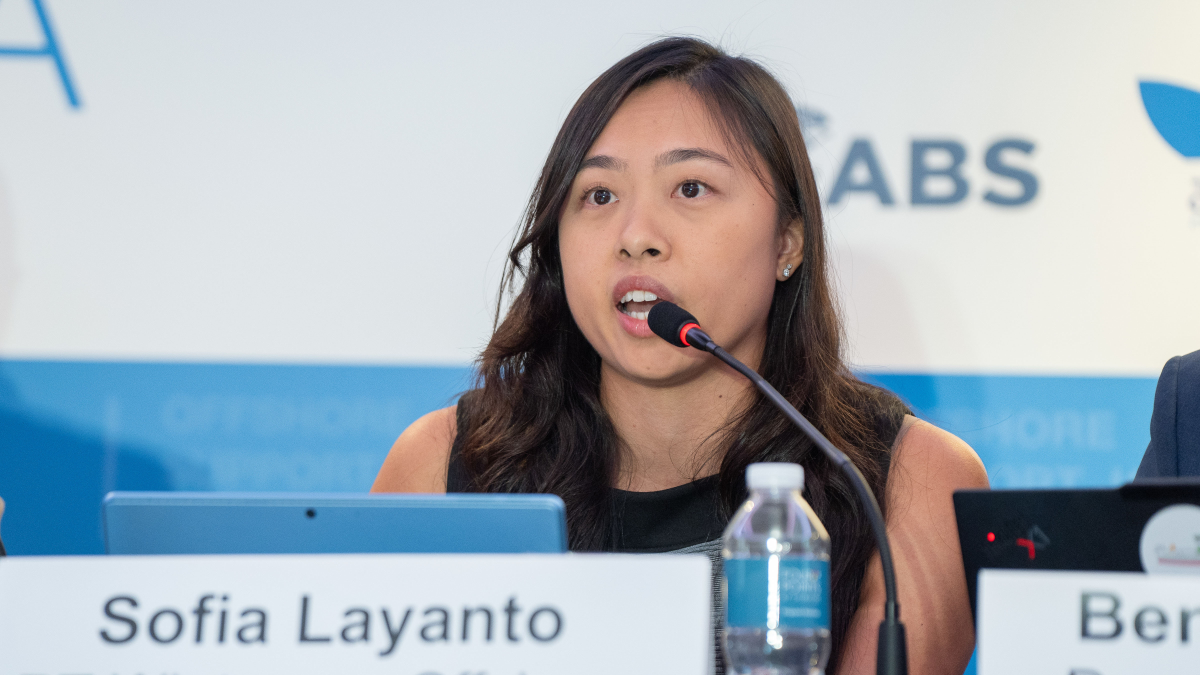
This is also important in cabotage markets were supply remains higher than demand. Wintermar Offshore Marine head of IT development, Sofia Layanto, said cabotage rules in Indonesia have resulted in a glut in OSVs in the country and pressure on owners to reduce charter rates. “There is a lot of competition and rates are not picking up,” she explained. “Rates are being kept repressed by charterers.”
There is little incentive to invest in fleets as “there is no limit in vessel age,” Ms Layanto added. This is a closed market to international operators where demand is limited and “many owners are willing to work at low rates” with the lowest day rate agreed at less than US$3,000.
“Exploration has fallen, ageing fields need investment in enhanced recovery,” said Ms Layanto, who expects progress on three key projects - Tuna, Abadi LNG and IDD deepwater - in the coming years, but regulatory complications are leading to uncertainties.
Malaysia and Thailand
Malaysia OSV Owners’ Association (MOSVA) president, Jamalludin Obeng, said it is time for a fleet renewal in Malaysia as the average age of the 350 OSVs operating in that country is about 13-15 years old.
“If we consider the fleet in five years’ time, we will not want the same vessels, constructed nearly 20 years ago, still in operation,” said Mr Obeng.
Association of Marine Industries of Malaysia president, Adren Siow, said Malaysian state energy producer Petronas is increasing the age of vessels it is willing to charter to more than 15 years, and could source assets from outside the country.
However, Petronas is planning more greenfield developments and brownfield maintenance in offshore Sarawak and Peninsular basins, which could lead to a supply gap, triggering a round of newbuild activity for six anchor handlers and platform supply vessels to enter the Malaysian market in 2026.
But a lack of finance, regulatory and cabotage risks and rising shipyard prices are preventing owners from investing in newbuilds. “It is not easy to finance newbuilds, there is a lot of pressure from banks, so oil and gas are low priority,” said Mr Obeng. But Petronas is also encouraging vessel owners to monitor fuel consumption, onboard machinery and emissions, creating demand for digital and software solutions.
In Thailand, OSV owners are focusing on technology to reduce emissions from crew and cargo transfers to existing fields and are preparing for a future round of platform decommissioning.
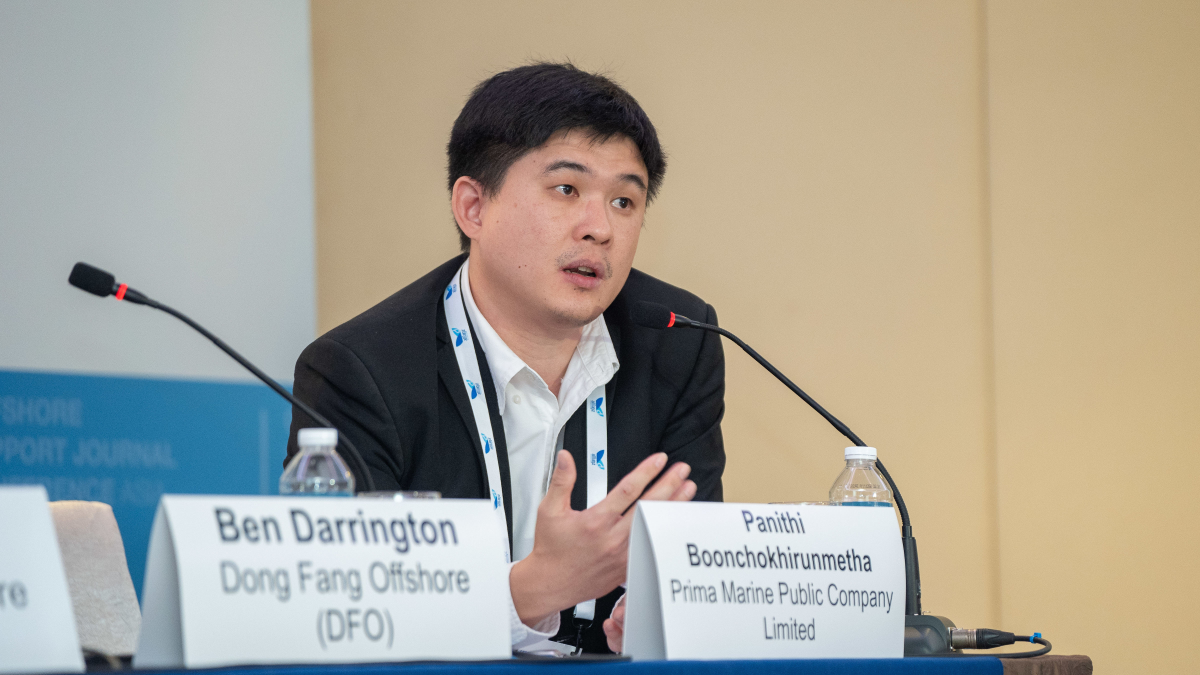
Prima Marine Public Co project manager, Panithi Boonchokhirunmetha, explained how the shipowner is investing in new crew transfer vessels with hybrid propulsion to lower fuel consumption and emissions. It has achieved these targets with Lloyd’s Register-classed newbuilds from Strategic Marine and Southerly Design. On TMS Ranoo and TMS Raman, Prima’s subsidiary Truth Maritime Services has used batteries instead of gensets for onboard power and to reduce engine use for transits.


Related to this Story


Events

© 2026 Riviera Maritime Media Ltd.


