


Business Sectors
Business Sectors
Events
Contents
All-electric tugs: driving the future
Advancements in battery, drive, and motor technology mean that all-electric tugs are now possible – and they’re operating in ports around the world today. At the heart of a successful electric tug is a compact, highly efficient drive system, explains Daniel Olsson, Global Sales Manager, Marine, ABB Motion.


There are many advantages to all-electric tugs: they are quieter, cheaper to operate and maintain, and produce no direct emissions.
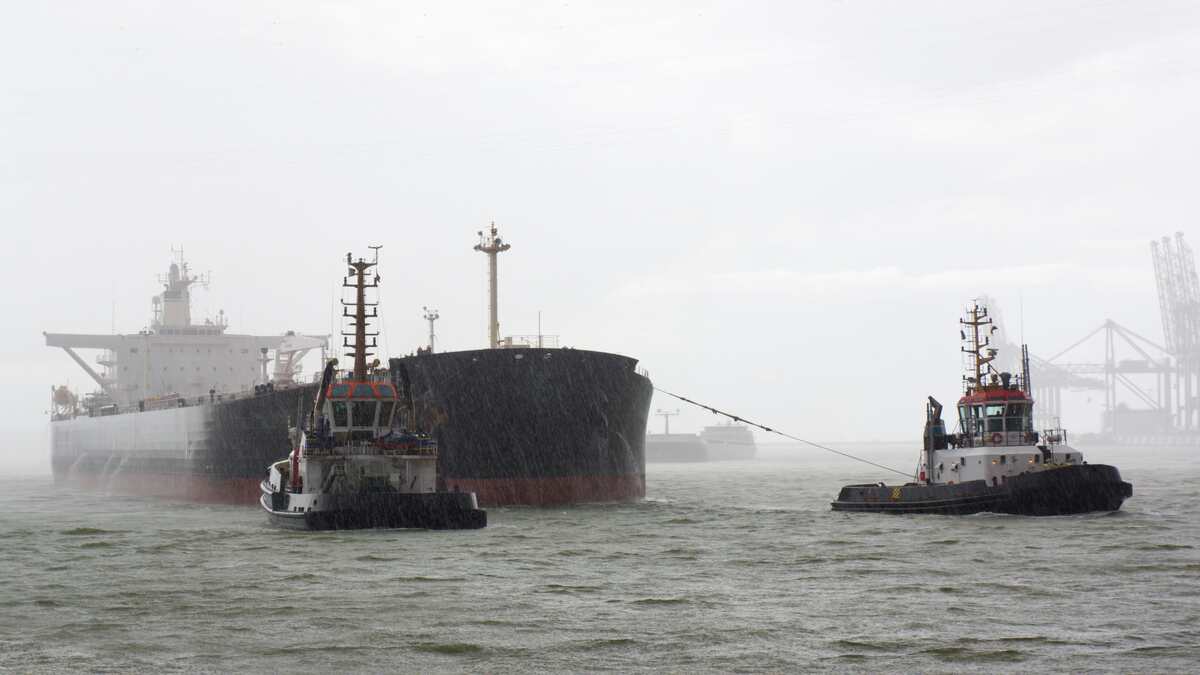
Tugs are designed for maximum bollard pull, but spend most of their time with very moderate power demand. Most of a tug’s operation is in transit, standing by or pushing/pulling with low power. It is typically only during a very small percentage of the operating time that full power is required, such as in an emergency manoeuvre during escort towing, or when assisting a big vessel on a very stormy day.
Since the tugs need to be capable of providing all that power, even though it is rarely used, they are traditionally designed with two very powerful diesel engines. This also means that most of the time these engines are running at low loads, which is less fuel efficient, while still accumulating running hours towards maintenance intervals.
Battery-electric drivetrains on the other hand are very efficient across the power range, which makes them a good fit for applications with big variations in power demand, such as a tug. The maintenance need for an electric drivetrain is also very limited which means that the overall operational costs are kept low.
The other big benefit of electric drivetrains is the ability to generate lots of thrust very quickly. Electric tugs are incredibly responsive when in operation, making them very useful in challenging situations, such as tight manoeuvring in bad weather.
It’s all about efficiency
Arguably the most important property of a marine powertrain is efficiency. This is even more true for a battery powered vessel, since less energy used means smaller batteries installed. This, in turn, means less weight to transport around and lower initial capital spend.
The efficiency of an electric drivetrain is primarily determined by two parts, the electric motor and the electric drive system.
Electric motors have improved a lot in recent years. ABB offers a wide range of highly efficient motors, including alternative technologies such as permanent magnet and synchronous reluctance motors. With ABB motors, you can maximize the utilization of every kilowatt-hour in your batteries, ensuring outstanding performance and efficiency.
As for the drives, most battery-powered tugs are based on a DC main power distribution system, rather than AC. Electric drives are at the centre of this system and tie together the power sources like batteries or gensets with the energy consumers, such as motors for propulsion or firefighting pumps. They are also used in grid-forming mode to create the AC grid required for auxiliary consumers such as lighting, navigational systems and everything else that run on AC in the vessel.
This DC grid based on drives makes it easy to integrate batteries and reduces the conversion steps between the battery and the propulsion motor for a very high level of efficiency. Efficient system design is the first important step for overall efficiency. The next important step is to select a drive with low energy losses.
Sudden changes in speed and torque – which are common for tug motors – can reduce efficiency unless the appropriate drive is used. The ABB ACS880 drive has a high overload capacity and uses patented Direct Torque Control (DTC) for excellent control and rapid response times to maintain efficiency in demanding circumstances.
Other important factors to consider when choosing drives for electric tugs include:
• The liquid cooled advantage: Electric tugs typically rely on liquid-cooled (LC) drives and ABB ACS880LC takes it one step further with fully enclosed drive cabinets that remove contamination risk from the outside air and ensure superior cooling performance for the highest possible efficiency. This allows for very compact drive cabinets and drastically reduces the need for bulky air ducts and HVAC systems, which is critical to ensure everything fits into the cramped spaces of a tug.
• Smarter, data-driven maintenance: Another significant benefit of modern drive technology is that it can provide operators with in-depth, real-time data on drive and motor performance. This gives them an opportunity to spot potential issues before they become critical, which enables smarter maintenance and minimizes downtime. ABB drives also support remote monitoring and diagnostics, which makes for convenient fleet management and troubleshooting.
• Charging infrastructure: Charging stations are planned based on comprehensive analysis of port tug operations, including different tug types, battery banks, and power consumption. This determines charging speed and duration, influencing the required charger capacity. AC to DC conversion on land via a charging station saves onboard space by eliminating a converter. Alternatively, onboard AC to DC conversion offers flexibility in accessing high-power AC connections in new ports compared to setting up DC charging stations.
Long-term benefits – for operators and the environment
Electrifying tugs unlocks new opportunities for the maritime industry. Now that battery, drive and motor technology are advanced enough for these challenging applications, operators can benefit from significantly lower operating costs.
|
|
At the same time, these vessels release zero emissions while operating, increasing air quality in their operating environment and improving quality of life for crews. If powered using renewable electricity, they can bring their total operating emissions to zero, which is a huge step forward for sustainability. Given these benefits, the case for specifying electric tugs today is clear – and the technology will only continue to improve. Learn more at new.abb.com/drives/segments/marine. |




Related to this Story


Events

© 2026 Riviera Maritime Media Ltd.


