


Business Sectors
Business Sectors
Events
Contents
Register to read more articles.

Alfa Lift build facing further delays – Strashnov lined up to start Dogger Bank work
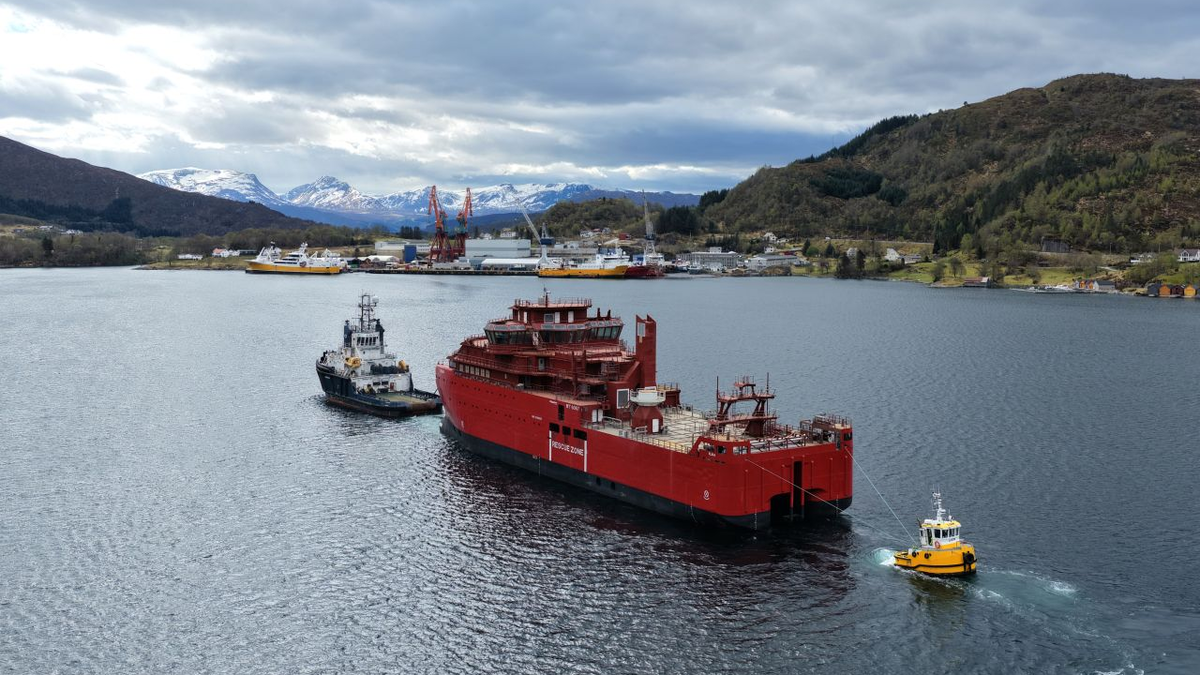
Seaway 7 said it continues to face challenges in the ‘critical path’ introducing into service its new-generation offshore installation vessel Alfa Lift


Presenting the company’s fourth quarter and full year 2021 earnings presentation, Seaway 7 chief executive Stuart Fitzgerald and chief financial officer Mark Hodgkinson said the vessel had conducted initial sea trials, verifying the vessel’s marine systems and performance, but there are ‘ongoing problems’ with key suppliers, including delays in the delivery of the vessels’ pile upending and installation equipment.
The vessel was due to start operations in Q1 2023, but a contingency scenario has been activated using another vessel, Seaway Strashnov, to progress work on Dogger Bank A if Alfa Lift is not ready.
Seaway Strashnov is a high-specification monohull crane vessel with a successful track record. The vessel is capable of a lifting height of approximately 100 m with its 5,000-tonne main hook and 130 m with an 800-tonne auxiliary hook that enables it to undertake projects from dual hook upending of large jackets to heavy topside installations, but is unlikely to be able to match Alfa Lift in terms of efficiency and speed of installation of monopile foundations for wind turbines.
In contrast to Seaway Strashnov, Alfa Lift is a purpose-designed semi-submersible unit that is customised for foundation installation for the offshore wind market. It has a ‘smart deck’ capable of carrying and installing up to 10 XL monopiles or eight jackets per voyage, and has a very different concept of operations to the monohull vessel*.
The supplier problems with Alfa Lift follow hard on the heels of an 18 October 2021 incident that occurred with the A-frame for the vessels main crane, it’s main ‘tool’ for offshore installation.
In the incident, said Seaway 7, “The A-frame folded down in an unplanned, uncontrolled way.” It took place at the yard in China that is building Alfa Lift, China Merchants Heavy Industry (CMHI).
In the 3 March 2022 presentation, the company said that no design deficiencies in the crane had been identified from a root cause investigation of the incident, but repairs to the crane are not expected to be complete until the second half of 2022.
As highlighted by OWJ in October 2021, Seaway 7 has been "assessing contingencies and mitigations" should Alfa Lift, the vessel due to install all of the foundations for what will be the world’s largest offshore windfarm, be late entering into operation.
Seaway 7 is contracted to install the foundations for all three phases of the 3.6-GW Dogger Bank offshore windfarm, which is to be built more than 130 km off the Yorkshire coast in the North Sea. It is being developed in three 1.2-GW phases: Dogger Bank A, B and C.
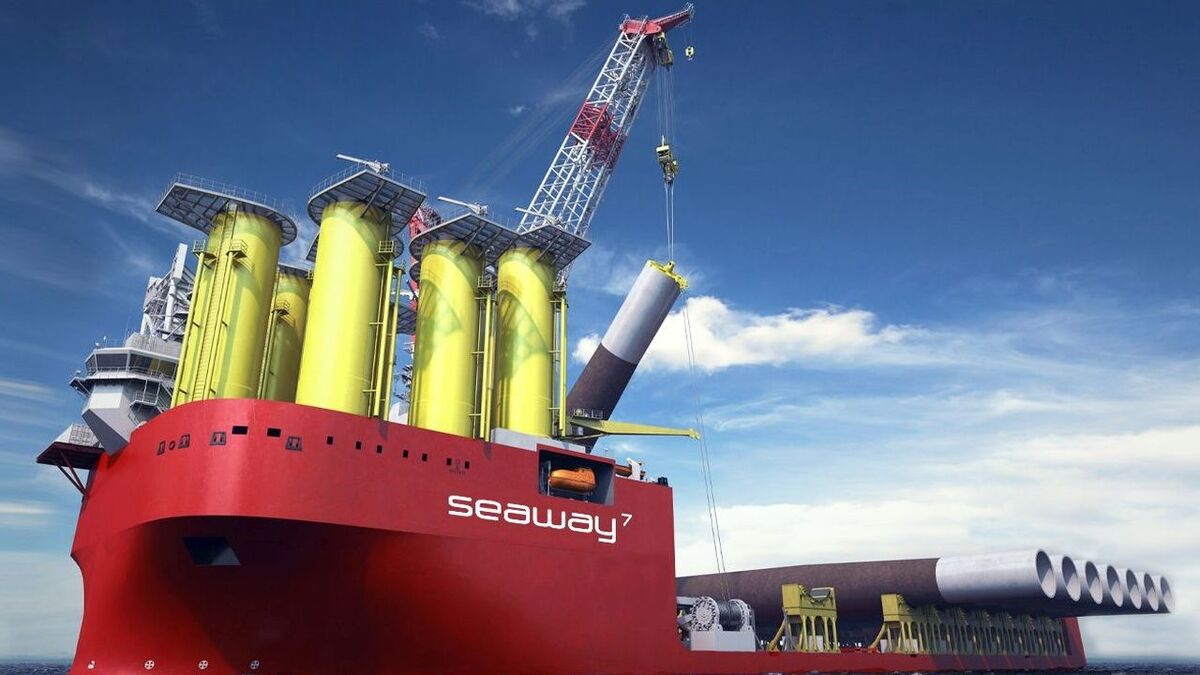
*Compared with a floating installation vessel or a jack-up, an installation vessel that can submerge like the semi-submersible heavy-lift ship of the type that Seaway 7 is building has important advantages: being able to submerge reduces motions, increasing workability in installation mode; and submerging also provides the vessel with a secondary role as a heavy transport vessel capable of transporting heavy modules, jack-ups and other cargoes.
The key to the concept is that a submersible vessel has better motion characteristics when submerged than a typical monohull vessel.
Having submerged, the Alfa Lift vessel remains submerged while a foundation is installed, and remains submerged while it moves in dynamic positioning mode to the next foundation location. The vessel is designed only to come back to the surface if the weather picks up significantly, or if operations have been completed and a new batch of foundations needs to be loaded. This means the design is both more stable and more efficient than a monohull.
Related to this Story
Events

Maritime Regulations Webinar Week
 16 Dec 2025
 GMT - ONLINE
Floating energy: successfully unlocking stranded gas using FLNGs and FSRUs
24 Feb 2026GMT - ONLINE
© 2026 Riviera Maritime Media Ltd.


