


Business Sectors
Business Sectors
Events
Contents
First Marin Teknikk multihull arrives in Norway as designer outlines other potential uses
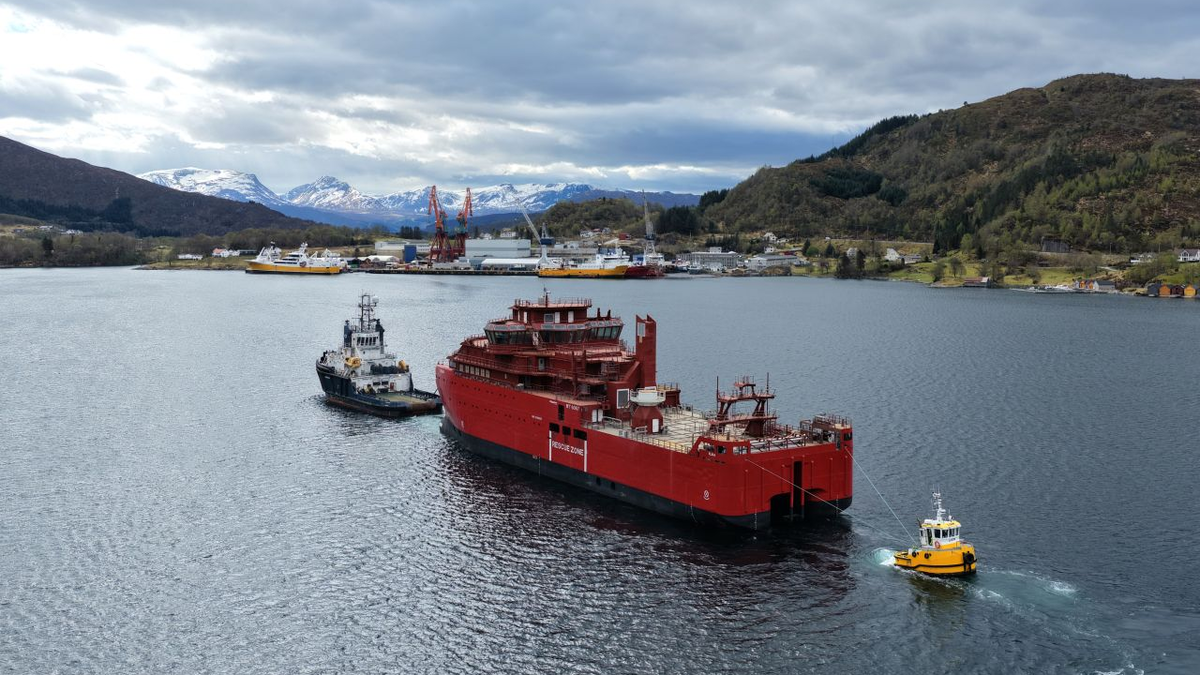
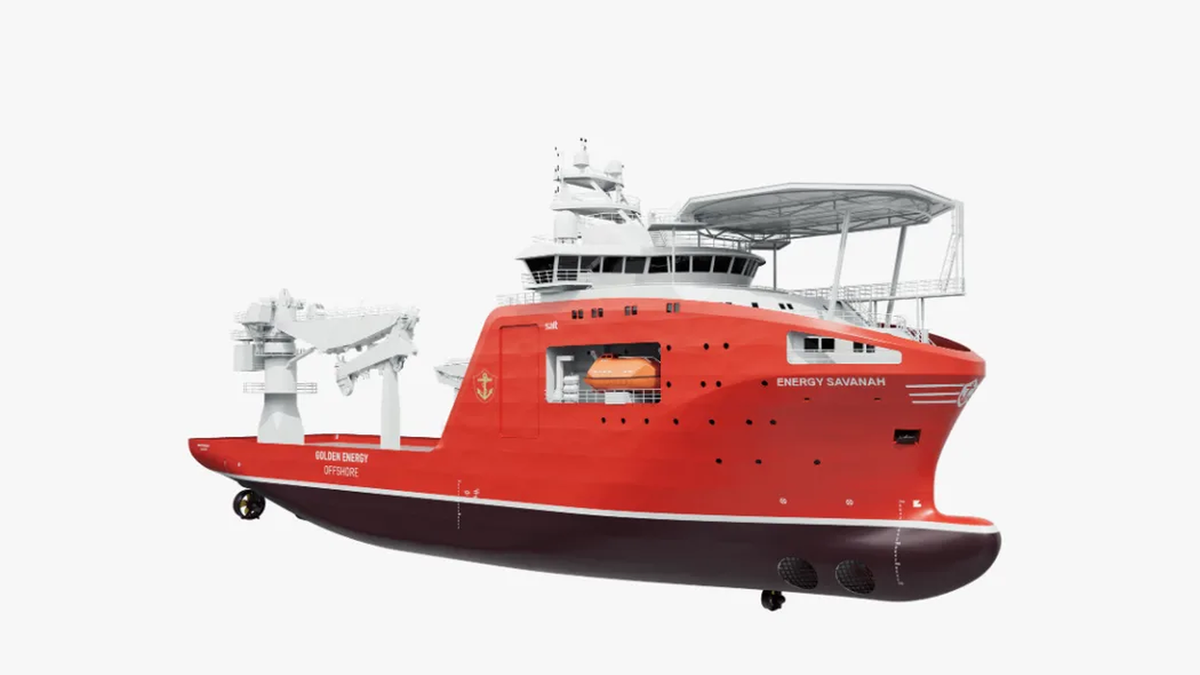
The first vessel based on Marin Teknikk’s Multi Hull Design (MHD) arrived at Green Yard Kleven in Norway on 18 April 2026 for outfitting and final completion, as the designer outlined other potential applications of the hullform


The hull of the MT 6067 vessel, Elisa, which is being built for Austrian/Romanian energy company OMV Petrom, was built at Montex Shipyard in Gdansk.
“After years of development, this marks a significant milestone for Marin Teknikk,” said the Norwegian designer, noting that the project originates from an internal concept that was developed through extensive engineering work and validated by three model tests conducted at SINTEF Ocean.
A key feature of the design is Marin Teknikk’s motion compensating system (MCS), which enables safe walk-to-work operations in sea states up to Hs = 4.5 m. Another key feature of the design is that, compared with conventional vessels, it enables remotely operated vehicles (ROVs) to be deployed in more challenging conditions than would otherwise be possible. Marin Teknikk states that, for a 70-m vessel based on the MHD design, an ROV could be launched over the side of the vessel in sea states up to Hs = 6 m, because of the design’s reduced vertical heave velocity.
“By significantly reducing vessel motions, the MHD concept improves operability, extends weather windows, and enhances working conditions for both crew and equipment offshore,” said the Norwegian designer. “The system is fully passive, requiring no energy input, contributing to a more sustainable and efficient offshore operation.”
In addition to walk-to-work vessels such as Elisa, Marin Teknikk is actively developing MHD-based concepts for a wide range of applications offshore. These include standby and rescue vessels optimized for harsh environments such as the Norwegian Sea, Barents Sea, and areas west of Scotland; subsea construction, inspection, maintenance and repair and ROV support vessels with improved lifting and operational performance; seismic node-handling vessels; vertical lay vessels for flexible and rigid pipelines (150–650-tonne tension capacity), enabling smaller and more cost-efficient vessel designs; cable-laying vessels for telecoms and subsea power cables; heavy-lift vessels with crane capacities up to 5,000 tonnes SWL; and offshore mooring installation vessels.
Marin Teknikk also foresees the application of the MHD concept for feeder vessels for offshore wind logistics, reducing accelerations from up to 3G (monohull) to below 1.5G in critical routes such as around South Africa; and accommodation vessels for up to 400 people. It also has aquaculture support vessel concepts under development.
The Norwegian designer also highlights, the MHD design also benefits from high bollard pull relative to installed power, which is achieved through a ‘4 Prop Drive’ configuration with four azimuth thrusters – one in each corner of the vessel – ensuring optimal thrust distribution without interference.
Green Yard Kleven said the next phase of the completion of Elisa will be carried out in collaboration with key subcontractors, including Marin Teknikk, Norwegian Electric Systems, ACEL Group, Vestnes Ocean and Kongsberg Maritime. “The yard is well prepared and ready to proceed with the outfitting of this advanced vessel,” said Green Yard Kleven.
Related to this Story

Events

Maritime Regulations Webinar Week
 16 Dec 2025
 GMT - ONLINE
Floating energy: successfully unlocking stranded gas using FLNGs and FSRUs
24 Feb 2026GMT - ONLINE
© 2026 Riviera Maritime Media Ltd.


