


Business Sectors
Events
Contents
Register to read more articles.
BC Ferries collaborates in underwater-radiated noise project
BC Ferries has taken part in an underwater radiated noise (URN) study that could lead to new installations on the operator’s future ships


The Canadian ferry operator teamed up with Schottel, together with project funder Transport Canada for the Hydrodynamic Propeller Noise Monitoring System (HyPNoS) research project to investigate the emissions of URN from ship propulsion systems in the waters off Vancouver, Canada.
This comes on the back of a proposal by IMO to monitor URN, which may lead to the establishment of thresholds combined with long-term monitoring requirements for certain regions.
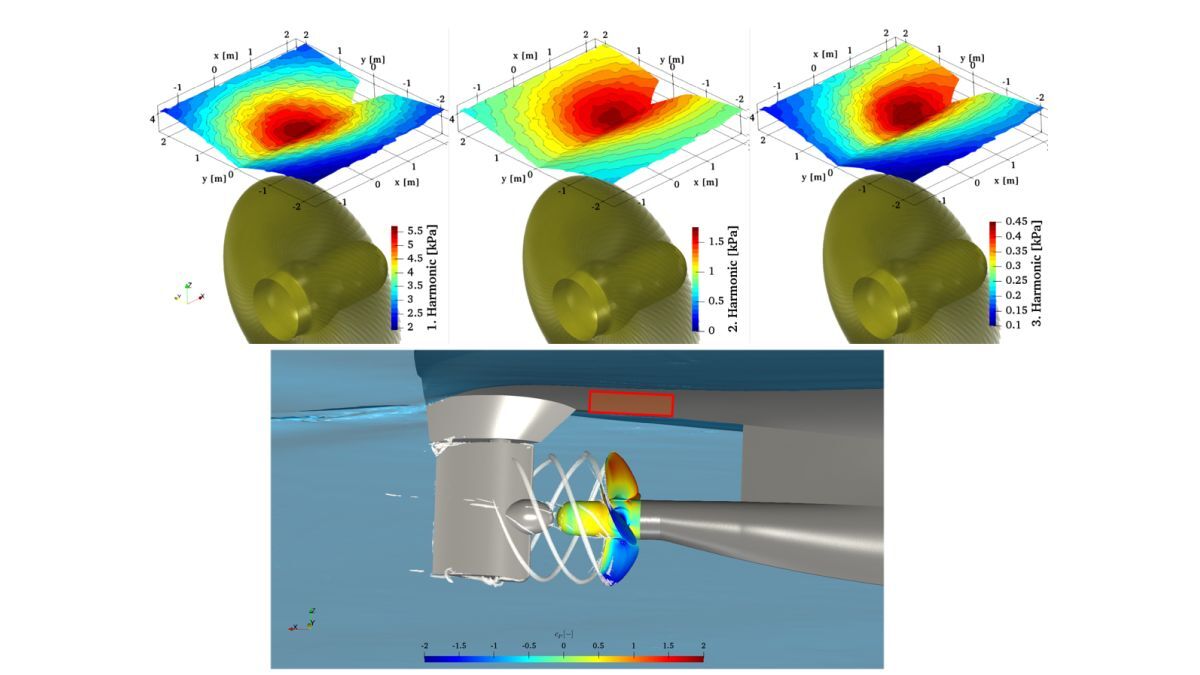
The focus of HyPNoS was on developing methods for measuring, predicting and reporting URN and deriving optimised design measures to reduce it. The research now culminates in the development of an onboard, real-time URN reporting system for crew and vessel operators.
Explaining its decision to take part, BC Ferries engineering manager, naval architecture Chanwoo Bae says, “Our fleet is a significant contributor to URN in the Canadian Salish Sea due to the sheer number of vessels, time on the water, vessel configuration and modes of operation. We acknowledge this and have endeavoured to make URN a critical consideration in the design and operation of vessels at BC Ferries. Further, addressing our URN is one of several measures we take to mitigate the impacts of our operations on the endangered southern resident killer whale population.”
This project enabled a trial to be conducted on one of BC Ferries’ Coastal-class vessels - a 160-m double-ended ropax ferry. The vessel was tested with an original and a noise-optimised propeller design, which showed an average reduction in URN of 5 decibels despite a reduced propeller diameter of 4.7 m compared with 5.0 m. This demonstrated the effectiveness of retrofitting propulsion systems to more modern designs, Schottel says.
Mr Bae says, “The vessel was equipped with a new propeller optimised for enhanced fuel efficiency at the broader service speed range and reduction of URN during its service. Through this project, the hydrodynamic performance of the new propeller was validated including the reduction of URN level at certain frequency ranges.”
The URN measurement methods consisted of a combination of hull vibration analysis and underwater noise measurements using hydrophones. Through extensive research, a quantitative correlation between the vibrations and the emitted noise was established, resulting in a pattern from which Schottel engineers developed an algorithm for calculating and predicting URN. This algorithm can also consider factors such as propeller speed, propeller pitch, ship speed or any other input.
Mr Bae comments, “URN considerations are a relatively new area for nonmilitary and research vessels to deal with. Work related to URN is inherently challenging due to the complexity of the problem, which requires expertise across multiple engineering and science disciplines, including ship hydrodynamics, cavitation, fluid-structure interaction, underwater acoustics and marine biology. Additionally, considerations such as installation, monitoring, crewing, refit schedules, cost and cyber security further complicate these efforts.”
A significant challenge in this project was measuring URN itself, Mr Bae says. “The noise was measured from an operational inservice vessel, and correlating hull vibrations with URN levels proved particularly difficult. This difficulty was exacerbated by the limited availability of data on this subject, environmental conditions during the measurements, and the presence of other vessels operating in the area.”
Mr Bae highlights key takeaways of the study, including predicting URN using computational fluid dynamics (CFD) based on the finite volume method with large eddy simulation is “indeed feasible”.
He says, “Although the detailed noise spectrum results showed some differences, maximum noise levels closely aligned with the measurements. Some discrepancies in the spectral distribution may be attributed to other noise sources present during the real-time measurements, as CFD predictions only account for hydrodynamically induced noise from the propeller.”
Secondly, the study confirmed the potential of onboard URN prediction software by measuring the ship’s vibration and URN at the same time and establishing a clear correlation between vibration levels and measured URN levels.
Mr Bae adds, “While a simple correlation method was employed in this project, it still demonstrated alignment between the two measurements. The accuracy of URN predictions could be further enhanced by utilising more advanced artificial intelligence data training methods.”
According to Schottel, the researchers improved their CFD simulation tools for analysing and predicting the noise emitted into the ship and the surrounding water. An important aim of the project was also to raise noise awareness among ship operators through a real-time reporting system. In the future, such feedback systems will enable operators to react to high URN levels and take immediate action to reduce them during operation. In addition, operators will be able to perform historical and fleetwide evaluations via an internet cloud-based system, which could then be used to provide noise emissions characteristics to authorities, organisations or the public.
Asked if it would incorporate any changes in its vessels going forward following the study, Mr Bae says, “The installation of real-time ship-condition monitoring systems, integrated with cloud-based data analysis packages for assessing overall vessel performance and individual systems, is increasingly gaining interest. The system tested in this project could become a component of a comprehensive ship’s alarm and monitoring system, providing operators with more precise information about URN levels and raising awareness of noise impacts. This would enable BC Ferries vessels to operate with continuous URN monitoring, reinforcing our commitment to protecting the endangered southern resident killer whales as well other marine mammals, in addition to detecting issues, such as a singing propeller, in real time. We are exploring options for this on future vessels as we speak.”
Schottel said in a statement, “With these new analysis and prediction capabilities, it will be possible to significantly improve propulsion systems with respect to URN, which will greatly benefit efforts to preserve marine life. The data collected by the HyPNoS project will point the way to future developments. At the customer’s request, Schottel is now able to adapt them in the product design.”
Sign up for Riviera’s series of technical and operational webinars and conferences:
- Register to attend by visiting our events page.
- Watch recordings from all of our webinars in the webinar library.

Related to this Story

Events

Maritime Regulations Webinar Week
 16 Dec 2025
 GMT - ONLINE
Floating energy: successfully unlocking stranded gas using FLNGs and FSRUs
24 Feb 2026GMT - ONLINE
© 2024 Riviera Maritime Media Ltd.


