


Business Sectors
Business Sectors
Events
Contents

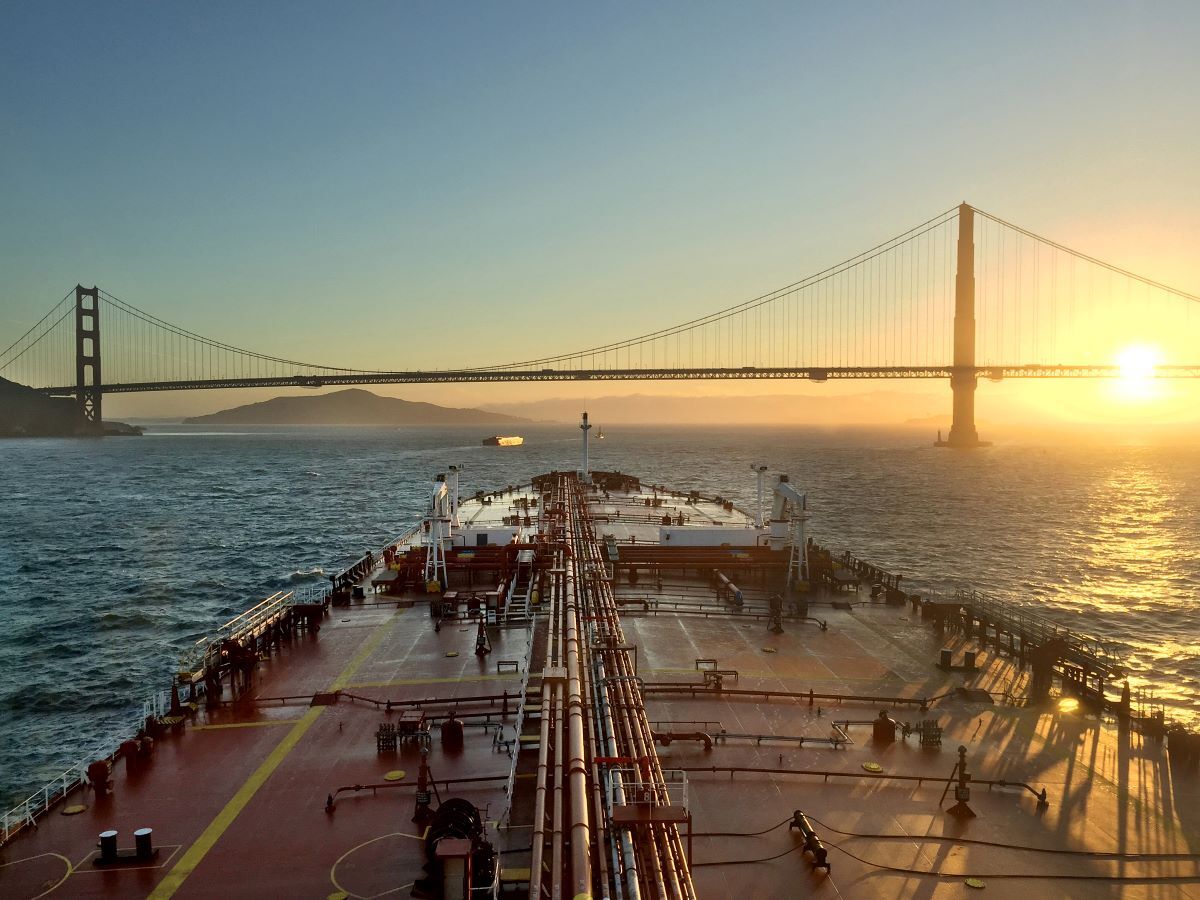
ClarkSea index tops $30,000 per day as trade fragmentation looms
Clarksons’ latest Shipping Intelligence Weekly reports multi-sector strength as IMO vote delay and US - China port fees raise uncertainty


The pulse of global shipping earnings, the ClarkSea Index, closed at US$30,461 per day, up 5% week-on-week and more than 50% above its 10-year trend, the first break above US$30,000 per day since late 2022, according to Clarksons.
Strength was broad-based: crude tankers advanced, dry bulk carriers improved on heavier Capesize activity, and container ship benchmarks firmed, while LNG carrier spot rates posted their first weekly gain in two months.
Policy signals turned markedly more complex.
An extraordinary MEPC session deferred adoption of the IMO Net-Zero Framework for one year after a contentious vote: 57 states backed delay (including the US, China, Panama and Liberia) and 49 opposed (including most EU nations).
Clarksons notes the outcome entrenches divisions and raises the likelihood of more regionalised emissions rules, increasing compliance complexity for owners and charterers.
In parallel, planned US port fees on Chinese-related vessels and rapid Chinese counter-measures triggered a scramble to map exposure.
Clarksons estimates 1–3% of the world fleet by number (2–7% by tonnage) could be affected when calling in China, levels that encourage redeployment switching but still introduce near-term disruption and inefficiency.
Segment detail underlines the composite lift: in tankers, average VLCC earnings rose 10% on the week to about US$90,000 per day, with US Gulf routes leading gains as freight on US Gulf–China reached US$12.5M. MR clean earnings jumped 44% to US$25,000 per day on stronger transatlantic activity and firmer US Gulf trades.
In the dry bulk sector, Capesize fleet-weighted spot earnings increased 15% week-on-week to US$27,639 per day as fresh cargoes cleared early-week uncertainty linked to fee exemptions.
In the container ship sector, the SCFI indicator climbed 13% to 1,310 points on transpacific general rate increases and blank sailings, while the container ship time charter index held at a post-Covid high of 198 points, with 1,100–4,200-TEU tonnage tight and larger sizes scarce.
LNG spot rates for modern 174,000-m3 vessels gained 14% to US$24,000 per day, supported by Atlantic requirements.
Supplyside frictions persist with newbuilding orders year-to-date totalling 1,296 ships of 35M gt, running 42% below the 2024 pace, while reported recycling is just 8.4M dwt, 58% under the 10-year average, limiting removal of older tonnage.
Trade fundamentals continue to improve: Clarksons’ monthly global seaborne indicator rose 3% year-on-year in September and is up 0.6% across 2025 to date after stronger Q3 trends.
Taken together, Clarksons’ data depicts firm earnings across key sectors even as regulatory and geopolitical developments point to a more fragmented operating environment and incrementally higher execution risk.
Riviera’s Tankers 2030 Conference, Singapore will be held 19-20 November 2025. Use this link for more information and to register for the event.




Related to this Story


Events

Maritime Regulations Webinar Week
 16 Dec 2025
 GMT - ONLINE
Floating energy: successfully unlocking stranded gas using FLNGs and FSRUs
24 Feb 2026GMT - ONLINE
© 2026 Riviera Maritime Media Ltd.


