


Business Sectors
Events
Contents
Register to read more articles.
Equinor, Gwynt Glas joint venture to develop Celtic Sea floating windfarms
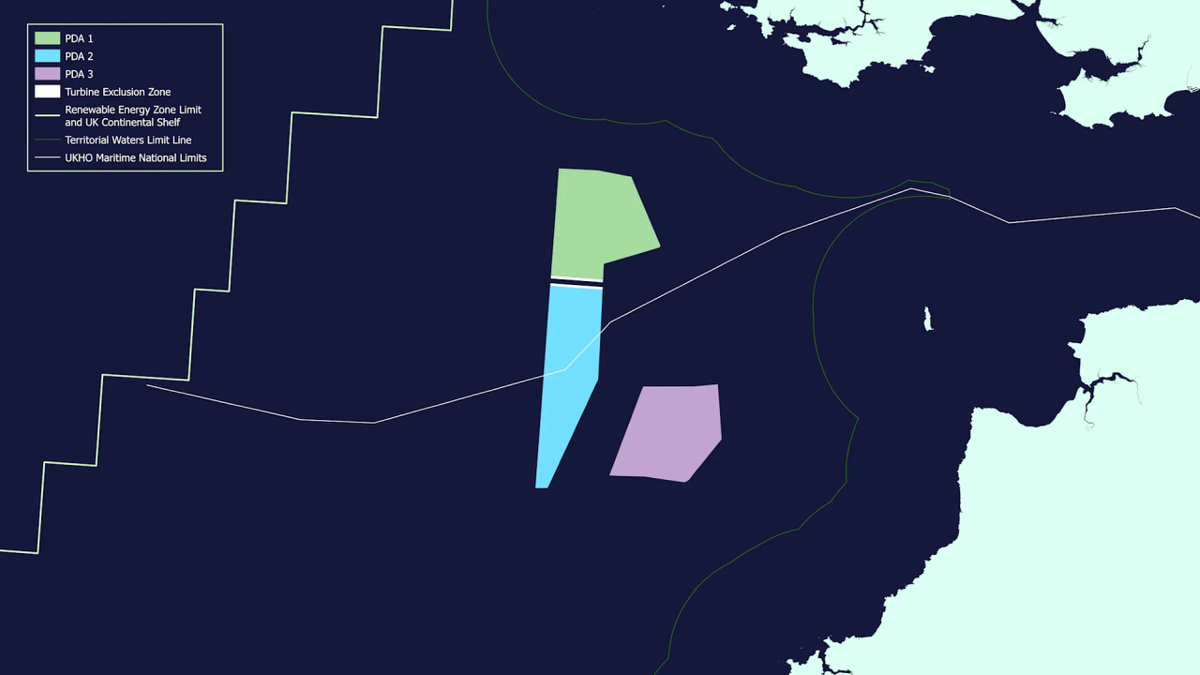
The Crown Estate, the UK’s seabed authority, has selected Equinor and Gwynt Glas, a joint venture between EDF Renewables UK and ESB, to develop floating windfarms in the Celtic Sea


Only two out of three project development areas (PDAs) offered by The Crown Estate have so far been selected for development, but The Crown Estate said it will work to ensure the delivery of the full potential capacity available off the southwest of England and Wales through the deployment of the third site. It said work is underway on a range of options to deliver this capacity, and it expects to set out next steps by the end of September 2025.
The new windfarms, each with a capacity of 1.5-GW, will be among the largest of their kind in the world, underlining the UK’s position as the leading market for floating offshore wind in Europe and expected to lead to the creation of thousands of new jobs and more than a billion-pound investment in the UK economy. The developers will pay £350 (US$470) per MW annually in option fees, that is, £525,000 a year, for the right to develop the PDAs, based on a 10-year option period, followed by a 60-year lease.
Energy Secretary Ed Miliband said, “Floating offshore wind will be transformative for economic growth in Wales and the southwest, unlocking thousands of jobs in places like Port Talbot and Bristol, bolstering our energy security and delivering industrial renewal. The Celtic Sea has huge untapped potential to support our mission to become clean energy superpower, so we can get energy bills down for good through our Plan for Change.”
Secretary of State for Wales Jo Stevens said, “This is a hugely significant moment for the clean energy industry in Wales and one which will have a positive impact for generations to come. Floating offshore wind will help deliver the transition to clean energy, bring down bills for households and help secure the UK’s home-grown energy supply. Increased economic growth and thousands of new well-paid jobs will come from this huge vote of confidence in Wales’ energy industry and its workforce.”
The Crown Estate chief executive Dan Labbad said, “It is 25 years since we first laid the foundations for a new market for offshore wind in the UK, creating the right conditions for a new technology to establish and grow into the world-leading industry we have today. The selection of EDF Renewables UK, ESB and Equinor to write the next chapter of this story in the Celtic Sea is an exciting reflection of how far we’ve come in that time, and a vote of confidence in this new technology and the long-term future of the UK market as a place to invest.”
ESB executive director Jim Dollard said, “ESB, in partnership with our colleagues in EDFR, is delighted to have been successful in The Crown Estate Round 5 seabed allocation in the Celtic Sea. The Celtic Sea is of strategic importance to ESB given its location adjacent to Ireland, and the opportunities to develop a floating offshore project in what we believe to be an ideal area bodes well for our ambitions to develop a portfolio of floating offshore wind projects in Ireland and UK to contribute to the net-zero plans for both countries, as well as those of ESB.”
Equinor senior vice president for renewables Europe Trine Borum Bojsen said, “We are delighted to be given this opportunity in the Celtic Sea. The UK is a core strategic market for Equinor and a market where we have more than a decade’s experience in offshore wind. The seabed lease offers the scalability and timing flexibility we seek and is a long-term option for Equinor’s renewables portfolio. We believe the deeper waters in the Celtic Sea have good future potential for floating wind which will play an important role in unlocking the UK’s journey towards net zero.”
The selection of Equinor and Gwynt Glas follows the conclusion of the latest leasing round by The Crown Estate. The developers bring with them significant expertise and experience in the delivery of offshore wind projects around the world, including new floating technology.
Launched at the start of 2024, a core focus of Offshore Wind Leasing Round 5 has been to open up a new region of the UK for the generation of more secure, clean energy, while kick-starting the development of a new industry and supply chain around the Celtic Sea.
As part of their submissions to The Crown Estate, the bidders also set out further plans for creating new onshore opportunities, with more details expected to be announced following the signing of Agreements for Lease in the autumn.
The Round 5 process also asked bidders to set out their plans for working with ports to support the final assembly of their projects, with specialist infrastructure needed to mount the turbines on floating platforms before being towed out to the final project sites. As part of their submissions, the preferred bidders have identified Port Talbot and Bristol ports as the likely locations for this activity.
Sign up for Riviera’s series of technical and operational webinars and conferences:
- Register to attend by visiting our events page.
- Watch recordings from all of our webinars in the webinar library.

Related to this Story

Events

Maritime Regulations Webinar Week
 16 Dec 2025
 GMT - ONLINE
Floating energy: successfully unlocking stranded gas using FLNGs and FSRUs
24 Feb 2026GMT - ONLINE
© 2024 Riviera Maritime Media Ltd.


