


Business Sectors
Business Sectors
Events
Contents
Register to read more articles.
EU's fresh crackdown on Russia brings total blacklisted vessels to 340
The European Union is implementing a new round of sanctions against Moscow, targeting a significant number of ’shadow’ vessels, while Russian crude exports remain stable year-on-year


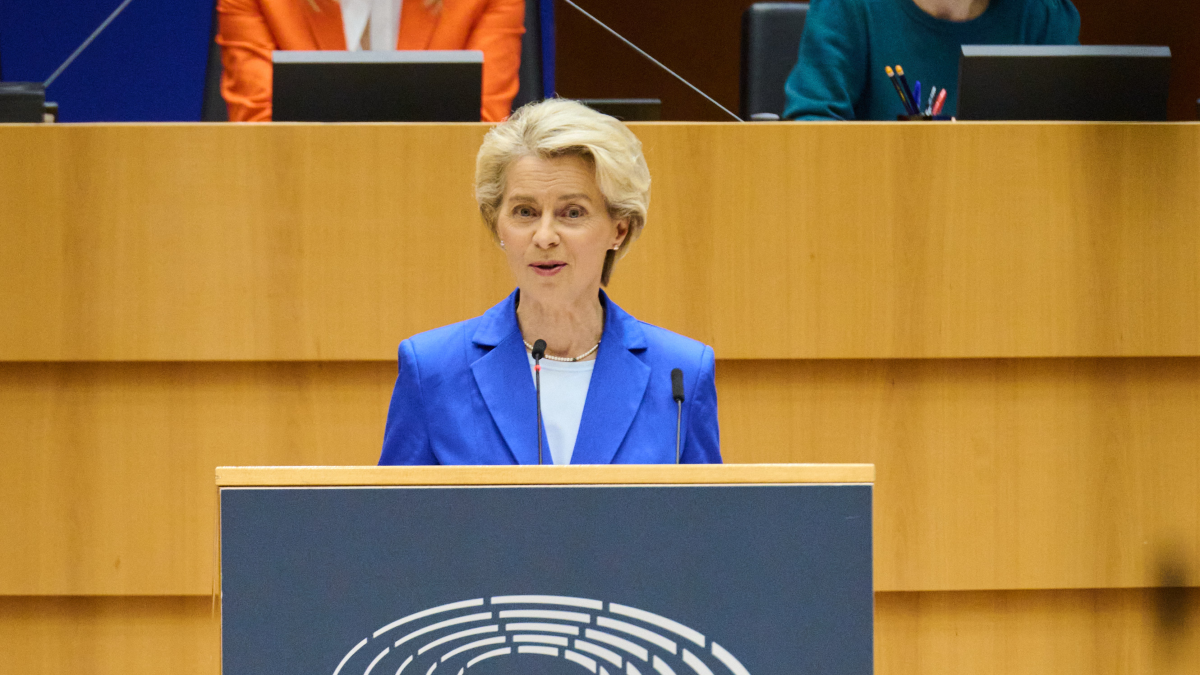
EU Commission President Ursula von der Leyen announced the approval of the 17th sanctions package against Russia in a post on X. The new measures add 189 vessels to the EU’s shadow fleet blacklist, bringing the total number of listed units to 342. This follows the previous packages, which included 153 ships. However, at the time of writing, the EU has yet to release the full list of newly sanctioned vessels.
This latest move aligns with recent actions by the UK, which on 9 May blacklisted 100 additional vessels associated with the shadow fleet.
“This war has to end. We will keep the pressure high,” Ms von der Leyen emphasised.
In early April, BRS Shipbrokers reported the global grey fleet now comprises 900 tankers, making up more than 10% of the world’s total tanker fleet.
The new sanctions package is expected to be formally adopted on 20 May, with reports indicating the EU will also implement a ban on its companies doing business with around 30 entities that are helping to circumvent sanctions via third countries. Additionally, 75 individuals and companies have reportedly been added to the sanctions list for their involvement in Russia’s ’war machine’.
Stable Russian crude flows
Amid the latest round of sanctions, Russian crude exports to the global market have experienced a slight year-on-year decline but remain resilient overall.
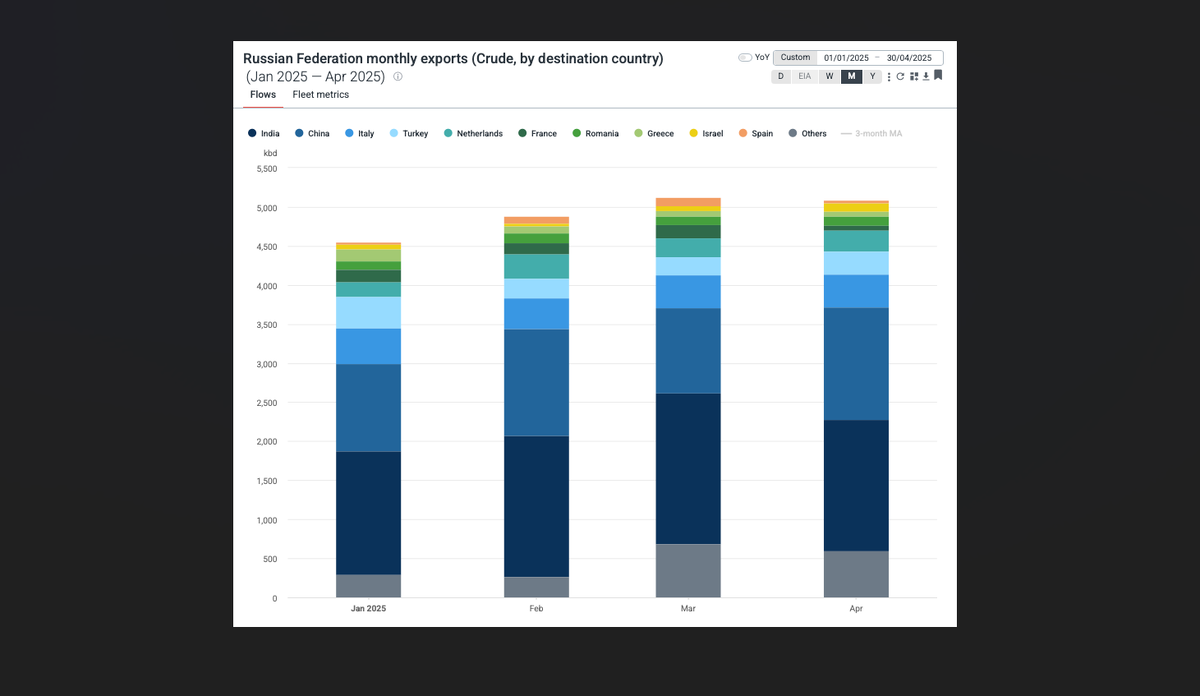
According to data shared by Kpler with Riviera, Russian crude exports totalled 79.0M tonnes in the first four months of 2025, a 4.5% decrease compared with 82.8M tonnes during the same period in 2024.
India continues to be the leading destination for Russian crude, receiving 28.7M tonnes this year, slightly down from 29.0M tonnes in 2024. China ranks second, but with a decline in volumes to 20.1M tonnes from 22.2M tonnes last year.
Kpler data also highlights that Italy, Turkey and the Netherlands are among the top five importers of Russian crude this year. Both Italy and Turkey have seen year-on-year declines of 23% and 31%, respectively, while the Netherlands has increased its imports by approximately 20%.
Sign up for Riviera’s series of technical and operational webinars and conferences:
- Register to attend by visiting our events page.
- Watch recordings from all of our webinars in the webinar library.




Related to this Story

Events

Maritime Regulations Webinar Week
 16 Dec 2025
 GMT - ONLINE
Floating energy: successfully unlocking stranded gas using FLNGs and FSRUs
24 Feb 2026GMT - ONLINE
© 2026 Riviera Maritime Media Ltd.


