


Business Sectors
Business Sectors
Events
Contents

Register to read more articles.
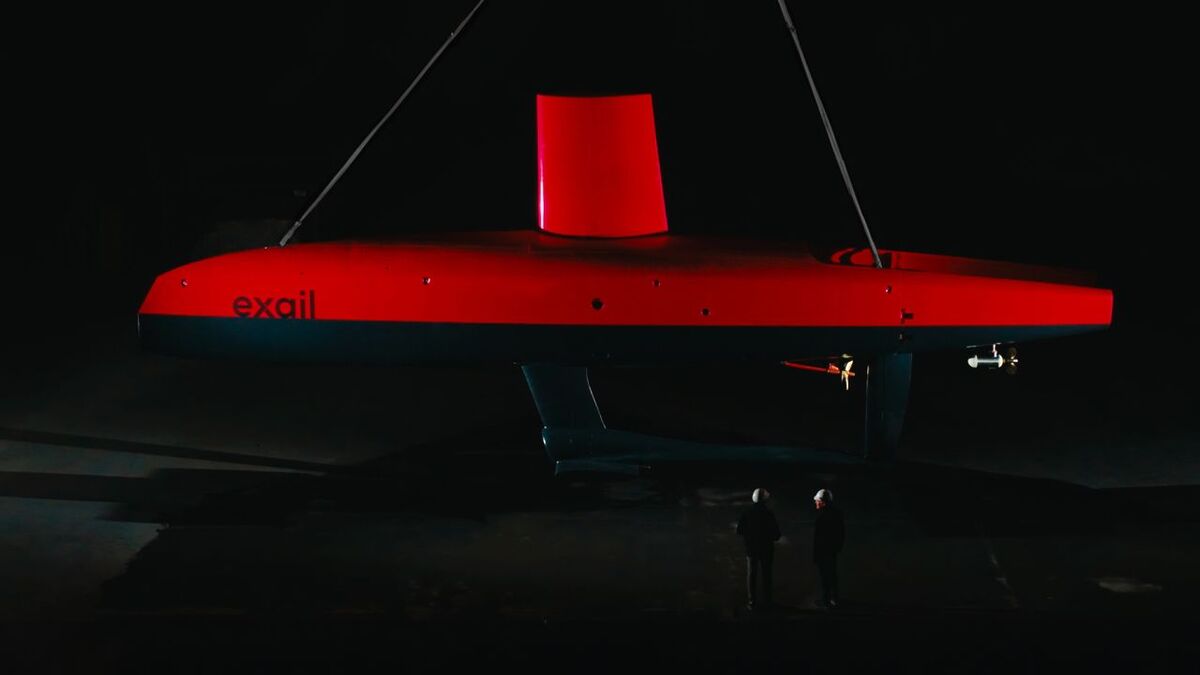
Exail introduces transoceanic USV capable of deploying autonomous assets
Exail has unveiled a ‘transoceanic’ uncrewed surface vessel (USV), the DriX 0-16


The company said the USV is “able to withstand the most severe ocean conditions” and was designed for long-duration operations of up to 30 days. It can also deploy multiple payloads and subsea assets.
The new USV leverages the successful track record of Exail’s DriX USV, which was launched in 2017, that has accumulated more than 150,000 hours of operation.
The DriX 0-16 benefits from hybrid propulsion, redundant architecture, advanced communication systems, as well as Al-powered obstacle detection and avoidance capabilities. It is designed to provide a high level of reliability and operational efficiency and new multi-mission capabilities.
The transoceanic USV can launch and recover remotely operated towed vehicles, inspection-class ROVs and autonomous underwater vehicles.
Its gondola, located below the water, can host a wide range of payloads such as deepwater multibeam echosounders (MBES), sub-bottom profilers or acoustic subsea positioning and communication systems such as USBL.
This makes the DriX 0-16 suitable for full ocean depth scientific and hydrographic surveys, geophysical and UXO surveys, as well as subsea infrastructure inspection and surveys that might require the deployment of multiple robots.
Exail vice president maritime autonomy solutions Olivier Cervantes said, “With this next-generation transoceanic low-carbon USV, we are pushing back the limits of ocean exploration, empowering collaborative autonomy between surface and subsea drones, and minimising human exposure at sea. The DriX 0-16 is a step forward in autonomous maritime operations.”
Sign up for Riviera’s series of technical and operational webinars and conferences:
- Register to attend by visiting our events page.
- Watch recordings from all of our webinars in the webinar library.




Related to this Story

Events

Maritime Regulations Webinar Week
 16 Dec 2025
 GMT - ONLINE

Floating energy: successfully unlocking stranded gas using FLNGs and FSRUs
24 Feb 2026GMT - ONLINE
© 2026 Riviera Maritime Media Ltd.


