


Business Sectors
Business Sectors
Events
Contents
Register to read more articles.
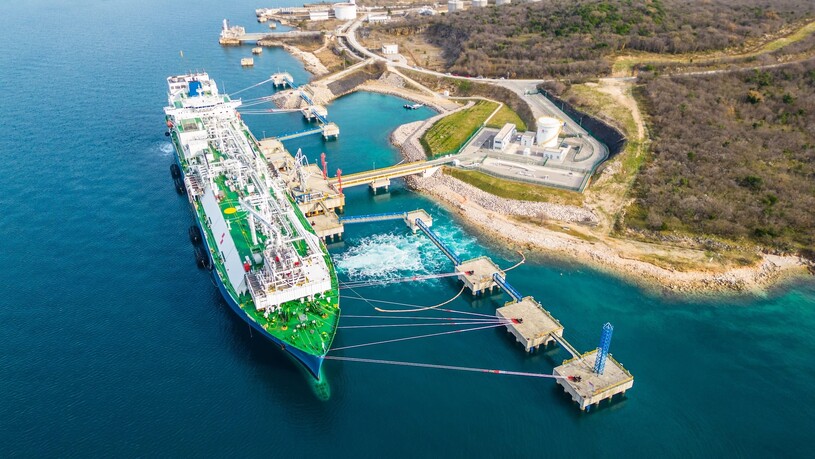
Germany confirms charters of four FSRUs
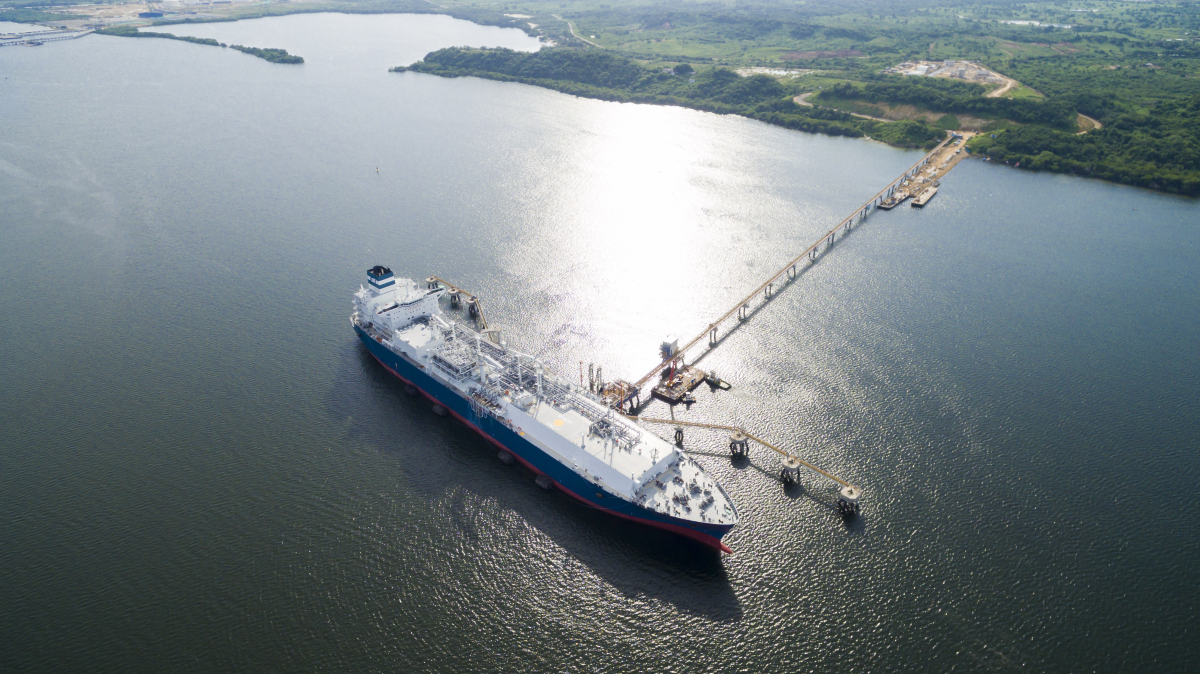
Germany’s Federal Ministry for Economic Affairs and Climate Protection (BMWK) has leased two FSRUs each from Höegh LNG and Dynagas


The BMWK said the vessel charters have been taken to replace Russian gas as the coutry tries to disentangle its energy supply ties following Russia’s war in Ukraine.
Höegh LNG said it has signed binding implementation agreements with the German ministry to charter out two FSRUs from its fleet for operations in Germany for 10 years. The detailed FSRU contracts are scheduled to be completed by September or early October, and FSRU operations are expected to commence at the end of this year.
"These floating liquefied natural gas terminals offer the opportunity to start importing LNG at very short notice to further promote independence from Russian imports," a BMWK statement said.
The German ministry said two of the FSRUs, from Höegh LNG, are scheduled to be in place and operating by early 2023.
"Specifically, the BMWK leases two ships [each] from the provider Höegh and the provider Dynagas. The ships are operated by RWE and Uniper, with whom the federal government concludes service agreements," the German ministry statement said.
"One of the Höegh ships is already available and will be used in Wilhelmshaven at the turn of the year 2022-2023. Work to prepare the infrastructure has already progressed here.
Höegh’s second ship is scheduled to be stationed in Brunsbüttel at the beginning of 2023. A location decision has yet to be made for Dynagas’ ships; but this should be done as soon as possible. Stade, Rostock, Hamburg-Moorburg or Eemshaven in the Netherlands can be considered as further locations for stationing an FSRU," BMWK said.
Germany does not currently have its own LNG terminal in the EU, nor does it have any floating LNG terminals. There are LNG terminals in other EU countries, for example in neighbouring Netherlands, France, Belgium and Poland, which can also be used to supply Germany. Together, these represent a regasification capacity of approximately 40Bn m3 per year. With a gas requirement of approximately 95Bn m3 per year for Germany and high demand from the Netherlands, France, Belgium and Poland, the landing capacities are not sufficient to land additional quantities destined for Germany, according to the government.
The German Government has now optioned four FSRUs, instead of the three originally targeted, through RWE and Uniper, allocating €2.94Bn (US$3.09Bn) for the vessels that will enable LNG imports to be fed into the German energy grid. The four FSRUs represent a regasification volume of at least 5Bn m³/year each.
Germany is currently working rapidly to reduce its dependence on Russian energy and to broaden the supply base of its energy.
On 1 May, German Vice Chancellor and Federal Economics Minister Robert Habeck offered a progress report on the country’s shift away from Russian energy.
Minister Habeck said, “In the last few weeks, we have made further intensive efforts with all the relevant stakeholders to import less fossil fuel from Russia and to broaden our supply base. Dependence on oil is down to 12%; the figure for coal is 8% and around 35% for gas. All of the steps we are taking are demanding a massive joint effort by all the stakeholders, and they are also generating costs, as is being felt by businesses and household consumers. But they are necessary if we are not to remain open to blackmail by Russia.”
The minister said the work to shift away from Russian energy requires construction of infrastructure and pasage of new laws to accelerate the construction of LNG terminals and pipelines.
Riviera Maritime Media will provide free technical and operational webinars in 2022. Sign up to attend on our events page
Related to this Story


Events
Maritime Regulations Webinar Week
 16 Dec 2025
 GMT - ONLINE
Floating energy: successfully unlocking stranded gas using FLNGs and FSRUs
24 Feb 2026GMT - ONLINE
© 2026 Riviera Maritime Media Ltd.


