


Business Sectors
Events
Contents
Global floating wind capacity up 13% in last 12 months
Despite political headwinds, floating wind installations have increased by 13% over the past 12 months, according to a report from RenewableUK


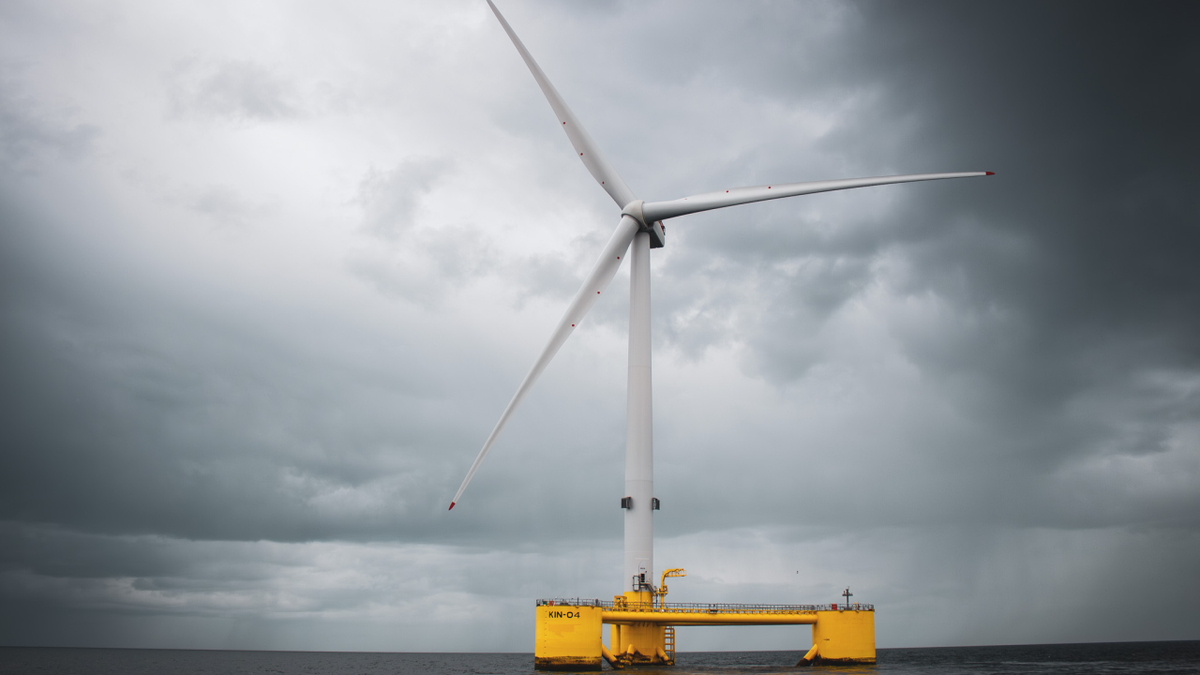
RenewableUK’s latest EnergyPulse Insights report shows that floating wind capacity has reached 277 MW, up from 245 MW a year ago, and is set to grow nearly tenfold to 2.5 GW by 2030.
In total, 16 projects are fully operational across seven countries. Norway currently has the most operational capacity at 100 MW across three projects. The UK is in second place with 78 MW across two projects, and China is third with 40 MW (five projects).
According to the report, immediate growth prospects remain strong, with 93 MW ender construction globally across four projects, two in France, two in China. Globally, there are 221 GW of floating capacity at all stages of development across 324 projects.
By 2030, China and the UK are set to dominate the market with 45% and 41% of global capacity respectively. Activity in other key floating wind markets such as France, Norway and Japan is expected to accelerate in the 2030s.
Although Italy has the largest pipeline of future projects, most of them are at an early stage of development. None are operational or under construction yet. The UK has moved up from third place to second, overtaking the USA where the report states most projects are on hold due to political uncertainty.
60% (134 GW) of floating wind capacity announced so far worldwide is being developed in European waters. 14% of the global floating project portfolio is in UK waters, 31 GW across 39 projects, 84% of which is in Scottish waters, 26 GW across 31 projects.
In the UK, five projects totalling 458 MW are eligible to compete in the upcoming round of contracts to generate clean power, Allocation Round 7. The report states that the current budget for this round is likely to procure two or three new projects.
RenewableUK head of floating and deepwater wind Luke Clark said, “The continued growth of floating wind globally highlights the UK’s opportunity to become a world leader in this technology.
“Strategic investment in early projects is vital to prime the supply chain and build confidence in the sector. More ambition in this year’s CfD round would see more test and demonstration projects coming through to unlock supply chain development, cut costs, and create jobs.
“Floating wind has the potential to be one of Britain’s biggest industrial success stories of this century, employing 97,000 people by 2050, with many of the jobs based in Scottish and Welsh ports, contributing £47Bn (US$62Bn) to our economy by building and supplying projects here as well as exporting our cutting-edge technology worldwide.”
Riviera’s Offshore Wind Journal Conference will be held in London on 2 February 2026. Use this link for more information and to register for the event.
Related to this Story

Events

Maritime Regulations Webinar Week
 16 Dec 2025
 GMT - ONLINE
Floating energy: successfully unlocking stranded gas using FLNGs and FSRUs
24 Feb 2026GMT - ONLINE
© 2024 Riviera Maritime Media Ltd.


