


Business Sectors
Business Sectors
Events
Contents
Register to read more articles.
Heave compensation system enables ‘in-air’ control of Vineyard Wind components
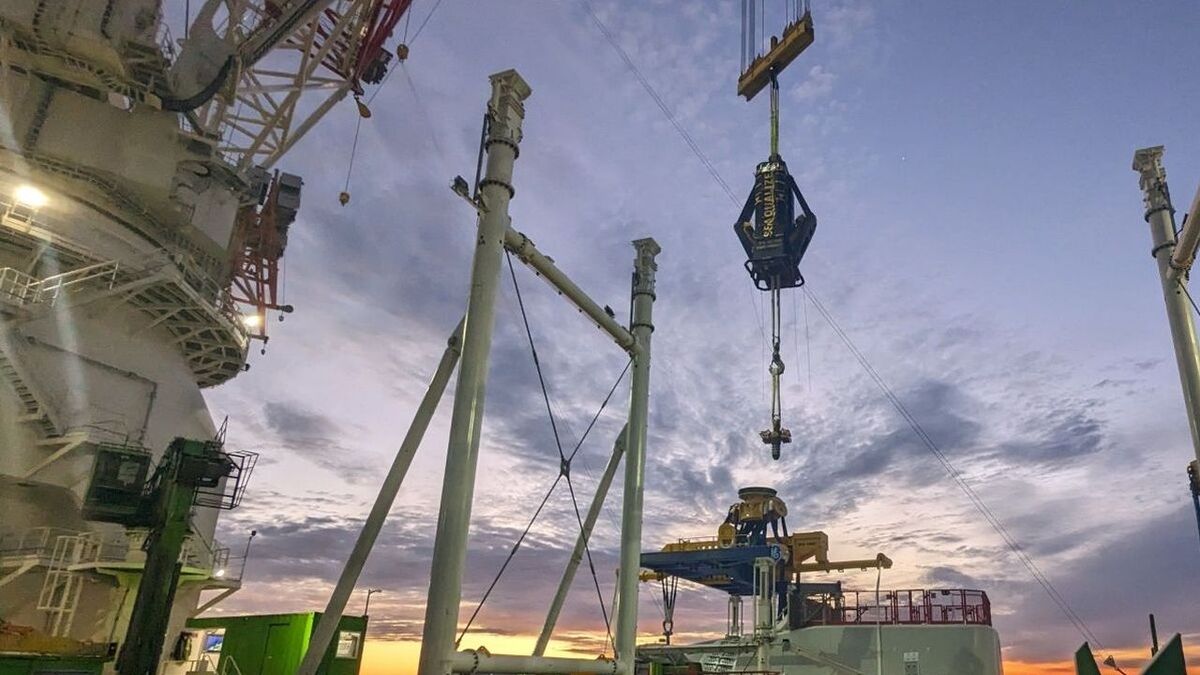
Heave compensation specialist Seaqualize has executed the first lifts of wind turbine components from a feeder barge to an insallation vessel, using its Heave Chief 1100


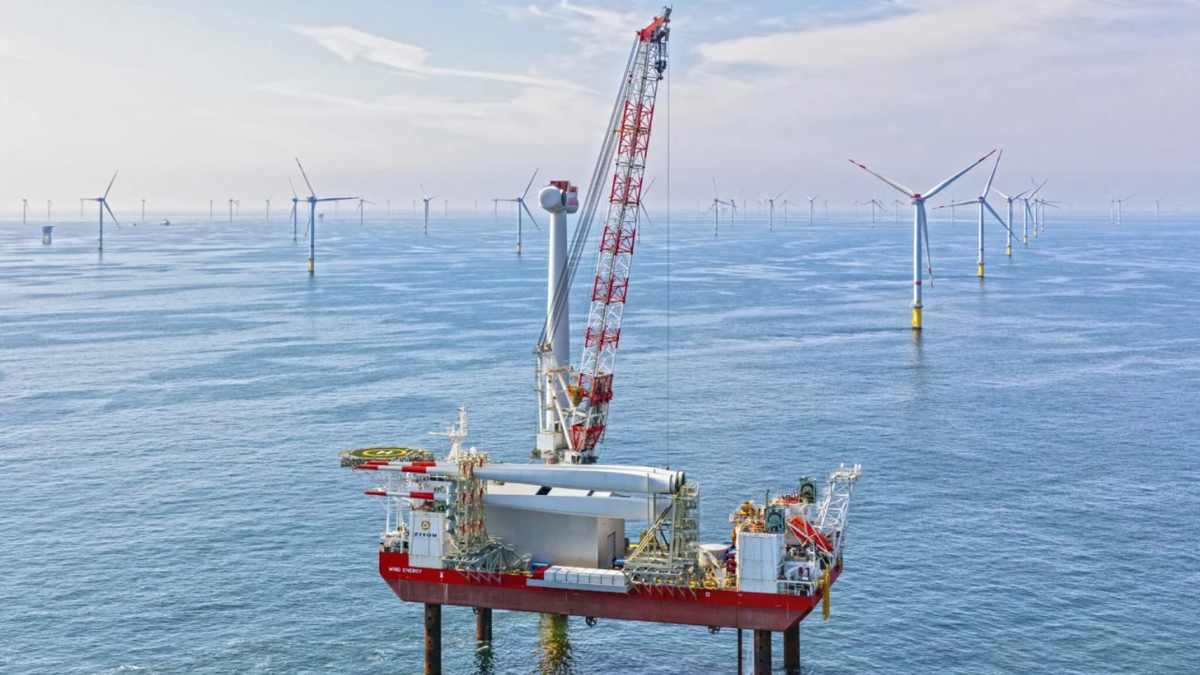
The Heave Chief 1100 is installed on DEME Offshore US’ installation vessel Sea Installer, which is installing the turbines for the Vineyard Wind 1 offshore windfarm, the first commercial-scale offshore windfarm in the US.
The Heave Chief 1100 is part of a solution developed for the project that also includes a feeder barge solution jointly developed by DEME Offshore US, The Netherlands-based Barge Master, Foss Maritime and Seaqualize. It is being used to lift components for the Haliade-X 13-MW wind turbines for the project and to ensure that turbines can be installed year-round.
Seaqualize’s motion compensation equipment is used for ‘fast lifts’ from the feeder barges to the installation vessel, compensating for heaving motions.
Seaqualize specializes in inline balanced heave compensators that are designed for heavy lift and ‘in-air’ active load control. The HC 1100 is capable of compensating for motions and fast lifting 1,100 tonne, which is sufficient to lift components for a 15-MW wind turbine.
“Normally such lifts would require extremely flat seas, as ‘re-hits,’ with the load hitting the heaving deck of the feeder barge, or shock loads to the crane lifting components could cause serious damage,” said Seaqualize.
“During the first set of lifts it made, the HC 1100 demonstrated that it can significantly increase workability – lifting can continue while the HC 1100 continues to fully compensate for heaving motions up to 3.5 m. The first lifts showed that it can fast-lift full loads at speeds of in excess of 70 cm/s For the tall tower sections, which are up to 70 m high, two separate systems provided by Barge Master further compensate for pitch and roll.”
Apart from fast-lifts of turbine components, the HC 1100 is also used to carefully place delicate component frames on the barge for the return trip, for the next load out. This requires the machine to actively follow the motion of a barge, reducing set down speeds.
Seaqualize managing director Gjalt Lindeboom said, “Some people will say, ‘Haven’t we done floating lifts for years in the oil and gas industry?’ The answer is ‘yes’, but not at this scale, frequency and with such delicate, standard components.
“In offshore oil and gas, it is not uncommon to wait several days or even weeks to execute a single lift of, for example, a heavy platform topside, or vessel module. It only has to be done once and that is the project. The component is usually engineered and fabricated to withstand any undesired transport, lifting or installation loads, simply by adding steel.
“But this is not possible in the cost-driven and competitive offshore wind sector. For example, the Vineyard Wind project requires more than 800 lifts, with loads ranging anywhere between 10 tonnes and 1,000 tonnes, all in quick succession.
“On an offshore wind project, every couple of hours spent waiting for the right conditions to execute a lift constitutes a delay in completing the windfarm and a delay in first power.”
Mr Lindeboom said a second Seaqualize Heave Chief – a HC750 – is about to enter operation, on another windfarm installation project that is ramping up in the US. “We are currently planning the production of additional machines to support projects in 2024 through 2026,” he said. “Our experience from Vineyard Wind1 clearly demonstrates that balanced heave compensation is the way to go for safe and efficient offshore feeder lifts.”
Related to this Story

Events

Maritime Regulations Webinar Week
 16 Dec 2025
 GMT - ONLINE
Floating energy: successfully unlocking stranded gas using FLNGs and FSRUs
24 Feb 2026GMT - ONLINE
© 2026 Riviera Maritime Media Ltd.


