


Business Sectors
Business Sectors
Events
Contents
Register to read more articles.
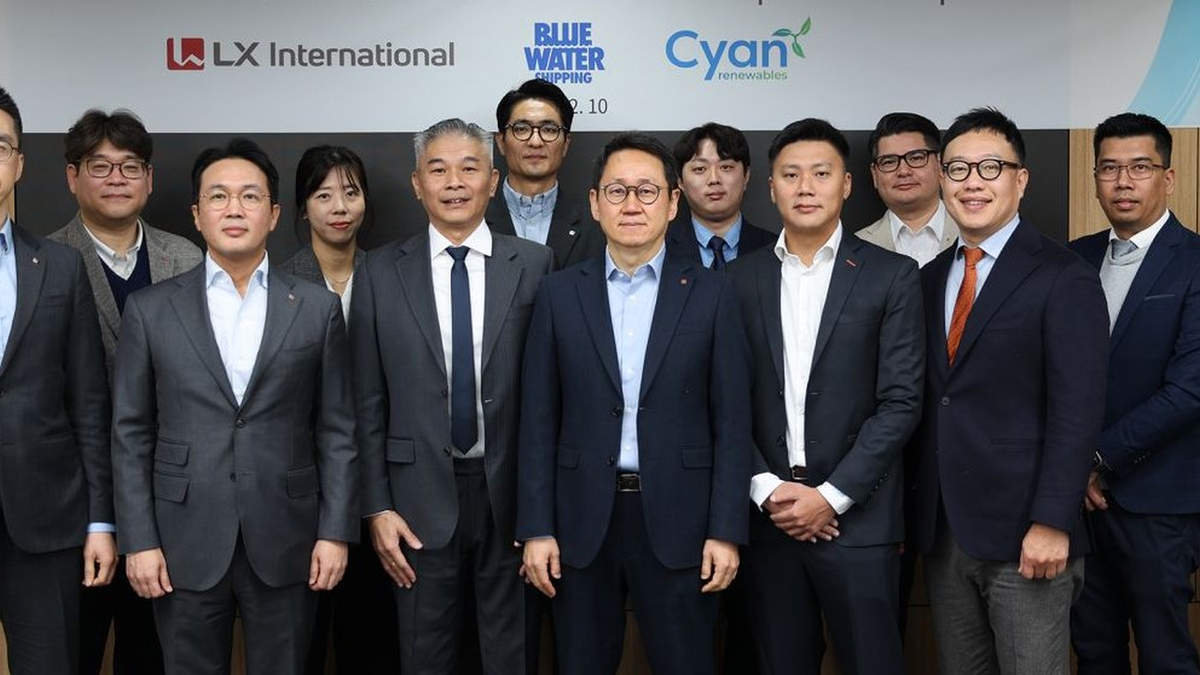
Agreement signed to develop offshore wind marshalling port in South Korea
Cyan Renewables, global trading company LX International and Blue Water Shipping have agreed a memorandum of understanding to develop an offshore wind marshalling port in South Korea


The facility in Dangjin would have 480 m of quayside for offshore wind vessels and a dedicated 14-m deepwater berth designed to support next-generation offshore wind installation and support vessels. On land, the new facility would be strengthened to enable it to support components for offshore wind turbines and enable efficient load-out operations.
The companies believe Dangjin has the potential to become a gateway for offshore wind development in Korea. They anticipate that the dedicated marshalling hub will support projects from installation through to operations and maintenance.
Blue Water Shipping will enable South Korea to deploy personnel with experience in handling offshore wind components. They will work alongside local teams to transfer best practice, operational know-how and safety standards, supporting the training and upskilling of the local workforce to international offshore wind marshalling benchmarks.
Cyan Renewables chief executive Keng Lin Lee said, “Cyan Renewables is proud to be a member of this consortium with LX and Blue Water Shipping. As the leading offshore wind vessel owner in the APAC region, with global operating experience, we bring deep offshore execution capabilities to this partnership. Together with LX’s infrastructure strength and Blue Water Shipping’s global logistics expertise, we will create an integrated ecosystem that reduces bottlenecks, strengthens supply chains and accelerates offshore wind deployment in Korea.”
Blue Water Shipping regional senior vice president Jason Goh said South Korea can be a “strategic entry point” for offshore wind logistics projects in Asia. The new facility will use Blue Water’s “proven Esbjerg marshalling port model and full-cycle logistics expertise,” he explained. Esbjerg is one of the leading offshore wind hubs serving markets in northwest Europe.
South Korea has ambitious targets for offshore wind capacity, but few dedicated offshore wind ports, which could be a bottleneck unless addressed.
In late 2025, an intergovernmental task force led by South Korea’s Ministry of Climate, Energy and Environment set out new plans for the construction of offshore windfarms including the implementation of 4.0 GW of offshore wind capacity a year, and a cumulative 10.5 GW to be installed or under construction by 2030. The plan included, among other things, the expansion of port capacity from 0.6 GW today to 4.0 GW per year by 2030 and securing sufficient installation vessel capacity.
Sign up for Riviera’s series of technical and operational webinars and conferences:
- Register to attend by visiting our events page.
- Watch recordings from all of our webinars in the webinar library.
Related to this Story

Events
Maritime Regulations Webinar Week
 16 Dec 2025
 GMT - ONLINE
Floating energy: successfully unlocking stranded gas using FLNGs and FSRUs
24 Feb 2026GMT - ONLINE
© 2026 Riviera Maritime Media Ltd.


