


Business Sectors
Business Sectors
Events
Contents
Register to read more articles.
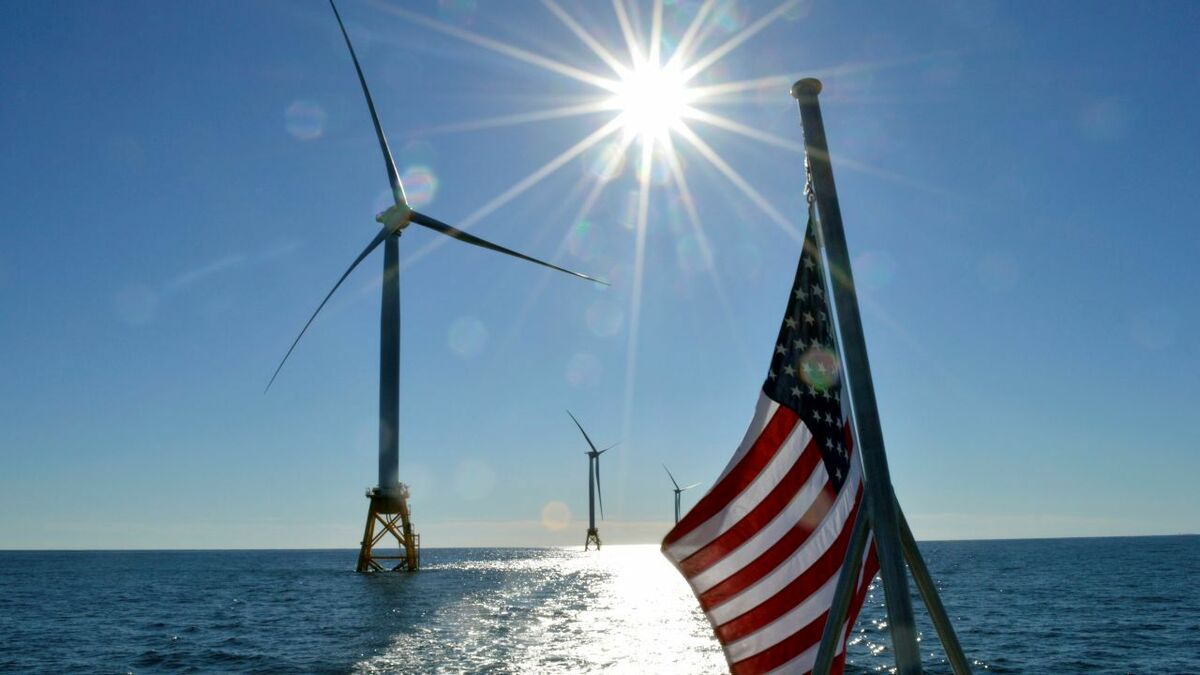
IRA ‘driving development of offshore wind’ as Europe turns its attention to China
Measures introduced by the Biden administration to support offshore wind in America have had far-reaching effects in the US and beyond, delegates at Global Offshore Wind 2023 heard, but European measures now need to address the threat posed by China


With the Inflation Reduction Act (IRA) of August 2022, the US has taken what President Biden described as “the most aggressive action ever in confronting the climate crisis and strengthening our economic and energy security.” The law provides tax credits to spur development of offshore wind in the US and measures to address transmission systems to bring power ashore. It also provides a new tax credit for domestic production of components and related goods such as installation vessels.
Offshore wind industry leaders were quick to applaud the legislation, describing it as a “historic step to promote offshore wind,” but it also aroused concern in Europe and elsewhere that it could skew the market – and investment in offshore wind – in favour of the US.
From project developers to original equipment manufacturers to vessel owners, the US offshore wind industry welcomed the passage of the IRA as potentially the single-largest tool available to reduce uncertainty around project development costs, surmount supply chain challenges and put the industry on a fast track to viability, but it has forced European legislators to act quickly to introduce measures of their own. However, as delegates at the conference heard, the response to the IRA in Europe is acting as an enabler for the industry, although much remains to be done.
The EU’s initial response, the Green Deal Industrial Plan, can be seen as one answer to the IRA, and an attempt to avoid clean-energy companies investing in the US rather than Europe. It uses a relaxation of state aid rules and allows for additional national support, including through tax benefits. It aims to provide a more supportive environment manufacturing capacity. Other instruments such as REPowerEU are intended to help the EU to develop clean energy projects, while the InvestEU Programme supports sustainable investment, innovation and job creation. In March 2023, the European Commission also adopted the temporary crisis and transition state aid framework (TCTF) to try to retain clean tech investment in Europe. Described as “an unprecedented loosening of EU State aid rules,” TCTF is another part of the EU’s attempt to prevent an exodus of green tech skills and investment to the US as a result of the IRA.
Speaking on the first day of the London event, Crowley Wind Services vice president Jeff Andreini told a conference session at GOW 2023 on the US offshore wind market that one of the effects of the IRA and the tax credits it provides would be to reduce the cost of building vessels in the US. He described the IRA as “extremely vital” to an industry that is going to need a “very significant numbers of vessels.” He told delegates, “The IRA shows unequivocally that the US government supports offshore wind. It helps to create the capacity to invest, and to enable the US market to avoid bottlenecks.”
Northgreen Capital managing director and head of global offshore wind Philip Bassil said the offshore wind industry is facing a worldwide supply chain challenge, especially as inflation and higher interest rates bite. “The US offshore wind market is at a crucial moment,” he told delegates, “but so too are other offshore wind markets. The IRA is having a beneficial effect in the US and outside it because it is stimulating policy in other markets that are expanding, that also need support, such as the EU and, potentially, the UK. Measures taken in Europe since the IRA and those being considered could actually outdo the IRA and its ability to support the industry,” he claimed.
Virginia Beach Economic Development business development manager Paige Fox agreed the IRA “is a sign the US government supports offshore wind.” She told the conference, “it makes the US an attractive place to do business and to invest.” Acteon US renewables director Ivan Harnett agreed. He said, “The US, Europe, and Asia are all pulling on the same supply chain.” He also agreed the IRA will help the US secure supply chain capacity in an increasingly competitive market but said the response to it is also having beneficial effects outside the US. “The IRA showed the world the US government is completely behind offshore wind,” he explained. “It will create the capacity to invest.” Mr Andreini agreed. “In a couple of years, we will have no vessels available,” he explained, “such is the demand for our ships. With the IRA,” he said, “the US has the kind of stimulus it will need for companies like Crowley to invest in more.”
All of the speakers agreed that European companies operating in the US will also benefit from the IRA and it is likely the IRA and the EU response to it will enhance their ability to compete with China. However, as speakers from the US addressed the conference, WindEurope warned the next ‘piece’ in the EU’s plan to massively expand renewables and strengthen Europe’s clean energy supply chain needs ‘beefing up,’ not least because of the threat it faces from Chinese competition. As currently formulated, WindEurope says, the Net-Zero Industry Act (NZIA) ‘falls short’ and, if the EU gets NZIA wrong, “it will end up building offshore windfarms with turbines manufactured outside Europe, many of them in China.
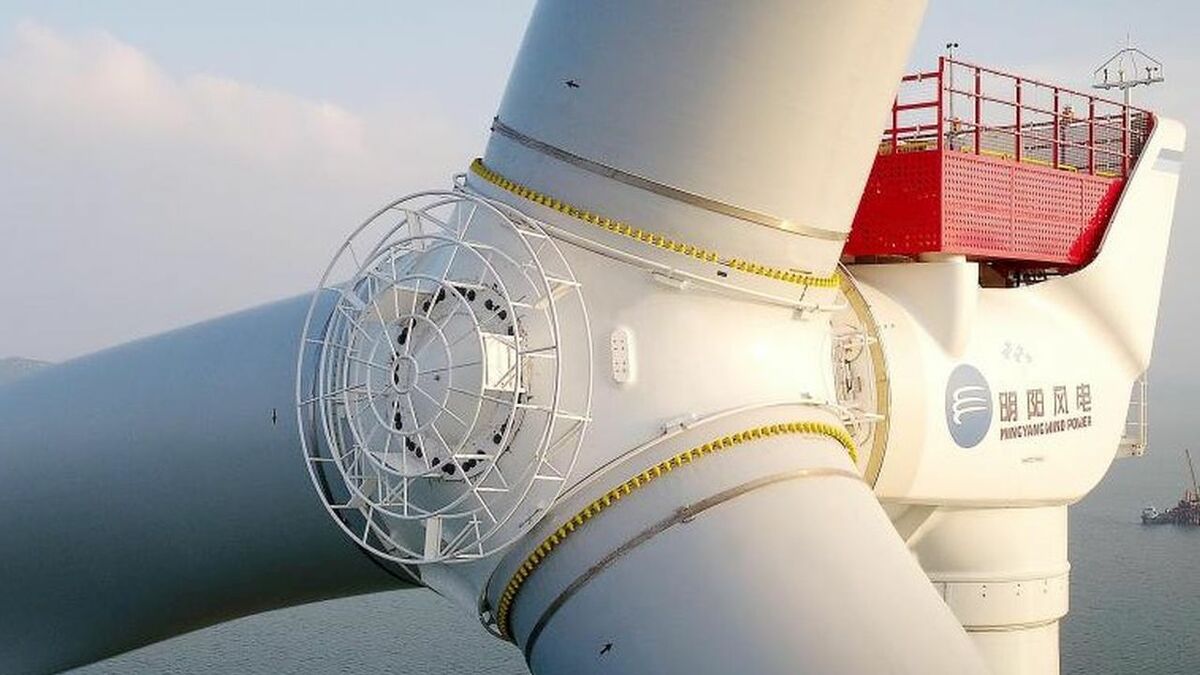
“We’re building a few new factories in Europe, but not enough for the massive expansion of wind energy that Europe needs,” WindEurope said. “Huge investments are needed now, in factories, ports, grids, vessels, cranes and skilled workers. We need to beef up the NZIA. The rapid expansion needed in Europe’s wind and other clean energy supply chains requires public policy and public financial support. The EU totally gets this – which is why they came up with their Green Deal Industrial Plan – but the NZIA, which is at the heart of the plan, falls a long way short of what is needed.” The European Parliament and EU member states are amending the NZIA, but WindEurope said the cost of getting it wrong ‘could be huge.’
“Constraints in Europe mean Chinese turbine manufacturers are starting to win orders here, not least with their cheaper turbines, looser standards and unconventional financial terms. There is a very real risk the expansion of wind energy Europe will be made in China not in Europe,” WindEurope asserted.
“Alongside the NZIA, new EU state aid rules allow member states to support investments in new factories making clean energy equipment. But it is essential the EU also puts its own money on the table. The new Sovereignty Fund cannot come soon enough. And the Innovation Fund needs less emphasis on technology breakthroughs and more on simply building out the manufacturing capacity.
“At the same time, Europe needs to keep a razor-sharp focus on the simplification of permitting rules and procedures. Europe wants a green industrial policy. It wants renewables to be made in Europe. But it is failing on the policies that will actually deliver that. NZIA needs beefing up… Otherwise the EU Green Deal will be manufactured outside Europe, and Europe will simply swap its dependency on Russian gas for one based on Chinese equipment.”
Sign up for Riviera’s series of technical and operational webinars and conferences in 2023:
- Register to attend by visiting our events page.
- Watch recordings from all of our webinars in the webinar library.


Related to this Story

Events

Maritime Regulations Webinar Week
 16 Dec 2025
 GMT - ONLINE
Floating energy: successfully unlocking stranded gas using FLNGs and FSRUs
24 Feb 2026GMT - ONLINE
© 2026 Riviera Maritime Media Ltd.


