


Business Sectors
Business Sectors
Events
Contents
Japan passes legislation enabling offshore wind projects in its EEZ
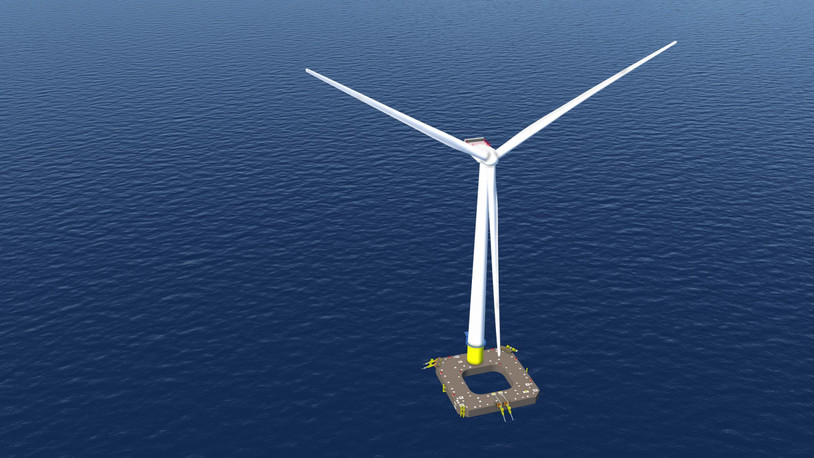
The Diet in Japan has approved legislation that will enable the development of floating offshore windfarms in its exclusive economic zone (EEZ)


As highlighted by OWJ, in March 2025, Japan’s cabinet approved a bill amendment to allow offshore wind projects to be built in the country’s EEZ, prior to the legislation moving to the Diet for further deliberation.
The Diet is the national legislature of Japan, and is composed of a lower house, the House of Representatives, and an upper house, the House of Councillors. It is anticipated that now it has been approved by the Diet, the legislation will take effect by 1 April 2026.
Responding to approval by the Diet, Global Wind Energy Council deputy chief executive Rebecca Williams said, “This is great news. Congratulations to the Ministry of Economy, Trade and Industry and the Japanese government for making this possible.
“Scaling up floating wind is important for increasing Japan’s energy autonomy and resilience, and represents an important global industrial opportunity. GWEC looks forward to continuing to work with the government of Japan to build a successful offshore wind industry for the country.”
Among the key features of the Bill are the designation of areas in the EEZ for offshore wind development; granting of licences for project development, with a strong emphasis on compliance; the formation of a Council to co-ordinate projects in consultation with relevant stakeholders; and streamlined government-led environmental assessment procedures to safeguard marine biodiversity.
GWEC said to unlock Japan’s floating offshore wind potential, industry-government collaboration to develop a clear and bankable framework for EEZ projects will also be required, as will transparent and efficient permitting and infrastructure access to accelerate project development, along with mechanisms to derisk projects and attract investment in floating wind technology.
With limited shallow waters, Japan’s offshore wind ambitions rely on scaling up floating wind in deeper waters. Offshore wind and floating wind are considered key to achieving carbon neutrality by 2050.
Sign up for Riviera’s series of technical and operational webinars and conferences:
- Register to attend by visiting our events page.
- Watch recordings from all of our webinars in the webinar library.


Related to this Story


Events

Maritime Regulations Webinar Week
 16 Dec 2025
 GMT - ONLINE
Floating energy: successfully unlocking stranded gas using FLNGs and FSRUs
24 Feb 2026GMT - ONLINE
© 2026 Riviera Maritime Media Ltd.


