


Business Sectors
Business Sectors
Events
Contents
Red Sea attacks: CMA CGM, Evergreen and OOCL halt services; Hapag-Lloyd, Maersk, MSC redirect
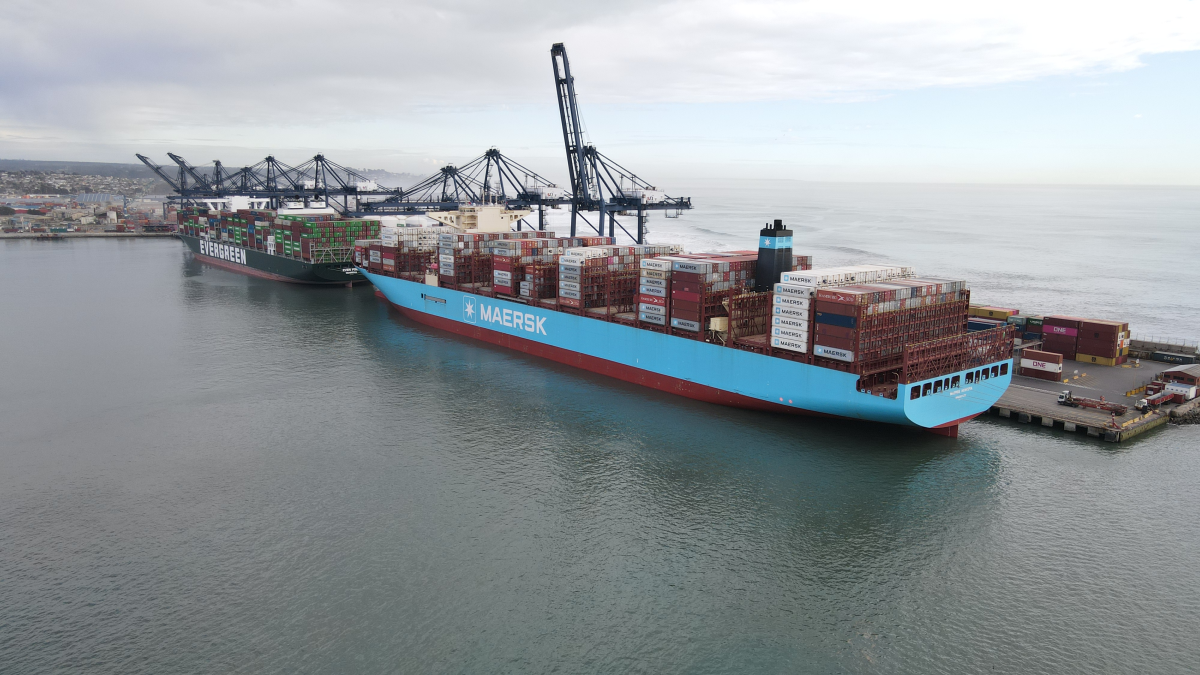
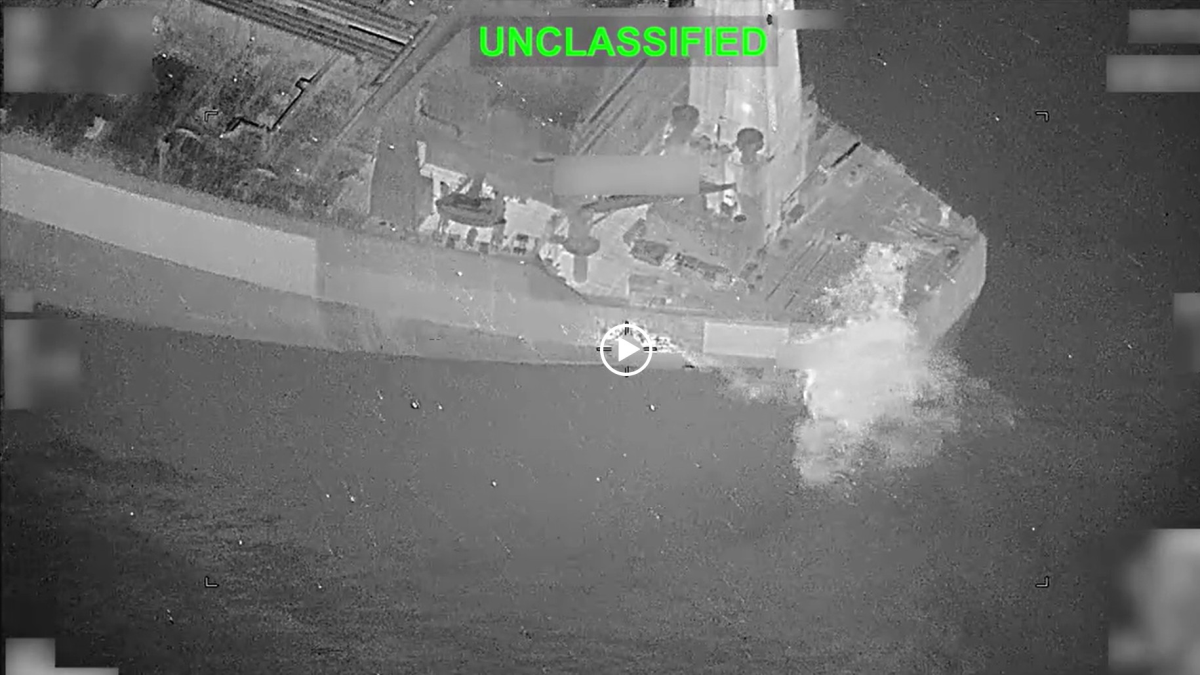
Container ships have been in the firing line in the Red Sea, struck by and narrowly avoiding missiles and other explosive projectiles and harassed by small, armed watercraft as suspected Houthi attacks have become a near-constant threat for all vessels in the Red Sea’s Bab el-Mandeb Strait


Hapag-Lloyd
Hapag-Lloyd confirmed an attack on its 15,000-TEU box ship Al Jasrah in an email on 14 December. The line said no crew members were hurt in the attack that happened when the vessel was sailing near Yemen’s coast but declined to immediately offer additional detail.
"Hapag-Lloyd will take additional measures to secure the safety of our crews," the container line said, later adding, "Hapag-Lloyd is pausing all container ship traffic through the Red Sea until Monday. Then we will decide for the period thereafter."
On Monday, the line said it had decided to re-route vessels.
"Hapag-Lloyd has decided to reroute several ships via the Cape of Good Hope. This will be done until the passage through the Suez Canal and the Red Sea will be safe again for vessels and their crews," the company said in an email.
Reuters cited an anonymous US defense department official in a report, saying the attacked Hapag-Lloyd vessel had caught fire after being struck by a projectile, believed to be a drone, in a series of attacks from Houthi-controlled territory in Yemen.
The Reuters report also mentioned two ballistic missile strike attempts on an unnamed vessel, with one missile finding its target and starting a fire on board the vessel that the crew were attempting to extinguish.
Maersk
Maersk vessels, too, have been targeted, and the line has decided to re-route its vessels around Africa’s Cape of Good Hope for the time being.
"All vessels previously paused and due to sail through the region will now be re-routed around Africa via the Cape of Good Hope. They will continue their voyages on the diverted routes as soon as operationally feasible. Impacted customers will be informed directly with further details. For all future vessel sailings planned through the area, a case-by-case assessment will take place to determine whether adjustments need to be made – including diversions via the Cape of Good Hope and further contingency measures," Maersk said.
Maersk said it was "pleased" that the US and others have committed to increasing security for vessels in the region in a move the line said it hoped would allow for a return to transit in the region in the future.
"However, at this time it remains difficult to determine exactly when this will be. Meanwhile, routing vessels via the Cape of Good Hope will ultimately deliver faster and more predictable outcomes for our customers and their supply chains," the company said.
Maersk initially told ships approaching the Bab el-Mandeb Strait to stay where they are until further notice, according to a spokesperson for the line.
"We are deeply concerned about the highly escalated security situation in the southern Red Sea and Gulf of Aden," Maersk said in an emailed statement. "Following the near-miss incident involving Maersk Gibraltar and yet another attack on a container vessel, we have instructed all Maersk vessels in the area bound to pass through the Bab el-Mandeb Strait to pause their journey until further notice."
Maersk also called for diplomatic efforts, asking "international society to come together to find a swift resolution to bring the situation under control".
Maersk and the US military’s Central Command confirmed an attack against 10,000-TEU Maersk Gibraltar, with Maersk saying in an emailed statement that the vessel’s crew are safe following what US news outlets said was a near-miss with a missile while travelling from Salalah, Oman to Jeddah, Saudi Arabia.
"The recent attacks on commercial vessels in the Bab el-Mandeb Strait are alarming and pose a significant threat to the safety and lives of seafarers. This issue cannot be addressed by the global shipping industry alone," Maersk said while declining to give further detail on the attack.
US independent news agency the Associated Press cited an unnamed US defence department official in the near-miss incident with the Maersk container ship Maersk Gibraltar. The official said a missile landed in the water near the vessel, and the Associated Press report linked the attack with a UKMTO incident report that said an unnamed vessel witnessed an explosion 50 m from its port side.
CMA CGM
The CMA CGM Group has also told its vessels in safe waters in the region to stay put, again citing "deeply held concerns" about security.
"We have been taking, over the past days, prevention measures to ensure the safety of our vessels and their crews navigating these waters. The situation is further deteriorating and concern for safety is increasing. As such, we have decided to instruct all CMA CGM container ships in the area that are scheduled to pass through the Red Sea to reach safe areas and pause their journey in safe waters with immediate effect until further notice" the line said.
OOCL
Hong Kong-based Orient Overseas Container Line (OOCL) said it, too, would be halting services, citing ’operational issues’ as the cause.
Evergreen Line
Evergreen posted a brief statement to its website to say that it would be temporarily suspending import and export services to Israel "with immediate effect" on 18 December. The line said fierce escalation of attacks, rising risk and safety considerations were the cause of the suspension.
MSC
MSC said it will reroute its vessels after confirming an attack on its MSC Palatium III container ship, saying the ship was attacked, "with limited fire damage and has been taken out of service," but all crew on board are safe with no reported injuries.
"Due to this incident and the lives and safety of our seafarers, until the Red Sea passage is safe, MSC ships will not transit the Suez Canal Eastbound and Westbound. Already now, some services will be rerouted to go via the Cape of Good Hope instead." This disruption will impact the sailing schedules by several days [on] vessels booked for Suez transit. We ask for your understanding in these serious circumstances," the line said in a customer advisory on its website.
And British maritime security firm Ambrey said MSC vessels have been approached by small craft, with those on board ordering the vessels to alter course towards Yemen.
The Bab el-Mandeb Strait has been the site of an increasing number of attacks against commercial shipping targets by Yemen’s Houthi rebel militia, the Iran-supplied Yemeni Armed Forces.
Beginning with attacks on vessels with Israeli ties, the group’s spokesperson has said the attacks come in reprisal for Israel’s bombing of the Palestinian territory of Gaza in the wake of attacks on Israelis by Iran-backed Palestinian Sunni Islamist political and military organisation Hamas, which governs the Gaza Strip.
But over recent days, the Yemeni Armed Forces attacks on shipping have become seemingly more indiscriminate.
An Ambrey threat circular said, "The Houthis have broadened their target profile of what constitutes ‘affiliated’ from flag, ownership, operatorship and management, to include the destination of Israel. It should also be noted that they, and their Iranian backers, have mistakenly targeted vessels that were no longer associated with Israel."
The company said it advised ship hardening and protection measures for vessels in the region.
"It is also assessed likely [Houthis] may target vessels whose parent companies have co-operated with Israel. This means the threat is no longer transit-specific. As some affiliated merchant shipping diverts from the area, the Houthis are assessed to maintain their broadened scope of potential targets. The insurance industry has responded with markedly higher rates across the board," Ambrey noted.
An attack on the tanker vessel Ardmore Encounter on 13 December came shortly after the Houthis expanded their threat to all ships heading to Israel and claimed responsibility for a missile strike on J Ludwig Mowinckels Rederi’s Norway-flagged tanker Strinda in the Red Sea.
In a circular titled The Gaza Conflict, the International Union of Marine Insurance called the attacks on vessels "a significant new twist" in the conflict.
"Houthis seized Galaxy Leader on 19 November using an Mi-17 helicopter to insert an assault team of eight men carrying AK-type rifles. That was a game changer and will require a ship security rethink. It was not in any security procedures manual for commercial vessels. Even if the vessel had an armed team aboard, the dispositions they would have to make in a very short time would not guarantee a successful defence. Worse, having demonstrated their capability, the Houthis also deemed anyone they considered a supporter of Israel to be a legitimate target. Trading and underwriting in the area have entered another phase of risk and uncertainty where political motives clash with commercial operations," the insurance circular said.
The US government has told news agencies it is in talks to put together an announcement for a naval coalition to protect commercial shipping in the region, a move Iranian government officials have vehemently opposed in Iran’s state media reports.
On 11-12 December, US CENTCOM Commander General Michael Erik Kurilla visited partners in Egypt and Jordan. While in Egypt, General Kurilla met with Egyptian Chief of Staff of the Armed Forces General Osama Askar and his staff, and while in Jordan, he met with the Jordanian Chairman of the Joint Chiefs of Staff, Major General Yousef Ahmad Al-Hunaiti and his staff. In both locations, US CENTCOM said the leaders discussed the current security concerns in the region.
Analysis of the security threat in the region by Dryad Global chief executive Corey Ranslem said, "Expect the boardings, drone, and missile attacks to continue to escalate in this region for the foreseeable future. Along with the drone and missile issues, there have also been numerous reports of small vessels and helicopters sighted on ’patrols’ within the region which could lead to further threats to shipping."
In addition to the container vessel attacks, UK Maritime Trade Operations (UKMTO) incident reports have been following a hijacking in progress on board a vessel that is now in the Arabian Sea and heading toward Somalia.
The vessel is thought to be Navigation Maritime Bulgare (Navibulgar)-owned bulk carrier Ruen. The shipping company has confirmed it has lost contact with the vessel and Bulgarian government officials have called the incident a hijacking. The incident began off Yemen’s Socotra Island, but it remains unclear who is behind the hijacking. UKMTO said it has received a report from the company’s security officer who "believes the crew no longer has control of the vessel".
Both the International Chamber of Shipping (ICS) and the European Community Shipowners’ Associations (ECSA) called for increased military presence in the region to protect seafarers.
"ICS deplores the actions of the Houthis in the strongest terms and calls for the immediate cessation of these attacks. These are unacceptable acts of aggression which threaten the lives of innocent seafarers and the safety of merchant shipping," the ICS said, noting that companies have begun rerouteing around the Cape of Good Hope, adding cost and time to goods carried by ship.
"ECSA strongly advocates for the enhancement of protective structures for the security of commercial vessels transiting through the area. These measures are crucial to ensure the safety and well-being of our seafarers and to enhance the security of vital trade routes,” said ECSA Secretary General Sotiris Raptis.
Sign up for Riviera’s series of technical and operational webinars and conferences in 2023:
- Register to attend by visiting our events page.
- Watch recordings from all of our webinars in the webinar library.
Related to this Story


Events

Maritime Regulations Webinar Week
 16 Dec 2025
 GMT - ONLINE
Floating energy: successfully unlocking stranded gas using FLNGs and FSRUs
24 Feb 2026GMT - ONLINE
© 2026 Riviera Maritime Media Ltd.


