


Business Sectors
Events
Contents
LPG carrier owners advocate capital discipline
BW LPG, Dorian LPG and Navigator Gas examined US NGL-driven demand, fleet renewal and cash returns


BW LPG, Dorian LPG and Navigator Gas assessed fleet growth, US natural gas liquids (NGL) supply and capital allocation across the gas carrier cycle.
As at December 2025, BW LPG operates 51 very large gas carriers (VLGCs) in a global VLGC fleet of 413 ships, including nine India-flagged vessels and an inhouse LPG trading arm handling 5–6M tonnes per year.
Speaking at Capital Link’s LPG carrier webinar on 10 December 2025, chief executive Christian Sorensen said the company has already completed its major fleet investment, acquiring the Avance Gas VLGC fleet in a US$1Bn transaction in 2024, and is now concentrating on cash generation and distributions.
“Paying dividends is our primary means of returning value to our shareholders,” he said, noting BW LPG reported net leverage “just below 30%” for the third quarter.
Dorian LPG’s approach to capital management also prioritises a balance between deleveraging, fleet investment and shareholder returns.
Chief financial officer Ted Young told the webinar net debt as a percentage of total capitalisation has fallen from 33% to about 15% over four years, while the company has delivered more than US$16 per share in dividends and executed a US$113M self-tender.
“Over the last four years, we have managed to strike a pretty good balance between all three,” he said, adding the market has rewarded dividends more visibly than buybacks in total shareholder return terms.
Navigator Gas, focused on Handy-size and mid-size gas carriers, described a similar tilt towards cash returns and disciplined growth.
"The key growth driver lay in NGL-rich basins such as the Permian and associated export infrastructure"
“We have had a capital return policy since 2023 and we have returned US$210M since then through dividends and share buybacks,” said chief executive Mads Peter Zacho.
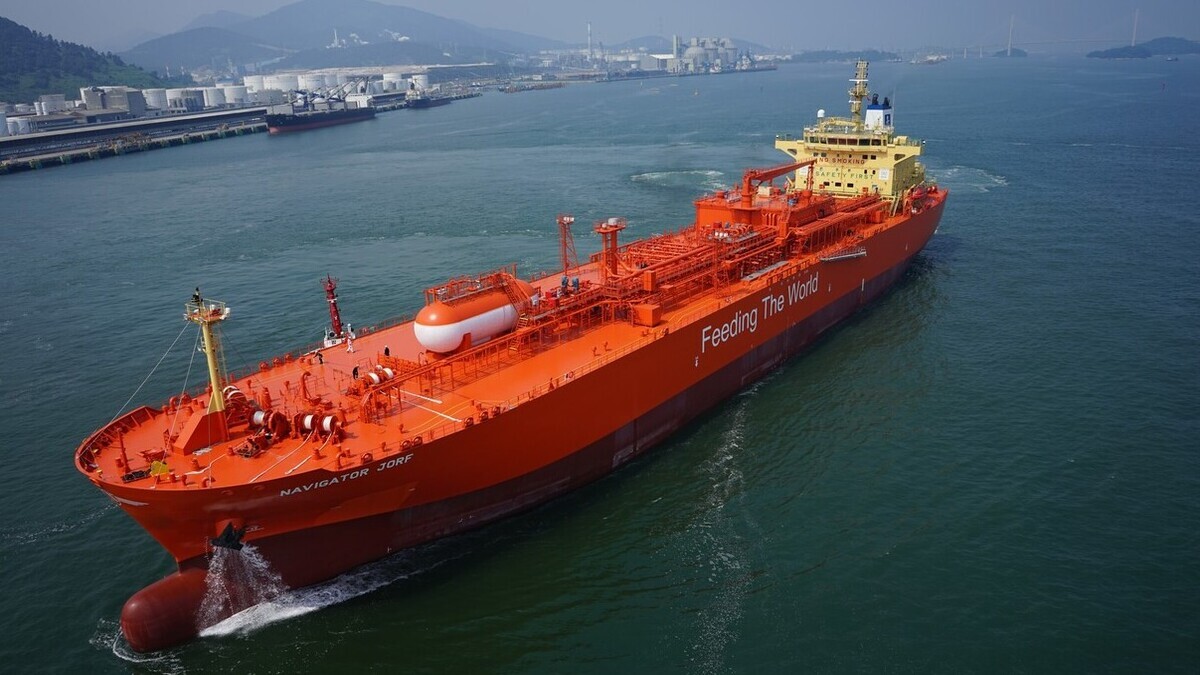
Navigator operates just over 60 gas carriers, including six on order, with 32 vessels ethylene-capable and a 50% stake in what Mr Zacho described as “the world’s largest ethylene export terminal”.
The group aims to “gradually renew” its fleet by selling vessels approaching 25 years of age and buying mainly secondhand tonnage, favouring “paper for steel” transactions over cash.
On fleet technology and employment, Mr Young characterised the VLGC sector as fully refrigerated, carrying propane, butane, propylene and, increasingly, ammonia cargoes at around –52°C.
“We’re told by our seafarers who have been at sea with LNG vessels that an LPG carrier is more technically complex,” he said, underscoring the importance of gas plant reliability and specialist gas engineers on board.
Mr Zacho contrasted this with Navigator’s semi-refrigerated Handy and mid-size vessels, which could both cool and compress cargo. “It sits in the name, Handy size, that they are very versatile and can do many different types of gases,” he said, noting 32 ethylene-capable ships could carry cargoes down to below –100°C and switch between LPG, ammonia and petrochemicals depending on relative returns.
The demand picture, as described by the panel, remains anchored in the dislocation between US production and Asian consumption.
Mr Sorensen reminded the audience LPG is “a byproduct of crude oil and natural gas production”, with the United States now the largest loading region for VLGCs alongside the Middle East.
LPG cargoes move predominantly from the US Gulf and Middle East Gulf to Asia, serving residential and commercial heating and cooking markets in South and southeast Asia and petrochemical feedstock demand further north.
BW LPG has also expanded its use of LPG as a marine fuel, with 19 owned LPG-fuelled vessels and additional units in its pool.
"Supplyside dynamics differed by segment but were generally described as manageable"
Mr Young estimated residential/commercial and petrochemical uses together accounted for “75% to 80% of world LPG consumption”, describing residential demand as relatively stable and closely linked to GDP and population growth.
In petrochemicals, he highlighted the role of flexible steam crackers switching between LPG and naphtha and the growth of propane dehydrogenation plants, particularly in China, where LPG-to-propylene chains face no competition from naphtha feedstock.
For Navigator, the key growth driver lay in NGL-rich basins such as the Permian and associated export infrastructure. Mr Zacho said around 60% of Navigator’s liftings originate in North America, with a heavy focus on Texas.
As the Permian matures, he said, “The production of one barrel of oil in the Permian Basin would yield about half a barrel of NGL in 2023… in 2025 that number was 0.66 barrels,” citing a roughly 33% increase in two to three years.
Enterprise, described as Navigator’s partner and “the biggest pipeline operator in the US”, forecast 25% growth in US NGL production between 2025 and 2030 and around US$6Bn of associated capex, mostly backed by firm offtake.
“All that additional natural gas liquid must be exported, and that is what the three of us here are doing,” Mr Zacho said.
From Dorian’s perspective, midstream forecasts reinforce confidence in the sector’s medium-term fundamentals.
Supplyside dynamics differ by segment but are generally described as manageable.
Mr Zacho said the Handy-size orderbook equates to roughly 10% of the on-the-water fleet and more than 20% of ships in that segment are more than 20 years old, creating scope for negative net fleet growth as scrapping outpaces deliveries.
He sees less favourable ratios in conventional mid-size ammonia tonnage, but emphasised Navigator’s focus on ethylene carriers, where the orderbook remains small.
For VLGCs, Mr Young puts the orderbook at “25% roughly” of the existing fleet but pointed out the sector has already expanded from about 120 vessels to more than 400 over the past dozen years.
Sign up for Riviera’s series of technical and operational webinars and conferences:
- Register to attend by visiting our events page.
- Watch recordings from all of our webinars in the webinar library.

Related to this Story
Events

Maritime Regulations Webinar Week
 16 Dec 2025
 GMT - ONLINE
Floating energy: successfully unlocking stranded gas using FLNGs and FSRUs
24 Feb 2026GMT - ONLINE
© 2024 Riviera Maritime Media Ltd.


