


Business Sectors
Business Sectors
Events
Contents

Register to read more articles.
Bulk carrier market faces bizarre pricing trends amid volatility
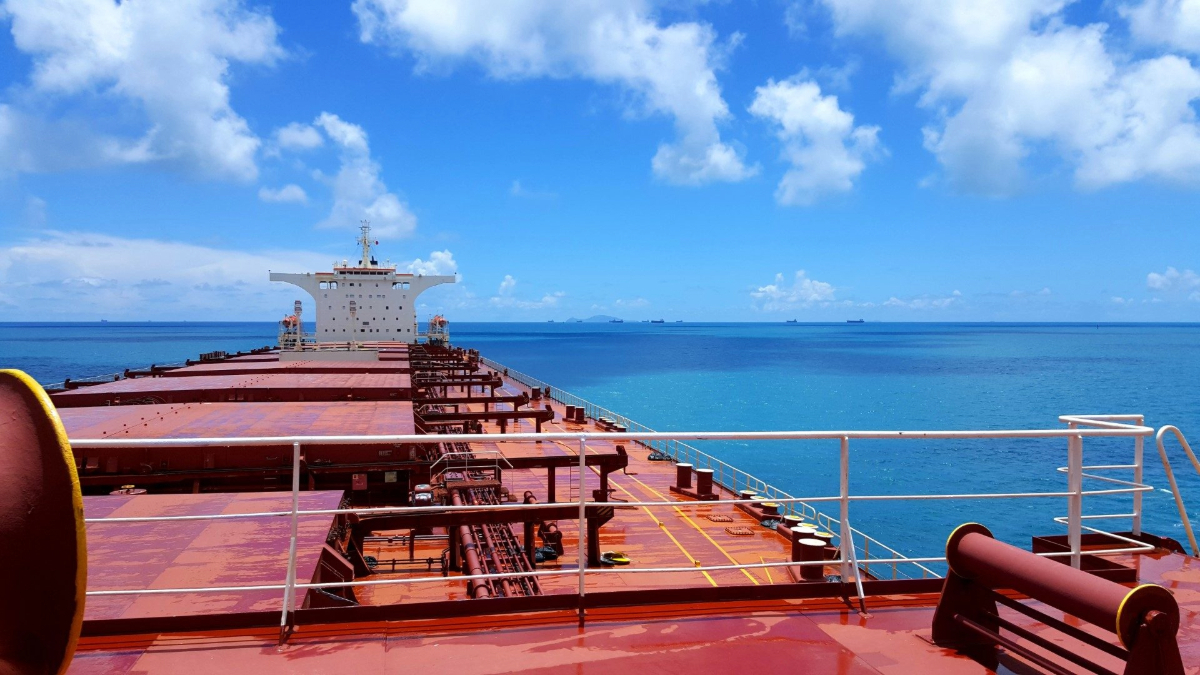
The bulk carrier charter market is experiencing an unusual period where larger vessels are underperforming compared with smaller ones, a trend now reflected in the secondhand sale and purchase (S&P) landscape


Recent reports indicate middle-aged Panamax and post-Panamax vessels are fetching prices equal to or lower than smaller bulk carriers, such as Supramaxes/Ultramaxes, and even Handysize bulk carriers.
For instance, last week a 2012-built post-Panamax (93,005 dwt) changed hands for approximately US$13.8M, while a 56,104-dwt Supramax and a 38,200-dwt Handysize of the same age reportedly sold for US$16.8M and US$13.5M, respectively.
Forces driving market shifts
One key factor influencing these pricing dynamics is vessel origin. The larger vessel in the comparison was built in China, whereas the smaller ships were built in Japan, a distinction that typically accounts for a 10–15% price difference. However, this alone does not fully account for the unusual pricing trends in the secondhand market.
“The freight market has had a significant impact on pricing,” Cleaves Shipbroking S&P shipbroker Einar Straume told Riviera.
“Panamaxes, and by extension post-Panamaxes, have suffered more than any other size segment over the past six months. This has heavily weighed on secondhand prices for these types," he explained. "As a result, we have seen cases where Ultramaxes are priced higher than same-age Panamaxes," he added.
Mr Straume pointed out another factor affecting valuations. He noted the price of this specific post-Panamax is actually lower than what one would expect for a standard Kamsarmax of the same age and origin.
However, this is not an unusual occurrence when Capesize rates fall below Kamsarmax rates, as is currently the case.
"In a better market, charterers would generate more revenue from higher-capacity vessels. But in a weak freight market, like today’s, the additional capacity yields minimal gains while the larger size incurs higher operating costs,” he explained.
“In a more typical scenario, where Capesize ships earn more than Kamsarmaxes (not to mention smaller vessels), we would expect a post-Panamax to command a slight premium over a Panamax/Kamsarmax," he concluded.
Signs of market stabilisation
Riviera recently reported Capesize vessels are currently earning less than all smaller bulk carrier types, including Handysize vessels.
“Capesize earnings have been lower than those of smaller ships, even Handysize bulkers. This is an unusual trend, considering their carrying capacity is four to five times greater,” Mr Straume noted.
However, he suggested such market conditions often signal a recovery is near.
“Whenever all size segments start to converge in earnings, it is typically an indicator the market is bottoming out, and the curves will turn upwards again," he explained.
Indeed, charter rates are gradually recovering, and secondhand vessel prices appear to be stabilising.
“We believe prices have found a temporary floor as the freight market has shown significant growth since the beginning of this month,” shipbroker WeberSeas stated in its latest report.
Riviera’s Bulk Carrier Webinar Week will be held from the week commencing 24 March 2025. Click here to register for this free-to-attend event.




Related to this Story


Events

Maritime Regulations Webinar Week
 16 Dec 2025
 GMT - ONLINE
Floating energy: successfully unlocking stranded gas using FLNGs and FSRUs
24 Feb 2026GMT - ONLINE
© 2026 Riviera Maritime Media Ltd.


